

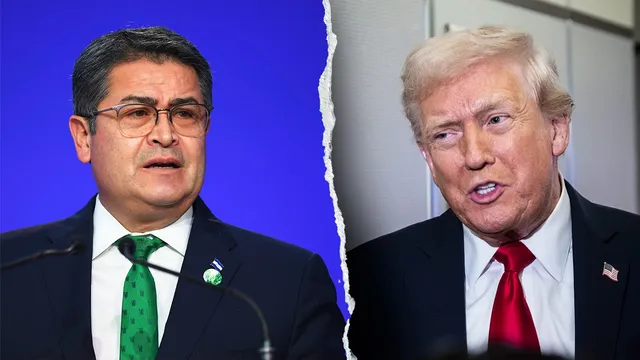
Trump pardons Juan Orlando Hernández despite drug trafficking conviction
Trump pardons Juan Orlando Hernández despite drug trafficking conviction
- Former Honduran President Juan Orlando Hernandez was pardoned by Donald Trump after being convicted of drug trafficking.
- Hernandez was sentenced to 45 years in prison and maintained his innocence, claiming political motives behind his conviction.
- His release could influence the upcoming elections in Honduras and the ongoing investigations into his administration's alleged corruption.
Story
In a controversial move, former U.S. President Donald Trump pardoned Juan Orlando Hernández, the former president of Honduras, who had been convicted on drug trafficking and weapons charges. Hernández, sentenced to 45 years in prison in March 2024, was found guilty of conspiring to import cocaine into the United States while serving as president from 2014 to 2022. His release from the U.S. Penitentiary, Hazelton, took place shortly after Trump's announcement, which was framed as a response to requests from Honduran citizens who believed Hernández was a victim of unjust political machinations led by the Biden administration. During his trial, prosecutors presented evidence that Hernández had accepted millions of dollars in bribes from drug traffickers, allowing them to operate freely in Honduras, which had been dubbed a 'narco-state.' Despite maintaining his innocence during legal proceedings, he portrayed himself as an ally in the fight against drug trafficking. Trump's post-pardon comments echoed Hernández's claim of being wronged, leading many observers to question the implications of this decision for U.S. foreign policy in Central America and the ongoing battle against drug trafficking in the region. As the U.S. ramped up military action against drug traffickers operating near Venezuela, Trump's pardon raised concerns about the message it sent regarding accountability for senior officials involved in corruption and crime. The timing of the pardon coincided with a tense electoral climate in Honduras, with potential implications for U.S. relations in the region, particularly as the Honduran general elections approached. The release of Hernández could lead to further unrest and complicate the political landscape in a country already beleaguered by corruption issues. Hernández’s wife publicly thanked Trump for the pardon, arguing that it corrected a serious injustice. Meanwhile, the Honduran Attorney General indicated a willingness to pursue further investigations against Hernández. This increasing friction illustrates a complicated relationship between U.S. governance and Central American politics, particularly in light of Hernández's long-standing ties to the drug trade and the current administration's attempts to negotiate better relations with Honduras under the leadership of Xiomara Castro, who succeeded Hernández after he was extradited to the U.S. for trial.
Context
The recent pardon of former Honduran President Juan Orlando Hernandez has significant implications for the political landscape of Honduras. Hernandez, who served from 2014 to 2022, faced numerous allegations of corruption, drug trafficking, and abuse of power throughout his presidency. His pardon by the current administration has sparked debates on governance, accountability, and the rule of law in Honduras. The pardon not only raises questions regarding the administration’s commitment to fighting corruption but also highlights the ongoing struggles within the country related to political polarization and the influence of former leaders on current affairs. In the immediate aftermath of Hernandez's pardon, reactions from the public and civil society have been mixed. While some supporters view the pardon as a necessary step in reconciling the political factions in Honduras, critics argue that it undermines the efforts to combat corruption and promote transparency in government. There is a palpable sense of betrayal among those who hoped for accountability against officials accused of serious crimes. The effect of this decision is likely to generate more protests and demands for governmental reforms, emphasizing civil rights and the fight against impunity in a country historically plagued by such issues. Moreover, Hernandez's pardon may reshape the political dynamics within the National Party, which he previously led. Some party members and supporters see this as an opportunity to reclaim power and influence, while others perceive it as an albatross that could hinder the party's credibility. The divided response may indicate the emergence of a factional struggle within the party, possibly leading to a realignment of political alliances as the country approaches future elections. The National Party's strategy moving forward will be critical, as it navigates public sentiment in the wake of the pardon and the potential for increased scrutiny on its affiliation with controversial figures. As Honduras moves forward, the impact of Hernandez's pardon will likely influence both domestic and international perceptions of the nation. International organizations, including human rights groups and anti-corruption watchdogs, may intensify their scrutiny of the Honduran government's actions following the pardon. This could result in diplomatic tensions or economic consequences if international partners perceive a regression in democratic values or the rule of law. Overall, the political ramifications of Hernandez's pardon are profound, and how they unfold in the coming months will be crucial for the future of governance and democracy in Honduras.


