

Claims of Bad Bunny handing Grammy to detained boy debunked
Claims of Bad Bunny handing Grammy to detained boy debunked
- Ed Krassenstein falsely claimed that the boy in Bad Bunny's performance was Liam Ramos, a detained five-year-old.
- The actual child, Lincoln Fox Ramadan, confirmed by reports, is a child actor who participated in the Super Bowl show.
- This misinformation underscores the importance of accurate reporting in discussions surrounding immigration.
Story
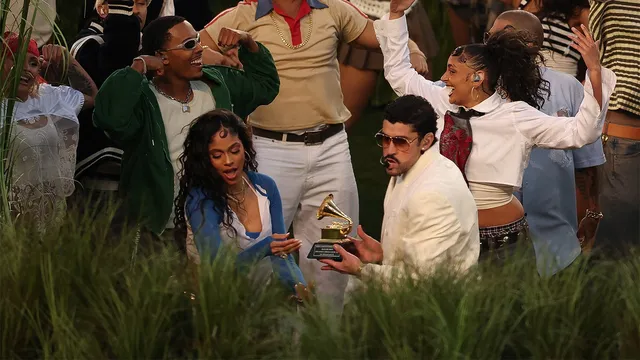
In the United States, during Super Bowl LV, on February 12, 2023, a controversy arose regarding a young boy who appeared in Bad Bunny's halftime show. The boy was incorrectly identified on social media by left-wing commentator Ed Krassenstein as Liam Conejo Ramos, a five-year-old who was detained by Immigration and Customs Enforcement in Minnesota. This misinformation circulated quickly, attracting millions of views. However, it was confirmed that the boy in question was Lincoln Fox Ramadan, a child actor who had portrayed a symbolic moment, where he was handed a Grammy Award by Bad Bunny. Lincoln's family corroborated the truth, emphasizing the need for accurate representation amidst the narrative surrounding immigration issues. The error was highlighted amid discussions on the portrayal of immigrants and the responsibilities of commentators in accurately reporting facts. Following this, reports clarified that Lincoln Fox, also five years old, is of mixed heritage and previously worked in modeling and acting. His joyful appearance in the halftime show was a moment of celebration rather than associated tragedy. The incident sparked conversation regarding the blending of entertainment, cultural representation, and the impact of social media on public perception. The exchange ultimately served to demonstrate the significant responsibility that influencers and journalists bear in providing factual information in a world inundated with misinformation. This event unfolded against the backdrop of heightened security and immigration narratives, framing Bad Bunny’s performance not only as entertainment but also as a commentary on social justice issues.
Context
The impact of social media on misinformation is a critical issue that has gained significant attention in recent years, especially with the rising prevalence of social media platforms. These platforms facilitate rapid information dissemination, making it easier for both accurate and erroneous information to spread among users. Consequently, misinformation, defined as false or misleading information spread regardless of intent, has become a pervasive problem that affects public perception, individual behavior, and even democratic processes. In the age of social media, misinformation often travels faster than fact-checked information, leading to confusion and misinformed opinions among users. The speed of information flow is compounded by algorithms that prioritize engagement, often amplifying sensationalist and misleading content at the expense of accuracy and truthfulness. This creates a challenging environment for users trying to discern credible sources from unreliable ones. Social media platforms often lack robust mechanisms for verification of information, which can exacerbate the misinformation crisis. Users are frequently bombarded with a mix of news, opinions, and rumors, many of which may originate from unverified sources. The viral nature of social media allows for misinformation to gain traction quickly, leading to widespread misconceptions that can impact significant societal issues, including public health responses and electoral integrity. Instances during the COVID-19 pandemic are illustrative; false cures and misleading health information proliferated across various platforms, leading to dangerous behaviors among the public. The growing influence of these digital mediums illustrates a shift in how information is consumed, making it imperative for both users and platforms to adopt more critical approaches to media consumption and accountability. Furthermore, social media's influence on misinformation is not solely a reflection of user behavior but is also significantly affected by external factors such as socio-political contexts and regulatory frameworks. In certain regions, state-sponsored disinformation campaigns exploit social media to sow discord, manipulate public sentiment, or influence elections. The phenomenon of fake news has shown that misinformation can be weaponized for political gain, manipulating voter behavior and undermining trust in institutions. Consequently, the social fabric is tested as individuals find themselves increasingly polarized, often retreating into echo chambers where their preconceived beliefs are reinforced rather than challenged. To combat the misinformation epidemic, a multi-pronged approach is necessary. Social media companies are urged to develop and implement more effective algorithms that can identify and limit the reach of false information. Education plays a vital role in equipping users with the skills necessary to critically evaluate the information they encounter. Promoting digital literacy can help individuals discern reliable sources from dubious ones, thereby reducing the spread of misinformation. Collaboration between tech companies, educators, and government entities is essential to create an informed public that can navigate the complex landscape of social media without falling prey to misinformation. Ultimately, addressing the impact of social media on misinformation is crucial for safeguarding informed public discourse and ensuring the health of democratic societies.


