Oil prices surge after cargo ship attack in Strait of Hormuz
business
impactful
controversial

Oil prices surge after cargo ship attack in Strait of Hormuz

10
(Update: )
strait between the Gulf of Oman and the Persian Gulf
  • Oil prices increased significantly after an attack on a cargo vessel in the Strait of Hormuz.
  • The International Maritime Organization canceled its evacuation plan for stranded ships due to the renewed violence.
  • The attack highlights the ongoing risks in the region and the importance of securing shipping routes.
Share opinion
1

Story

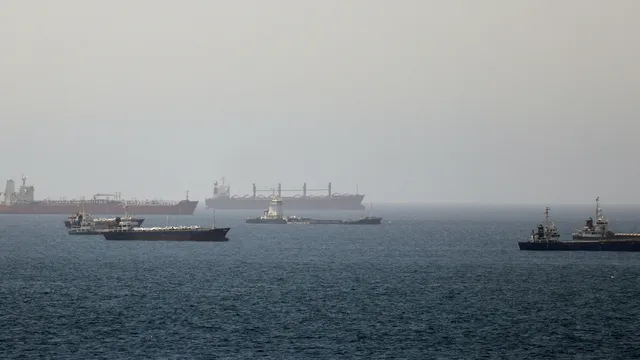
In the Strait of Hormuz, a vital waterway for global oil and liquefied natural gas supplies, a cargo vessel was attacked, prompting the United Nations maritime agency to cancel its evacuation plan for stranded ships. This incident occurred amid heightened tensions following the recent conflict between the United States and Iran. The attack, attributed to Iran by unnamed U.S. officials, involved an unknown projectile striking the vessel while it was near the Omani coast. As a result, Brent crude oil prices surged by as much as 4 percent, reflecting market concerns over the security of shipping routes in the region. The Strait of Hormuz is crucial for international trade, with approximately one-fifth of the world's oil passing through it during peacetime. The attack has raised alarms about the fragility of peace in the area, especially given the recent ceasefire between the U.S. and Iran. Analysts have noted that the incident serves as a stark reminder of the ongoing risks associated with maritime navigation in this strategic corridor. The International Maritime Organization's decision to halt the evacuation plan underscores the challenges faced by shipping companies operating in the region. Following the attack, Asian markets reacted negatively, with major indices in Japan, South Korea, Hong Kong, and Taiwan experiencing significant losses. The Nikkei 225 and Kospi both fell more than 3 percent, while the Hang Seng Index dropped about 1 percent. This market response highlights the interconnectedness of geopolitical events and economic stability, particularly in regions heavily reliant on oil exports. The increase in oil prices is likely to have broader implications for global markets and economies, especially those dependent on oil imports. As the situation unfolds, the need for secure passage through the Strait of Hormuz becomes increasingly critical. Analysts emphasize the importance of restoring normal shipping operations to alleviate high crude stocks and ensure the resumption of oil production. The attack has not only disrupted shipping plans but has also intensified scrutiny on Iran's role in regional security. The Persian Gulf Strait Authority's warning about unauthorized routes further complicates the landscape for maritime operations, as vessels may face increased risks if they do not adhere to designated pathways. The ongoing tensions in the region will likely continue to influence oil prices and market stability in the foreseeable future.

Context

The relationship between Iran and the United States has been characterized by tension and conflict, particularly in the context of maritime security. Since the 1979 Iranian Revolution, the U.S. has viewed Iran as a significant threat to regional stability and its own national interests. This perception has led to a series of sanctions, military confrontations, and diplomatic standoffs. The Strait of Hormuz, a critical chokepoint for global oil shipments, has become a focal point for these tensions, with both nations asserting their naval presence to protect their interests. Iran's naval capabilities, including the use of fast attack boats and drones, have raised concerns about the safety of maritime navigation in the region, prompting the U.S. to enhance its military presence and conduct freedom of navigation operations to deter Iranian aggression. In recent years, incidents involving Iranian vessels and U.S. Navy ships have underscored the volatility of the situation. The U.S. has accused Iran of harassing commercial shipping and threatening the freedom of navigation, while Iran has claimed that U.S. military operations in the region are provocative and destabilizing. The potential for miscalculation or accidental conflict remains high, particularly as both nations continue to engage in military posturing. Diplomatic efforts to ease tensions, such as the 2015 Joint Comprehensive Plan of Action (JCPOA), have faced significant challenges, especially following the U.S. withdrawal from the agreement in 2018 and the subsequent re-imposition of sanctions on Iran. The implications of U.S.-Iran relations extend beyond bilateral interactions, affecting global energy markets and international maritime security. Disruptions in the Strait of Hormuz could lead to significant increases in oil prices, impacting economies worldwide. Furthermore, the involvement of other regional players, such as Saudi Arabia and Israel, complicates the dynamics of U.S.-Iran relations, as these nations often align with U.S. interests and view Iran as a common adversary. The potential for a broader conflict involving multiple actors raises the stakes for maritime security in the region, necessitating a coordinated international response to ensure safe passage for commercial shipping. Looking ahead, the future of U.S.-Iran relations and maritime security will depend on a combination of diplomatic engagement, military readiness, and the willingness of both nations to de-escalate tensions. The Biden administration has expressed interest in re-engaging with Iran diplomatically, but significant hurdles remain, including Iran's nuclear program and its regional activities. As both nations navigate this complex landscape, the importance of maintaining open lines of communication and establishing mechanisms to prevent maritime incidents cannot be overstated. Ultimately, achieving a stable and secure maritime environment in the Persian Gulf will require cooperation not only between the U.S. and Iran but also among other regional and global stakeholders.

2026 All rights reserved