

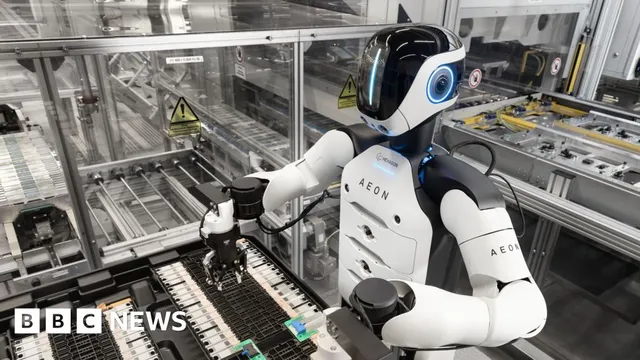
BMW introduces humanoid robots to revolutionize car production
BMW introduces humanoid robots to revolutionize car production
- BMW plans to implement humanoid robots in its car manufacturing plant in Europe from the summer.
- These robots, designed by Hexagon Robotics, will perform tasks such as feeding parts to tools and battery assembly.
- The introduction of humanoid robots is aimed at addressing labor shortages and improving manufacturing efficiency.
Story
In recent months, BMW has taken significant steps to enhance their car manufacturing capabilities by introducing humanoid robots at a plant in Europe. This initiative marks the company's first use of humanoid robots in the region, developing on similar projects previously launched in the United States. The robots, produced by Hexagon Robotics, are set to begin work in the summer, with roles aimed at easing the burden of physically demanding and repetitive tasks within the production line. These humanoid robots were crafted with the capabilities to replicate human actions, enabling them to function in diverse roles in automotive manufacturing. Their design allows them to be adaptable across various positions where humans are typically employed, reflecting the sentiments shared by Nikolaides from Hexagon, who highlights that with a humanoid form, robots can fit into nearly any human work environment. The training process for the robots utilized teleoperation to observe human movements and simulation software from Nvidia, ensuring that they can learn by imitating human workers during the assembly process. The integration of these robots into BMW's production process signifies a response to anticipated labor shortages in the coming years. Nikolaides pointed out that the company is already facing a shortage of staff and that these humanoid robots could fill that gap effectively. Moreover, the ability of these robots to adapt to various tasks without failure, even when conditions change, increases their potential benefits to the manufacturing sector. For instance, they can quickly adjust to new positions of sheet metal and continue work, reducing downtime and improving overall efficiency in manufacturing. As the project progresses, the initial reception from staff has been positive. The introduction of humanoid robots is viewed as a step towards innovation in manufacturing. The physical AI capabilities of these machines, particularly in their ability to learn from human actions and commands, indicate a potential shift in how production lines will operate in the future. Companies like BMW are pushing the boundaries of robotics in manufacturing, with humanoid robots paving the way for more advanced automation in industries traditionally reliant on human labor.
Context
shift analysis trends data policy data economic market policy market policy market insight shift global geopolitical data geopolitical geopolitical market strategic geopolitical strategic insight economic strategic analysis data economic impact insight economic trends global strategic global strategic policy strategic policy economic economic strategic policy economic policy analysis economic strategic impact impact geopolitical geopolitical analysis shift analysis impact market data economic policy analysis insight shift insight analysis trends shift impact economic economic insight strategic economic geopolitical geopolitical shift global economic economic...


