
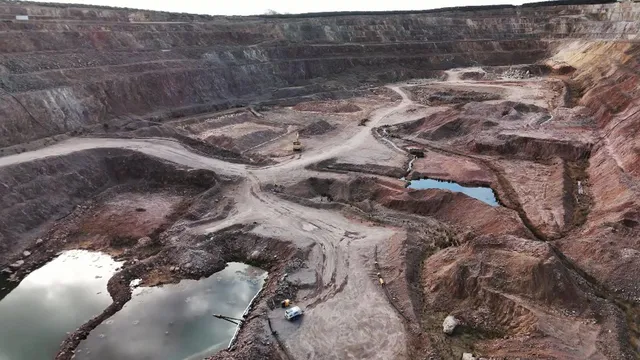
Tungsten West closes in on £50m share sale for Devon mine
- Tungsten West is in discussions to raise significant capital through a share sale for its Devon mining project.
- The increasing demand for tungsten, driven by geopolitical factors, is influencing the mineral's market price.
- The company's efforts could address supply chain vulnerabilities related to critical minerals in Western economies.
Story
In the midst of increasing global demand for critical minerals, Tungsten West, a London-listed mining company, is advancing plans to conduct a significant share sale aimed at raising between £40 million and £50 million. This financial initiative is intended to support the extraction of tungsten from Hemerdon, Devon, one of the largest known tungsten deposits globally. Tungsten is particularly important for various industries, including defense and automotive, and China's control over about 80% of the tungsten supply has raised security concerns among Western nations. As the United States takes steps to secure critical minerals, including plans for a $12 billion investment, Tungsten West aims to contribute significantly to the supply chain, potentially producing a quarter of the world's non-Chinese tungsten. The company's stock price jumped nearly 13% recently, reflecting growing confidence in the enhanced economic viability of the Hemerdon project. Chief Executive Jeff Court noted that rising tungsten prices—up over 200% since late 2024—and tin prices, which have increased by over 70%, signal a robust market dynamics that merit rapid advancement of their project.
Context
The impact of U.S. investment in critical minerals has significant implications for both the domestic economy and global supply chains. Critical minerals, including rare earth elements, lithium, cobalt, and others, play an essential role in the production of advanced technologies, clean energy solutions, and defense applications. Investment in these resources is crucial for maintaining the competitive edge of the United States in a global market increasingly dominated by countries with established mining and processing capabilities, particularly China. Without a robust domestic supply chain, the U.S. risks vulnerabilities in national security, economic stability, and technological innovation. Therefore, fostering a sustainable and secure supply of critical minerals is paramount to supporting strategic industries and reducing dependency on foreign sources. Recent investments have targeted the development of domestic mining operations and processing facilities, thereby allowing for the extraction and refinement of critical minerals within U.S. borders. This approach not only aims to secure supply but also supports job creation and economic growth in mining regions. The U.S. government, in collaboration with private sectors, has started initiatives designed to streamline permitting processes and reduce bureaucratic obstacles, enhancing the attractiveness of domestic mining projects. The push for responsible mining practices, which include environmental considerations and community engagement, is also integrated into these investments to ensure that the exploitation of critical minerals does not come at the expense of ecological stability. Investments in technology to develop alternative materials and recycling processes for critical minerals have emerged as a complementary strategy. These innovations promise to diversify supply sources and enhance sustainability by reducing reliance on primary raw materials. As global demand for electric vehicles, renewable energy technologies, and electronic devices continues to rise, the circular economy presents an opportunity for the U.S. to lead in the sustainable management of resources. This forward-thinking approach could mitigate supply risks and create secondary markets for recovered materials, contributing to a more resilient industrial framework. In conclusion, the U.S. investment in critical minerals is not merely an economic endeavor, but a strategic imperative that fuses national security concerns, environmental stewardship, and economic resilience. As the U.S. navigates the complexities of global competition and geopolitical tensions, ensuring a stable and sustainable supply of critical minerals will be instrumental in shaping a prosperous and secure future. The collective efforts among government, industry stakeholders, and academic institutions will be vital in achieving these objectives, thereby placing the U.S. at the forefront of critical minerals development and utilization in a rapidly evolving global landscape.
