

Mexico's powerful cartel leader 'El Mencho' killed in military raid
Mexico's powerful cartel leader 'El Mencho' killed in military raid
- Nemesio Oseguera Cervantes, known as 'El Mencho', was killed during a military operation in Jalisco, Mexico.
- The operation's success was facilitated by intelligence from a confidante of a romantic partner.
- His death continues to raise concerns about increased cartel violence and instability in Mexico.
Story
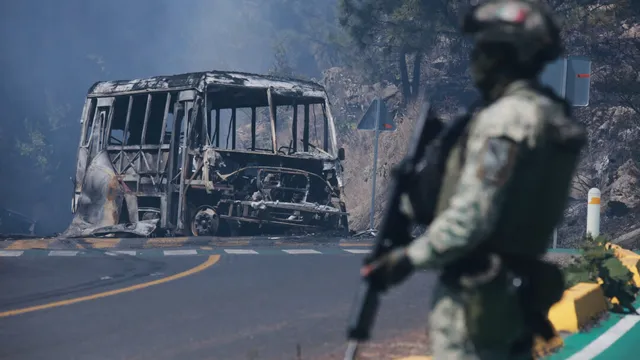
In Jalisco, Mexico, a significant military operation targeting one of the world's most wanted drug lords, Nemesio Oseguera Cervantes, widely known as 'El Mencho', culminated in his death on Sunday, February 22, 2026. This action followed intelligence gathered from a close associate of Oseguera Cervantes’ romantic partner, allowing Mexican special forces to pinpoint his location effectively. During this operation, conflict erupted within his compound, leading to a shootout where Oseguera Cervantes was gravely injured. Despite immediate medical evacuation efforts to transfer him to Mexico City, he died en route. The confrontation not only claimed Oseguera Cervantes' life but also instigated a violent backlash from cartel members across various regions in Mexico. Following this event, violent acts, including gunfire at public locations and arson targeting businesses, surged. The Mexican government disclosed that more than two dozen security personnel were killed in the chaotic aftermath of the operation, underscoring the growing danger faced by law enforcement as they confront cartel violence. Mexican officials credited U.S. intelligence as an essential factor in locating the cartel leader, yet emphasized that the operation was solely executed by Mexican agencies. Following Oseguera Cervantes' death, the Mexican President Claudia Sheinbaum assured citizens of ongoing efforts to restore safety and stability amid growing cartel-related violence. The fall of Oseguera Cervantes marks a turning point in Mexico’s ongoing battle against drug cartels, seen as a testament to the effectiveness of recent strategic cooperation with U.S. forces. However, analysts are concerned about the potential for continued violence, as rival factions of the cartel may vie for control in the wake of his demise, raising questions regarding the long-term impact on Mexico's security landscape.
Context
The current situation of cartel violence in Mexico remains critical, with ongoing conflicts primarily fueled by the rivalry between various drug trafficking organizations. As of February 2026, violence related to these cartels has escalated in many regions, with significant impacts on civilian safety and local governance. The complex landscape includes not only traditional drug trade but also involvement in other criminal activities such as human trafficking, extortion, and illegal mining. The fragmentation of major cartels into smaller, more violent factions has increased the intensity and frequency of violent encounters, resulting in a troubling rise in homicides and abductions. The situation is further compounded by the strategic use of terror tactics by these groups to establish control over territories and intimidate rivals and authorities alike. This has led to a state of fear among local populations and a significant burden on law enforcement agencies. As a result, many communities are trapped in a cycle of violence and vulnerability where they feel unable to trust governmental institutions meant to protect them. The toll on innocent civilians is profound, as killings, disappearances, and public displays of brutality have become more commonplace, prompting both national and international concern regarding human rights violations and the urgent need for comprehensive reform. The Mexican government has recognized the severity of the issue and has pledged to bolster its efforts in combating organized crime through increased military and police presence in affected areas and targeted operations aimed at high-profile cartel leaders. These initiatives have met with mixed results; while some operations have temporarily weakened certain factions, the overall impact on reducing violence has yet to be substantially realized. Economically, these conflicts further disrupt local economies, pushing impoverished communities into deeper despair and continued dependence on illicit activities as a means of survival. The international dimension of cartel violence also poses challenges, as drug trafficking networks extend their reach beyond Mexico's borders, affecting regions such as the United States and Central America. The geopolitical implications necessitate a comprehensive approach that highlights not only law enforcement but also social and economic development strategies to address the root causes of involvement in organized crime. Moving forward, a concerted effort involving collaboration among governmental, non-governmental, and international entities is essential to tackle the multifaceted issues stemming from cartel violence. Without a multifaceted strategy, efforts to curb cartel influence and restore peace to affected regions will likely remain insufficient.


