

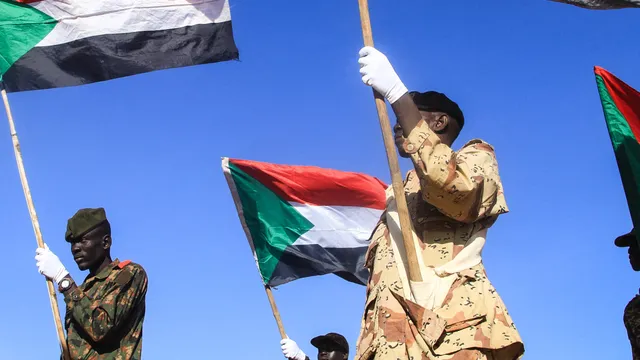
Sudan's civil war claims over 150,000 lives amid ongoing turmoil
Sudan's civil war claims over 150,000 lives amid ongoing turmoil
- Sudan's civil war has led to over 150,000 fatalities and 13 million displaced individuals.
- The Kordofan region, particularly the Nuba Mountains, has faced intense violence affecting the local Christian population.
- Continued conflict creates a humanitarian crisis that threatens regional stability and requires international attention.
Story
Sudan is experiencing a protracted civil war that has crossed the 1,000-day milestone. This ongoing conflict has culminated in significant loss of life, with over 150,000 individuals reported killed and more than 13 million displaced. The majority of Christians in Sudan inhabit the Kordofan region, particularly in the Nuba Mountains, which have faced relentless violence and bombings. Despite the turmoil, Christian leaders, such as Rafat Samir of the Sudan Evangelical Alliance, remain hopeful, praying for resilience to continue spreading their faith amid the besieged circumstances. The situation in Sudan has drawn international concern over the systemic persecution of Christians, highlighted by a recent incident where Sudanese Armed Forces used a drone to attack a gathering of Christians celebrating Christmas, resulting in the deaths of 11 individuals. The State Department of the United States has acknowledged significant deterioration in Sudan's respect for fundamental freedoms, including religious liberty, since the conflict escalated in April 2023. Reports indicate that civilians are facing dire conditions, struggling with starvation and limited access to essential services. The civil war not only poses a humanitarian crisis, but also threatens regional stability, with fears that the conflict could spill into neighboring Ethiopia. This concern has prompted various countries to contemplate their involvement, including Egypt coordinating military actions against rival factions. The international community has been urged to take a decisive stance, with U.S. diplomats working towards mediation that prioritizes humanitarian aid and initiatives to stabilize the region. Amid the chaos, Sudanese Christians are enduring immense suffering, with reports stating that some have resorted to foraging for grass due to severe food shortages. The civil conflict has led to a collapse of essential services, posing further challenges for vulnerable populations. Despite this dark chapter, the Sudan Evangelical Alliance expresses a belief in the enduring presence of faith in their country, symbolized by a commitment to live as testimonies of their beliefs, holding on to hope for a peaceful resolution.
Context
trends policy shift strategic insight policy global geopolitical strategic analysis economic market market impact analysis data economic global market analysis impact impact geopolitical data impact geopolitical strategic insight economic geopolitical trends economic analysis shift impact trends strategic data global analysis analysis policy trends shift economic global impact economic policy trends geopolitical policy policy analysis insight trends global strategic analysis trends strategic economic market analysis strategic impact economic data insight economic strategic impact global geopolitical data analysis global trends analysis analysis...


