

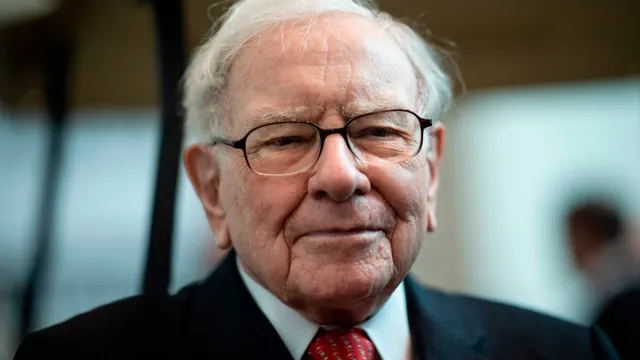
Warren Buffett steps down as Berkshire Hathaway CEO after six decades
Warren Buffett steps down as Berkshire Hathaway CEO after six decades
- Greg Abel is set to succeed Warren Buffett as CEO of Berkshire Hathaway after Buffett's retirement announcement.
- Abel has managed the company's non-insurance businesses since 2018 and aims to maintain the company's culture.
- Berkshire Hathaway faces challenges in growth and cash management as it enters a new leadership era.
Story
In the United States, Warren Buffett announced his retirement as CEO of Berkshire Hathaway, effective at the end of the current year. This momentous decision, made public during a five-hour question and answer session, took shareholders by surprise as Buffett chose not to entertain questions regarding his retirement. His announcement followed decades of steering the company from a struggling textile mill to a diversified conglomerate with substantial market influence, renowned for acquiring various businesses across multiple sectors including insurance, manufacturing, and retail. Buffett's chosen successor, Greg Abel, has been prepared for this transition as he has managed all of Berkshire's non-insurance businesses since 2018. While Buffett's influence on the company's culture remains significant, Abel's leadership approach is expected to bring changes as he adopts a management style that balances autonomy for acquired companies with more oversight, reflecting a need for a more traditional approach as the company has grown. Abel is already taking steps to relieve some of his responsibilities by appointing Adam Johnson, CEO of NetJets, to oversee all of Berkshire's consumer, service, and retail businesses. Despite Berkshire Hathaway's past success in generating higher returns than the S&P 500, the company faces challenges in maintaining its growth trajectory due to the sheer size it has reached. Recent acquisitions, including a $9.7 billion purchase of OxyChem, have been scrutinized for their potential impact on overall profitability. Moreover, the management must now address investor concerns over Berkshire's significant cash reserves, which amount to $382 billion. There may be increased pressure from shareholders to consider paying dividends or implementing stock buybacks if productive uses for the cash cannot be identified. As Buffett's departure approaches, speculation abounds regarding further changes in company leadership, particularly in light of the departure of executive Todd Combs. However, some long-term shareholders express comfort with Abel's succession and continuity in leadership style, believing that the company's long-term culture and values will remain intact. Overall, this transition marks a pivotal moment for Berkshire Hathaway, with investors and stakeholders closely watching how Abel's leadership will influence the company's strategic direction and operational practices.
Context
Berkshire Hathaway, a conglomerate led by the legendary investor Warren Buffett, has a rich history of acquisitions that have significantly shaped its trajectory and diversified its portfolio. Founded in the 1830s as a textile manufacturing company, it transitioned into an investment holding company in the mid-20th century. One of the defining moments for Berkshire Hathaway came in 1965 when Buffett took control of the company. He began strategically acquiring companies that aligned with his long-term vision, focusing on their management quality, sustainable competitive advantages, and fair pricing. These early acquisitions laid the groundwork for what would become one of the largest conglomerates in the world, covering various industries from insurance to utility companies and consumer goods. Throughout the decades, Berkshire Hathaway has been known for its disciplined acquisition strategy. One of its most notable purchases was the acquisition of Geico in 1996, which reinforced its position in the insurance market and provided significant returns over the years. The purchase of the Washington Post Company in 1973 exemplified Buffett's emphasis on acquiring strong brands with loyal customer bases; this investment yielded massive returns and showcased his ability to identify undervalued asset opportunities. Each acquisition was not just a financial decision but also a reflection of Buffett's philosophy regarding long-term growth and management excellence. Berkshire Hathaway's acquisition strategy took a major step forward in 2001 with the purchase of the H. J. Heinz Company, demonstrating its commitment to the food and beverage sector. This was further evidenced by the subsequent purchase of Kraft Foods in 2015, signaling Berkshire's intent to expand its footprint in consumer staples. Warren Buffett's investment decisions are informed by a combination of research, personal insights, and a keen understanding of market dynamics, making these acquisitions critically valuable for the growth trajectory of Berkshire Hathaway. The shift in investment focus to high-quality companies with strong cash flows has resulted in consistent profitability and resilience against market downturns. As of 2025, Berkshire Hathaway continues to thrive as a multifaceted corporation, with a diverse range of holdings including well-known companies such as Dairy Queen, Fruit of the Loom, and Duracell. The company has proven adept in navigating economic challenges, and its strategic acquisitions reflect its commitment to remain a leader in various sectors. Berkshire Hathaway's unique approach to acquisition—prioritizing long-term investment over short-term gains—coupled with its strong corporate culture has set a benchmark in the investment world. This history of acquisitions not only illustrates Buffett’s investing acumen but also serves as a testament to the sustainable growth model championed by the company.


