

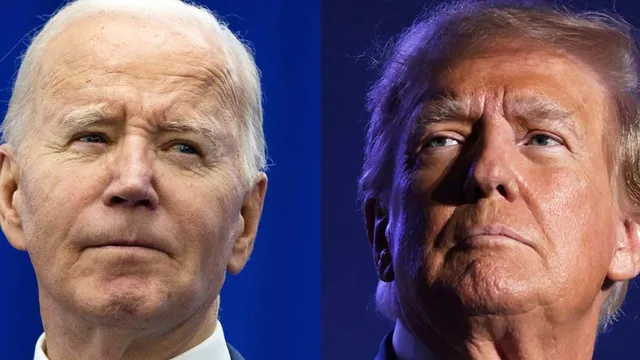
Trump terminates Biden's executive orders signed via autopen
Trump terminates Biden's executive orders signed via autopen
- Donald Trump claimed that about 92% of Joe Biden's executive orders were signed using an autopen, calling them invalid.
- Legal analysts argue that autopen signatures do not invalidate executive orders, asserting the validity of Biden's actions.
- The controversy surrounding autopen use may lead to more stringent documentation requirements for future administrations.
Story
Following Donald Trump's announcement on December 2, 2025, he declared that he was terminating all executive orders signed by Joe Biden through the autopen, claiming this method may have rendered the documents invalid. The autopen is a device that replicates signatures, often used by presidents for convenience, particularly when they are unable to sign documents in person. Trump asserted that approximately 92 percent of Biden's executive actions were signed using this device, raising questions regarding their legitimacy and the adherence to proper protocols. The announcement was made on Trump’s social media platform, Truth Social. Legal analysts, however, contested Trump's claims, asserting that autopen signatures are valid and that the method of signing does not affect the legitimacy of executive orders. Barbara McQuade, a former U.S. attorney, emphasized that any sitting president has the authority to revoke a predecessor's executive orders, irrespective of how they were signed. The debate surrounding the usage of the autopen intensified, as Republicans accused Biden's administration of potentially misleading the public about his decision-making capabilities, suggesting that aides could have circumvented Biden's direct involvement in significant executive actions. The controversy also resurfaced concerns that Biden's aides may have used the autopen to execute executive orders and potentially pardons without the president's direct approval. Representative James Comer, the chairman of the House Oversight Committee, characterized the situation as a significant political scandal, calling for investigations regarding the legitimacy of actions taken by Biden's inner circle during his presidency. Critics pointed to the necessity for stricter documentation processes to prevent future misuse of such devices. Historically, the autopen has been utilized by various presidencies since Thomas Jefferson's time, including Barack Obama and Trump himself. During his presidency, Trump had previously invoked the use of the autopen, illustrating its commonality among various administrations, despite the ongoing discourse regarding Biden's specific use of the device towards the end of his term. As the political landscape continues to evolve, the implications of Trump’s proclamation yield unanswered questions regarding the future of executive orders and the boundaries of using technology in governmental processes.
Context
The legality of autopen signatures in executive orders has been a subject of considerable debate in the context of U.S. law and practices. An autopen is a device that reproduces an individual's signature by using a mechanical process, and it has been used by various government officials, including presidents, to sign documents when they are unable to do so personally. The issue of whether such signatures constitute a valid means of executing executive orders arises from the need to adhere to legal standards while also ensuring the efficacy of government operations. An executive order, which is a directive issued by the president to manage the operations of the federal government, traditionally requires an actual signature to demonstrate the president's personal approval and authority over the content of the order. The historical precedent concerning autopen signatures isn't uniform, as the use of technology in government has evolved. Courts have indicated that the key concern is whether the signature adequately conveys the president's intent and authority. In past instances, the use of autopen signatures has been viewed by some as a legitimate means, given the necessity for prompt governmental actions when the president is otherwise occupied or unable to sign documents due to travel or other commitments. Nevertheless, it is pivotal that these signatures are used judiciously and within a framework that recognizes the significance of the presidential signature as a marker of official decisions and legislative authority. Critics argue that autopen signatures may dilute the presidential authority over executive orders and undermine the notion of direct accountability and personal engagement in governance. The possibility of using autopen technology to circumvent the traditional practices raises questions about transparency and democratic processes. Conversely, advocates for the use of autopen signatures highlight the practicality and efficiency that such technology brings, suggesting that it allows for a more streamlined approach to governance in an era where the demands on time and attention are higher than ever. Ultimately, while the use of autopens in signing executive orders is generally accepted in many contexts, it should not replace the necessity for direct presidential involvement in significant policy declarations. As technology advances and governmental processes adapt, the ongoing discourse surrounding the legality and appropriateness of autopen signatures will likely continue. The fundamental balance between efficiency and accountability remains at the core of discussions on this matter, making it essential for lawmakers and legal scholars to examine and clarify the parameters around the use of autopens in official documents.


