

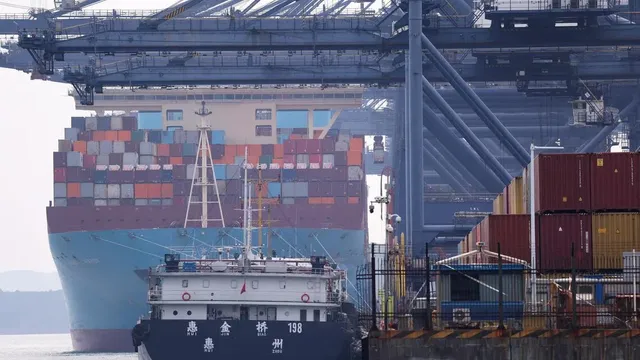
China's exports soar despite US tariffs
China's exports soar despite US tariffs
- China's export growth in January and February 2026 reached over 20%, significantly exceeding economist predictions.
- Trade with European countries and ASEAN nations saw notable increases, while exports to the U.S. decreased by more than 10% due to tariffs.
- The current economic situation indicates that China's economy heavily relies on exports amidst domestic challenges.
Story
China has experienced a significant surge in its exports during the first two months of 2026, with official figures indicating an increase of over 20%. This growth, which nearly tripled economists' expectations, positions the country to potentially exceed its previous record-breaking trade surplus achieved in 2025. The recent data coincides with heightened trade tensions between China and the United States, particularly amid U.S. President Donald Trump's administration imposing tariffs and various measures aimed at tackling trade imbalances. As China grapples with several domestic economic challenges, including weak consumer spending, a declining population, and a property market crisis, the country's reliance on exports remains a critical aspect of its overall economic landscape. Notably, strong demand for electronics and a rise in shipments of agricultural and manufactured goods have played a pivotal role in bolstering exports. Trade with European nations saw an impressive growth of 27.8%, while exports to ASEAN countries grew by nearly 30%. Conversely, despite the overall export increase, trade figures indicate that exports to the United States fell by over 10% as a direct consequence of tariffs imposed by the Trump administration. This decline illustrates the challenges China faces in maintaining trade relations with the U.S., a key trading partner. The annual economic growth target set by Chinese authorities was also lowered to 4.5%-5%, down from the previous goal of 5%, further reflecting concerns about the domestic economy's reliance on exports to sustain growth. Amid these challenges, the upcoming visit of President Trump to China for a meeting with President Xi Jinping in April 2026 stands as a key diplomatic moment that could potentially address some of the lingering trade tensions. The implications of these trade dynamics are being felt across Asia, particularly in light of the economic impacts resulting from conflicts such as the ongoing US-Israeli war with Iran, which has disrupted the global energy market. China, as a vital player in international trade, must navigate these complexities to sustain its economic momentum and address domestic vulnerabilities.
Context
The ongoing US-Israeli war has significant repercussions on global trade, manifesting through disrupted supply chains, shifts in commodity prices, and changes in geopolitical alliances. As a key player in global commerce, the United States represents a critical link in international trade networks; the war has prompted a reevaluation of trade relationships as nations respond to the evolving conflict. As military actions unfold, shipping routes have been threatened, particularly in the Eastern Mediterranean, leading to increased shipping costs and delays. These disruptions not only affect the flow of goods between the US and Israel but also have cascading effects on trade with Europe and Asia, as many international companies rely on stable access to these markets for their operations. Furthermore, the war has prompted fluctuations in the global prices of essential commodities, such as oil and gas, due to uncertainties surrounding supply. The US has historically been a major player in the energy sector, and any conflict involving its allies can lead to fears of supply shortages. Markets have reacted by increasing prices, which can have a butterfly effect on inflation rates across different economies. Higher energy costs translate into increased transportation and production expenses, which ultimately impact consumers and businesses worldwide. This reality highlights the interconnectedness of modern economies, where uncertainty in one region can ripple across the globe, affecting even those nations far removed from the direct conflict. In addition to economic aspects, the war may also reshape geopolitical alliances and trade agreements. Countries may choose to support one side or another based on their strategic interests, leading to a reconfiguration of trade partnerships. For instance, nations in the Middle East could shift their alliances based on how the US responds to the conflict. This realignment could lead to new trade deals or the dissolution of existing ones, affecting global trade flows significantly. The involvement of other regional powers, such as Russia and China, in supporting either side of the conflict underscores the potential for broader geopolitical ramifications that extend beyond immediate trade disruptions. In conclusion, the US-Israeli war represents a complex challenge for global trade that involves not only logistical considerations but also deep-rooted economic and political dynamics. As nations contend with the implications of the conflict, the priority will be to secure economic stability while navigating the shifting landscape of international relations. Stakeholders, including businesses, governments, and international organizations, must remain vigilant in assessing the evolving situation to mitigate risks and adapt to changing trade environments.


