

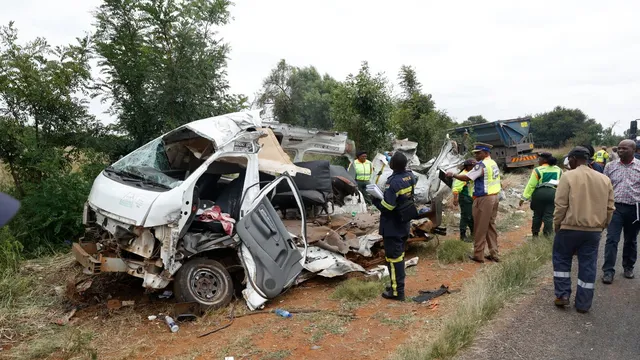
Thirteen schoolchildren killed in tragic minibus crash in South Africa
Thirteen schoolchildren killed in tragic minibus crash in South Africa
- In Vanderbijlpark, South Africa, a minibus crash resulted in the deaths of thirteen schoolchildren.
- Five additional pupils received critical injuries and were rushed to the hospital for medical attention.
- This tragic event highlights the dire need for improved road safety measures in the country.
Story
In South Africa, a devastating accident occurred on Monday morning when a minibus collided with a truck in Vanderbijlpark, a city situated south of Johannesburg. This catastrophic event resulted in the loss of thirteen young lives, with eleven pupils dying at the scene and two subsequently succumbing to their injuries after being transported to medical facilities. The collision is indicative of the ongoing challenges faced by the nation in maintaining road safety, particularly for schoolchildren, who rely on reliable transportation for their daily commutes. The minibus was reportedly attempting to overtake two vehicles when it crashed into the truck, leading to the tragic outcome. Five additional students sustained critical injuries and were rushed to a hospital for urgent care. The incident has sparked widespread outrage and calls for improved safety measures on South Africa’s roads, given the country's notorious reputation for poor road safety. The local police have indicated that a case of culpable homicide will be pursued against the minibus driver, who is currently in hospital, while the condition of the truck driver remains uncertain. South Africa’s road safety statistics are alarming, with over 11,418 road deaths recorded last year, a reduction from 2024 but still a staggering average of 31 deaths per day. The government has acknowledged the pressing need for reform in traffic laws, particularly regarding drunk driving and reckless behavior behind the wheel. Transport Minister Barbara Creecy recently advocated for a zero-tolerance policy regarding the legal alcohol limit for drivers, as a means to potentially reduce these avoidable accidents. The President of South Africa, Cyril Ramaphosa, has described the accident as “distressing,” noting that children are invaluable assets to the nation. He emphasized the responsibility of all stakeholders, including the transport providers, to ensure the safety and well-being of students during their journeys. This tragic incident highlights not only the immediate consequences of road traffic accidents but also the systemic issues that need to be addressed to prevent similar future tragedies. Those affected, particularly the families of the victims, now face irreparable loss and grief, reiterating the critical need for comprehensive traffic reforms.
Context
Road accidents are a major concern in South Africa, with a significant impact on both public safety and the economy. Understanding the causes of these accidents is crucial for developing effective prevention strategies. The factors contributing to road accidents are multifaceted, involving a combination of human behavior, environmental conditions, and vehicle safety standards. In South Africa, a prominent factor is reckless driving, which encompasses behaviors such as speeding, aggressive driving, and driving under the influence of alcohol or drugs. According to a report by the Road Traffic Management Corporation, speeding alone accounts for a significant proportion of fatalities on the roads. Furthermore, many drivers exhibit a lack of adherence to traffic rules and regulations, further exacerbating the risk of accidents. Environmental factors also play a critical role in the incidence of road accidents in South Africa. Poorly maintained roads, inadequate signage, and adverse weather conditions can significantly increase the risk of crashes. In rural areas, unpaved roads are common, contributing to higher accident rates due to limited visibility and road hazards. Additionally, during rainy seasons, the probability of accidents increases as slippery roads create difficult driving conditions. It is essential that road infrastructure is improved and maintained to enhance safety for all road users. Local and national governments must prioritize investment in road maintenance and improvements to address these issues effectively. Vehicle safety standards are another important aspect to consider in the discussion of road accidents. Many vehicles on South African roads do not meet adequate safety specifications, which can lead to more severe outcomes in the event of an accident. The lack of regular vehicle inspections and the prevalence of older, less safe vehicles contribute to the risk. A concerted effort must be made towards ensuring that vehicles on the road are safe and fit for use. This can involve implementing stricter regulations regarding vehicle maintenance and inspection standards. Additionally, public education campaigns can promote the importance of using well-maintained vehicles, especially among low-income communities where older vehicles may be more prevalent. Efforts to reduce road accidents in South Africa must take a comprehensive approach that addresses these diverse factors. Educational programs aimed at changing driver behavior, improved enforcement of traffic laws, enhanced road infrastructure, and the promotion of vehicle safety are all crucial components of a successful road safety strategy. Various stakeholders, including government agencies, non-profit organizations, and the private sector, must collaborate to implement initiatives that aim to reduce the number of road traffic incidents. Only through ongoing commitment and action can South Africa hope to significantly decrease the number of roads accidents and improve overall road safety.


