
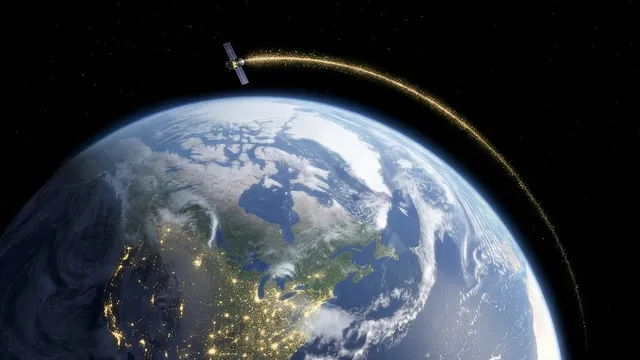
Nvidia plans to launch AI data centres into space
- Nvidia unveiled its Space-1 Vera Rubin Module to facilitate AI data analysis in space.
- The initiative aims to address technical challenges related to cooling systems and radiation exposure.
- This development highlights the intersection of AI and space exploration, representing a new frontier in technology.
Story
In an ambitious move, the California-based company Nvidia has outlined its plans for deploying artificial intelligence data centres in space. This initiative, revealed by CEO Jensen Huang, emphasizes the importance of having intelligence wherever data is generated, particularly as satellite constellations support exploration into deeper space. The new Space-1 Vera Rubin Module will facilitate AI analysis for these satellites and represents a significant development in space-based AI infrastructure. Multiple tech giants, including SpaceX and Microsoft, are also investigating opportunities related to orbital data centres, recognizing the advantages such as higher efficiency from solar energy in space and lower latency through laser communication connections. During the announcement at Nvidia's annual GTC conference in San Jose, Huang acknowledged the critical technical challenges that lie ahead. Key obstacles include developing effective cooling systems for hardware in the space environment and protecting servers from radiation exposure in low Earth orbit. Nvidia has collaborated with several partners, including Starcloud, to address these challenges and create specifically designed orbital data centres. Philip Johnston, CEO of Starcloud, emphasized the transformative potential of hyperscale AI computing in orbit, which enables data processing at its source and reduces reliance on earthly data downlinking. This step signifies a major advancement towards fully integrating space with the global cloud computing landscape. The push for orbital data centres is part of a broader trend in the tech industry, signifying a new frontier in the ongoing space race. These stations stand to benefit from the unique conditions of space, including significantly higher solar energy efficiency and faster data transfer capabilities compared to traditional ground-based infrastructures. As tech company efforts converge on this goal, the implications extend beyond just improved communications; they could redefine how intelligence is applied in remote and uncharted territories. The technological innovations devised for this purpose may lead to new applications in various sectors, from intelligence operations to deeper exploration of the universe. Ultimately, Nvidia’s announcement shines a light on the future of AI and the essential role it will play as humanity ventures further into space. In the coming years, as these initiatives evolve, they may yield breakthroughs in autonomous systems and decision-making capabilities for spacecraft. With data processing and AI analysis happening directly in orbit, companies and researchers could gain immediate insights and control, enhancing their ability to conduct missions and discover new frontiers in space exploration.
