

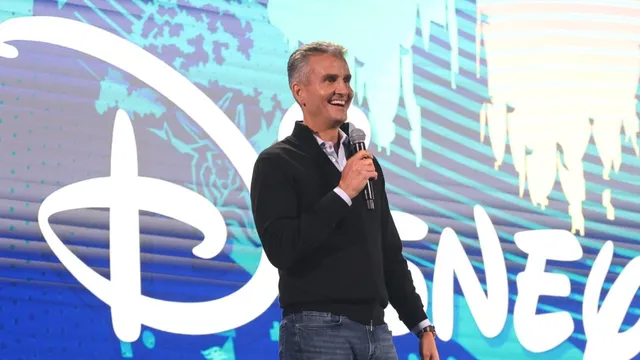
Disney's CEO faces existential crisis amid rise of AI
Disney's CEO faces existential crisis amid rise of AI
- Josh D'Amaro, Disney's ninth CEO, is confronting issues caused by the rise of artificial intelligence, mirroring Walt Disney's challenges with television.
- Bob Chapek was ousted for failing to engage with fans and treating Disney merely as a revenue machine.
- D'Amaro's strategy emphasizes physical experiences, reflecting historical business lessons that could help navigate the company's current crisis.
Story
In the United States, Disney has been navigating significant challenges due to the emergence of artificial intelligence, much like its historical struggles with television in the 1950s. The company's ninth CEO, Josh D'Amaro, took over amid concerns that the shift towards digital entertainment may threaten traditional business models. In the past, Walt Disney himself faced similar challenges with the advent of television, which he recognized was not a passing trend but a formidable platform that could be used to promote and enhance the Disney brand. Unlike previous leadership under Bob Chapek, who was ousted after a short tenure due to his overly revenue-focused strategy, D'Amaro's approach is rooted in fostering loyalty through authentic, physical experiences offered by Disney parks. Chapek's strategy neglectfully treated the entire company as a machine for revenue optimization, which led to a lack of connection with both fans and employees. D'Amaro, however, values the importance of on-the-ground presence and direct engagement with stakeholders, which he believes is critical to Disney's resurgence. Historically, Walt Disney understood that Disneyland was essential for the survival of Walt Disney Studios during the rise of television. This insight is reflected in the current struggles of Disney, where its studio operations face underperformance, a streaming division yet to achieve profitability, and criticisms surrounding creative content. As D'Amaro assumes leadership, he faces the same lessons from past eras: investing in irreplaceable experiences is key when content becomes commoditized in the digital age. This historical context provides a pivotal template for addressing the ongoing existential crisis fueled by technological advancements. In summary, the ability to adapt to emerging technologies while staying committed to unique physical experiences represents a crucial challenge for Disney's leadership today. D'Amaro will need to keep this balance in mind as he aims to redefine Disney's core strategy in response to present-day threats posed by artificial intelligence.
Context
The impact of artificial intelligence (AI) on the entertainment industry has been profound and transformative, presenting both opportunities and challenges. AI technologies are increasingly being integrated into various facets of entertainment, including film, music, gaming, and content creation. In the film industry, AI algorithms are being utilized for script analysis, casting decisions, and even in the editing process. By analyzing vast amounts of data on audience preferences and box office trends, AI can assist producers in making informed decisions that optimize project success. Additionally, advanced AI-driven tools are used for visual effects, allowing for more efficient and innovative productions. This technological evolution can lead to enhanced storytelling capabilities and better audience engagement, ultimately reshaping how films are produced and consumed. In the realm of music, AI has changed the landscape of composition and production. Numerous platforms now utilize AI to create original music tracks, analyze listener preferences, and optimize playlists. AI algorithms can study the structure of popular songs and learn to emulate successful musical compositions. This democratization of music creation has enabled aspiring artists to produce professional-quality music with minimal investment. Furthermore, AI-driven tools can analyze vast quantities of user data to personalize music recommendations, thereby enhancing the overall listener experience. However, this raises questions about artistic originality and the potential overshadowing of human musicians by algorithmically generated music. Gaming has also been significantly impacted by AI, with advancements enhancing gameplay experience and user interaction. AI is employed to create more realistic and adaptive non-player characters (NPCs) that respond dynamically to player actions, making games more immersive. Machine learning algorithms analyze player behavior to create personalized gaming experiences, tailoring difficulty and content to individual preferences. These developments not only improve player engagement but also provide developers with insights into game design and monetization strategies. Nevertheless, the growing sophistication of AI in gaming might lead to ethical dilemmas concerning data privacy and the balance between monetization and user experience. As AI continues to evolve, its implications for the entertainment industry will likely expand further. The increasing reliance on AI poses potential risks, including the loss of jobs traditionally held by creative professionals and ethical concerns surrounding automated content generation. The industry must navigate these complexities while balancing innovation with the preservation of human creativity. Stakeholders must engage in collaborative discussions to establish guidelines that protect artistic integrity while leveraging AI's capabilities to enhance the entertainment landscape. The ongoing developments in AI present a crucial juncture for the entertainment industry, potentially redefining its future in exciting yet uncertain ways.


