

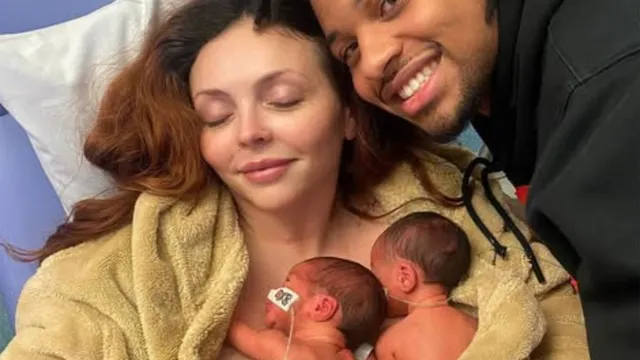
Jesy Nelson reveals heartbreaking diagnosis for her twin daughters
Jesy Nelson reveals heartbreaking diagnosis for her twin daughters
- Jesy Nelson's twin daughters were diagnosed with Spinal Muscular Atrophy (SMA) Type 1, a rare genetic condition.
- The twins have begun treatment, which includes being fitted with leg splints to support their mobility.
- Jesy Nelson is advocating for SMA screenings to be included in newborn tests to prevent late diagnoses.
Story
In the UK, Jesy Nelson shared the emotional news that her twin daughters, Ocean Jade and Story Monroe Nelson-Foster, have been diagnosed with Spinal Muscular Atrophy (SMA) Type 1. The diagnosis was revealed in January 2023, following a challenging series of medical appointments during which the severity of their condition was confirmed. Nelson highlighted the difficulties faced over the preceding three to four months, as the medical team recognized the twins' severe muscle disease requiring urgent intervention. SMA Type 1 is known to be a neuromuscular condition that severely affects motor function. After the diagnosis, Nelson expressed her deep concern regarding the prognosis for her daughters. She indicated that they may never walk or regain their neck strength, markedly illustrating the immediate health challenges the girls must confront daily. The singer also shared her experience with the health system, emphasizing the importance of securing treatment as a means of survival for her children. The profound emotional turmoil that accompanies such a diagnosis has been compounded by the ongoing medical requirements necessary to maintain their health. Since learning about the diagnosis, Jesy Nelson has actively campaigned for the early screening of SMA at birth, urging for its inclusion in newborn blood spot tests. In her public advocacy efforts, Nelson has criticized the lack of routine screening for this severe condition, stating in conversations that it is unfair that families continue to face the challenges posed by SMA without the chance for earlier diagnosis and intervention. Through social media and public appearances, she uses her platform to raise awareness and generate support around the necessity of these screenings, illustrating the intense struggles faced by families with sick children. Additionally, Jesy Nelson described the physical manifestations of SMA Type 1 that impact the twins' lives, such as difficulty in basic motor functions, respiratory issues, and feeding challenges. Highlighting the necessity of constant medical oversight, she mentioned that frequent hospital appointments have become a regular part of her family's life. The twins have now been fitted with leg splints to help support their joints. Despite the
Context
Spinal Muscular Atrophy (SMA) Type 1 is a rare genetic disorder characterized by the progressive degeneration of motor neurons in the spinal cord, leading to severe muscle weakness and atrophy. It is primarily caused by mutations in the SMN1 gene, which is crucial for the production of the survival motor neuron (SMN) protein. Patients with SMA Type 1 typically present in infancy with difficulties in movement, poor muscle tone, and failure to achieve developmental milestones such as sitting or crawling. This condition not only affects the motor function but can also complicate breathing and swallowing, making timely and effective treatment essential to improve quality of life and prolong survival in these patients. In recent years, there has been significant advancement in the treatment options available for SMA Type 1. The introduction of disease-modifying therapies, such as Nusinersen (Spinraza) and onasemnogene abeparvovec (Zolgensma), has transformed the management of this condition. Nusinersen is an antisense oligonucleotide that increases the production of the SMN protein by modifying splicing of the SMN2 gene. Clinical trials have demonstrated that treatment with Nusinersen leads to improvements in motor function in infants with SMA Type 1. The administration is via intrathecal injection, requiring ongoing monitoring and support. On the other hand, Zolgensma is a gene therapy that provides a copy of the functional SMN1 gene to patients, aiming for a one-time treatment that could potentially lead to long-term benefits. Both therapies have shown to significantly improve survival rates and motor function, though the criteria for their use may differ based on clinical presentations and age of onset. In addition to these gene-targeted therapies, supportive care plays a critical role in the management of SMA Type 1. Multidisciplinary approach involving physiotherapy, occupational therapy, nutritional support, and respiratory care is crucial to address the complex needs of these patients. Rehabilitation strategies focus on maintaining mobility for as long as possible and managing complications associated with muscle weakness. Recent advancements in assistive technology, such as powered mobility devices and communication aids, have also been pivotal in improving the autonomy and quality of life for children affected by SMA. Despite the progress made in treating SMA Type 1, challenges remain, particularly regarding access to these therapies and ongoing research into their long-term effects. It is crucial for healthcare providers to stay informed about the latest research and treatment protocols to tailor care appropriately for their patients. Ongoing studies are exploring the potential of newer therapies and combination strategies, aiming to find more effective and accessible solutions for those affected by this debilitating condition. As the landscape of SMA treatment continues to evolve, the hopes are high for improved outcomes and a better quality of life for individuals living with SMA Type 1.


