

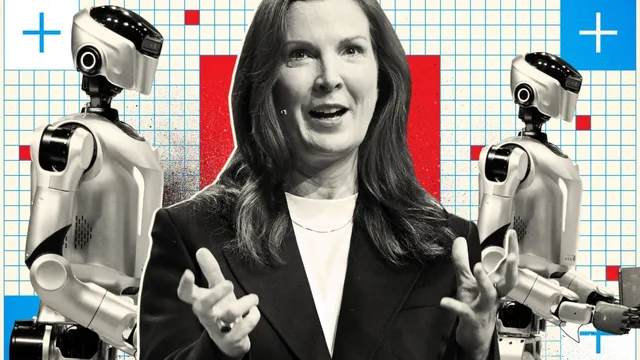
Kate Crawford warns about the dangerous rise of AI
Kate Crawford warns about the dangerous rise of AI
- Recent discussions at Mobile World Congress highlight the urgent need for AI regulations and accountability.
- Kate Crawford warns about 'accountability laundering' in tech deployments and its implications.
- The future of AI requires defining operational standards to ensure safety and utility.
Story
In recent discussions at the Mobile World Congress, experts have voiced concerns over the rapid advancements in artificial intelligence, emphasizing the need for clear regulations and accountability measures. Kate Crawford, an artificial intelligence research professor at the University of Southern California, highlighted that technological development is both immediate and rooted in historical contexts. She stressed that this is a crucial moment where the standards regarding AI are being shaped, which will impact various aspects of our lives, including power dynamics, warfare, and privacy. Crawford also addressed the phenomenon of 'accountability laundering,' where individuals and organizations evade responsibility for the outcomes of AI applications. This has led to a sense of uncertainty regarding accountability in the deployment of such technologies. In the United Kingdom, the civil service phenomenon known as 'sloping shoulders syndrome' reflects this trend of avoidance, revealing a significant gap in accountability structures. As conversations evolve around the implications of AI agents in society, questions arise regarding who will assume decision-making roles and how human oversight can be integrated into these systems. Crawford pointed out the troubling history of intelligence as a concept, emphasizing the necessity of establishing new criteria to assess AI agents and their functions. With the rapid evolution of these technologies, there is an impending urgency to define the parameters within which they operate, to ensure they are beneficial rather than harmful. The ongoing discussions among regulators and tech professionals signal a turning point where these important conversations must become actionable and substantive, shaping a future where technology serves humanity responsibly.
Context
The rapid advancement of artificial intelligence (AI) technology has significantly altered the landscape of privacy and power dynamics in contemporary society. AI systems, fueled by vast amounts of data, have the potential to enhance decision-making processes in various sectors, including healthcare, finance, and law enforcement. However, this increasing reliance on AI raises critical questions about the implications for individual privacy. As organizations collect, analyze, and utilize personal data to train AI systems, the risk of surveillance and unauthorized data usage grows. Consequently, individuals may find their privacy eroded and their personal information exploited without adequate consent or transparency. Moreover, the integration of AI into governance structures and institutional frameworks has the potential to concentrate power in the hands of those who control these technologies. With corporations and governments leveraging AI for data analysis and predictive policing, there is a danger that marginalized communities may face disproportionate surveillance and discrimination. The power dynamics shift towards those who have the means to deploy advanced AI systems, creating an unequal playing field where the minority hold significant authority over the majority. This, in turn, exacerbates existing inequalities, leading to societal tensions and a demand for accountability and regulation. In addressing these challenges, regulators and policymakers must strike a balance between harnessing the benefits of AI and safeguarding individual privacy rights. This involves establishing robust frameworks that ensure transparency, equitable access to AI technology, and the protection of personal data. Emerging legislation, such as the General Data Protection Regulation (GDPR) in Europe, provides a foundation for protecting privacy rights, but further efforts are needed to adapt these regulations to the fast-evolving AI landscape. Collaboration among stakeholders, including technology developers, ethicists, and civil society organizations, is essential to create comprehensive strategies that promote ethical AI development while upholding privacy standards. Ultimately, the impact of AI on privacy and power dynamics is a complex interplay of technological innovation and social responsibility. The trajectory of AI should prioritize human rights and ethical considerations, ensuring that advancements do not come at the expense of personal freedoms. As we navigate this increasingly AI-driven world, it is vital to engage in ongoing discussions about privacy, equity, and the inherent power imbalances that emerge from the implementation of these transformative technologies. By doing so, society can work towards a future where AI serves as a tool for empowerment rather than oppression.


