
politics
tragic
impactful

Khaleda Zia passes away at 80 after long battle with illness

Dec 30, 2025, 2:51 AM130
(Update: Jan 2, 2026, 10:37 PM)
Bangladeshi prime minister from 1991 to 1996 and 2001 to 2006
country in South Asia

Khaleda Zia passes away at 80 after long battle with illness

  • Khaleda Zia passed away at the age of 80 after a prolonged illness, as per her political party's announcement.
  • She was Bangladesh's first female prime minister, serving from 1991 to 1996 and 2001 to 2006 amidst a fierce political rivalry.
  • Her death marks the end of a significant political chapter in Bangladesh, especially in the context of her party's future and upcoming elections.
Share your opinion
13

Story

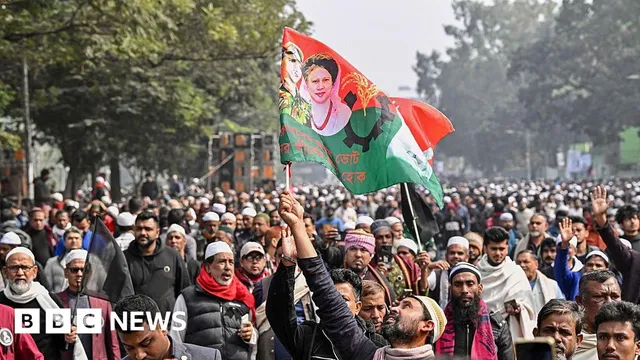
Khaleda Zia, the first female prime minister of Bangladesh, passed away at the age of 80 after enduring a prolonged illness, as announced by her political party, the Bangladesh Nationalist Party (BNP). Zia was born in West Bengal in 1945 and became a key figure in Bangladeshi politics, leading her party to victory in the country’s first democratic elections in 1991. During her time in and out of office, she faced significant challenges, including allegations of corruption, and maintained a fierce rivalry with Awami League leader Sheikh Hasina. Her political journey began after the assassination of her husband, former president Ziaur Rahman, in a military coup in 1981. Zia subsequently took charge of the BNP and led mass movements against military rule. Throughout her career, she served two nonconsecutive terms as prime minister, first from 1991 to 1996 and again from 2001 to 2006, before facing various legal troubles. She was jailed for five years in 2018 over corruption charges that she claimed were politically motivated. In her later years, she suffered from advanced health issues, including cirrhosis of the liver. Although she was released from prison due to her deteriorating condition in 2020, her family made multiple requests for her to receive medical treatment abroad, which were denied under the previous government. After Sheikh Hasina was ousted from power in August 2024, Zia was finally permitted to travel for medical assistance in London, where she spent four months before returning home. Zia's death has left a significant mark on Bangladeshi politics. She was a central figure who not only became the country's first female prime minister but also navigated a tumultuous political landscape defined by her rivalry with Hasina. Despite her controversial legacy and challenges during her administrations, her passing marks the end of an era in Bangladesh's political history. Her party, the BNP, is now looking towards its future under her son, Tarique Rahman, as they prepare for upcoming elections.

Context

Khaleda Zia has been a pivotal figure in Bangladesh's political landscape since the country's independence in 1971. As the first女性 Prime Minister, her tenure in office from 1991 to 1996 and again from 2001 to 2006 marked significant milestones in a nation largely dominated by male political figures. Her leadership and the formation of the Bangladesh Nationalist Party (BNP) provided an alternative to the prevailing political parties, particularly the Awami League, which has been the major political rival in Bangladesh. Zia's government focused on national sovereignty and the preservation of Bangladeshi culture and identity, aspects which resonated with a large segment of the population. However, her political journey has not been devoid of controversy, facing allegations of corruption and authoritarianism during her terms, which have led to major shifts in public opinion towards her leadership style and policies. The impact of Khaleda Zia on Bangladesh's politics extends beyond her time in office. She has played a critical role in shaping the political discourse and party dynamics within the country. The electoral rivalry between the BNP and the Awami League has intensified under her influence, resulting in a polarized political environment that often resorts to strikes and protests. Zia's emphasis on nationalism and resentment towards India has further fueled a sense of identity politics in the nation. Furthermore, her imprisonment in 2018 on corruption charges has created waves, leading to petitions for her release as well as public outcry and divisive views about democratic processes in Bangladesh. Her de facto role as a leader, despite being out of power, illustrates her enduring influence over public opinion and party politics. As a researcher, it is also essential to analyze the implications of Zia's impact on women’s participation in Bangladeshi politics. Her ascent to power has encouraged greater engagement among women in political activities, with an affirmation that women can lead at the highest levels of governance. While her own leadership has had its challenges, it has nonetheless opened the door for more women to aspire to political office. Yet, women's representation remains low, and Zia's tenure raises questions about the responsibilities and expectations placed upon female leaders in a traditionally patriarchal society. The evolution of her political journey can serve as a case study for understanding the complexities surrounding female leadership in South Asia. In conclusion, Khaleda Zia's legacy within Bangladeshi politics is multifaceted and continues to influence the political scene even today. From her contributions as a leader to the ongoing struggles surrounding her imprisonment, the effects of her political presence are evident in the current political milieu. The ramifications of her actions and the responses to her leadership reflect broader themes of governance, identity, gender, and civil liberties in Bangladesh. Examining Zia's impact provides valuable insights into the nature of political power and the evolution of democracy in a region marked by intense political rivalry and social change.

2026 All rights reserved
