

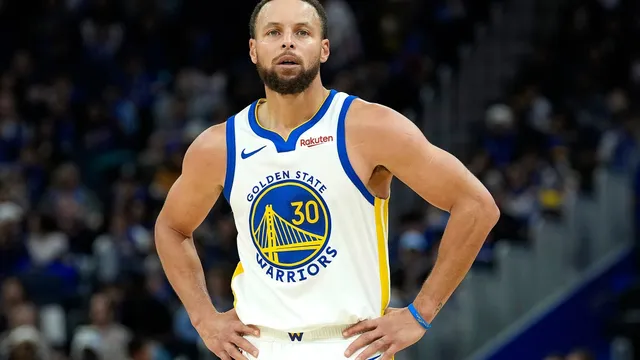
Warriors lose star Jimmy Butler for the season after ACL tear
Warriors lose star Jimmy Butler for the season after ACL tear
- Jimmy Butler suffered a right knee injury during a game against Miami Heat, requiring assistance to leave the court.
- An MRI confirmed that Butler tore his ACL, ending his season.
- This injury significantly impacts the Warriors' playoff hopes and team dynamics.
Story
On January 19, 2026, in San Francisco, the Golden State Warriors faced off against the Miami Heat, achieving a 135-112 victory. However, the match took a devastating turn when star player Jimmy Butler went down with a serious right knee injury with 7:41 left in the third quarter. Following a collision with the Heat's Davion Mitchell, Butler's knee buckled upon landing, requiring assistance to leave the court as he could not put weight on his leg. This injury arose not only during a critical phase of the game but also a significant point in the Warriors' season as they sought to improve their playoff standings. Amidst concern for his well-being, the Warriors looked to Butler for leadership and skill, as he had established himself as a key player on the team, averaging 20.1 points, 5.6 rebounds, and 4.9 assists prior to his injury. With the anticipation of an MRI to assess the damage, the atmosphere shifted from celebration of their victory to anxiety about Butler's condition. Later reports confirmed that Butler had torn his ACL, a serious injury that would sideline him for the remainder of the season. Butler's absence raises significant implications for the Warriors, who had only just found momentum with 12 wins in their last 16 games. Coach Steve Kerr expressed deep concern for Butler's health as they awaited the full extent of the injury. The Warriors' recent surge in performance had been attributed largely to Butler's impact, and his sidelining casts doubt on the team's playoff aspirations. This further complicates the overall dynamics of the team's roster as they attempt to adapt to losing such a critical player. The Warriors are currently in eighth place in the Western Conference, a position precariously close to a potential play-in game for the playoffs. As they face opponents in the upcoming weeks, including the Toronto Raptors and others, the loss of Butler complicates their strategic approach, especially considering his unique ability to secure wins in tight situations. The team now must rely on others, such as Jonathan Kuminga, to step up in Butler's absence; he may play a more prominent role as the Warriors navigate the challenges ahead. With Butler’s ACL recovery anticipated to take 11 to 13 months, questions arise about how his team is to restructure its plans for the immediate and long-term future, particularly regarding his contract status. With the pressure to remain competitive and possibly trade discussions on the horizon, the organization stands at a crucial decision point for both Butler's rehabilitation and the overall direction of the franchise.
Context
Injuries are an inevitable aspect of any competitive sport, and the National Basketball Association (NBA) is no exception. The impact of injuries on NBA teams can significantly alter the team dynamics, performance, and overall chances of success within a season. Players injuries can range from minor bruises and sprains to severe problems requiring lengthy recovery periods, directly influencing game outcomes, team strategies, and player morale. As rosters are typically comprised of only a limited number of active players, the absence of key athletes due to injuries can create substantial gaps in team capabilities, often forcing coaches to modify lineups and strategies in order to fill these voids. This can lead to a domino effect where players are placed in unfamiliar roles, disrupting game chemistry and contributing to inconsistencies in performance. Statistically, the correlation between injuries and team performance is well-established in the NBA. Teams that experience a higher number of injuries generally exhibit lower win percentages compared to those that remain relatively healthy. For example, the impact of losing an All-Star player can be particularly detrimental, both in terms of scoring and overall influence on the court. This phenomenon is not merely anecdotal; data analysis often shows that teams with high injury rates are more susceptible to prolonged losing streaks, limiting their playoff contention possibilities. Coaches and management are often compelled to make pivotal roster decisions and personnel changes to combat the adverse effects of injuries, including trades or the promotion of players from the G League. The long-term implications of frequent injuries extend beyond immediate game performance to the overall franchise health and player careers. When key players miss significant time due to injuries, franchises can endure considerable financial implications concerning attendance, merchandise sales, and overall brand strength. Additionally, chronic injuries can lead to longer-term health concerns for the players, potentially shortening their careers and altering the trajectory of their physical capabilities. The psychological impact on athletes is substantial as well, as the pressure to return to peak performance quickly can lead to further injury if not managed appropriately. Coaches, medical staff, and sports science professionals are increasingly focusing on injury prevention and management strategies to mitigate these risks, employing advanced training techniques and recovery protocols tailored to individual player needs. In conclusion, the impact of injuries on NBA teams extends beyond mere statistics and win-loss records. The challenge of coping with injuries requires a multifaceted approach that considers not only the physical but also psychological aspects for both players and teams. As the league continues to evolve with advances in sports medicine and player analytics, understanding and managing the relationship between injuries and team performance will be critical for achieving success. Consequently, organizations that prioritize injury prevention and recovery, coupled with in-depth performance analysis, are likely to position themselves more favorably in a highly competitive environment.


