

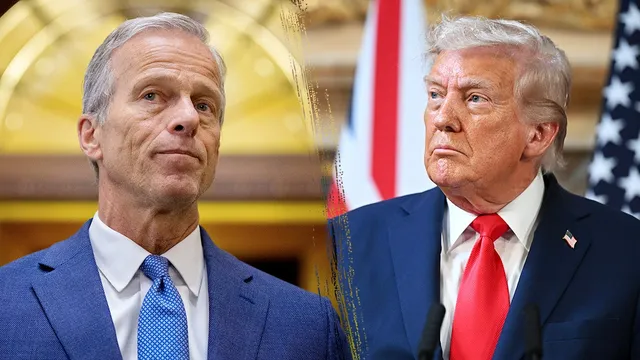
House Republicans push for proof of citizenship to vote
House Republicans push for proof of citizenship to vote
- House Republicans are advancing legislation requiring proof of citizenship and photo ID to vote.
- The bill faces significant opposition from Senate Democrats and is challenged by filibuster rules.
- The outcome of this legislation could have major implications for voting rights in the United States.
Story
In recent weeks, House Republicans in the United States have been actively pursuing a new piece of legislation known as the SAVE America Act, which mandates proof of U.S. citizenship and a photo ID for voters participating in federal elections. This effort is part of a broader Republican initiative, significantly influenced by former President Donald Trump, who has vocally criticized the integrity of American elections, claiming they are "rigged" and calling for stricter voting regulations. The introduction of this legislation has sparked considerable debate and opposition, particularly among Democrats, who accuse Republicans of engaging in voter suppression. As Trump continues to urge Congress members to adopt stricter voting measures, some Senate Republicans are considering strategies to bypass the current 60-vote threshold that prevents legislation from advancing without bipartisan support. One option being discussed is the potential implementation of a 'standing filibuster,' which would require lawmakers opposed to the bill to remain active and present on the Senate floor, thereby consuming significant legislative time. This idea, however, also faces skepticism from various Republican senators who feel that it may disrupt other legislative priorities, such as funding bills and national sanctions. The opposition from Democratic legislators is largely framed around concerns of exclusion and voter suppression, as they argue that such identification requirements disproportionately affect minority communities and those without easy access to identification. They have labeled these moves as 'Jim Crow 2.0', linking them to historical efforts to disenfranchise voters based on race and socioeconomic status. With Senate Majority Leader Chuck Schumer speaking against these initiatives, the debate has intensified, focusing on the fundamental principles of access to voting versus the need for election security. As the situation progresses, the Republican majority in the House seems determined to move forward with this legislation, driven by Trump's insistence on election integrity. The current political climate indicates an ongoing struggle between preserving existing voter accessibility while attempting to inject new requirements aimed at ensuring election confidence. This struggle reflects the larger national conversation surrounding voting rights in the United States, making it clear that the legislative outcomes in the coming weeks may have lasting impacts on the democratic process and citizen participation in future elections.
Context
Voter suppression in the United States has deep historical roots that date back to the post-Civil War era, when various laws and practices were implemented to disenfranchise African American voters and, in many cases, poor white voters as well. Following the passage of the Fifteenth Amendment in 1870, which granted African American men the right to vote, Southern states enacted a series of discriminatory measures aimed at circumventing this constitutional right. These included literacy tests, poll taxes, and understanding clauses, which were ostensibly designed to ensure informed voting but were, in practice, used to target Black voters and suppress their participation in the electoral process. These barriers were accompanied by intimidation and violence, perpetuating an environment where many African Americans were too fearful to exercise their right to vote. The systematic disenfranchisement of Black voters continued throughout the early 20th century, particularly during the Jim Crow era, when segregation laws further marginalized African Americans in all aspects of public life. The Voting Rights Act of 1965 marked a significant turning point in this struggle against voter suppression by prohibiting the use of literacy tests and other discriminatory practices. The Act aimed to enforce the voting rights guaranteed by the Fourteenth and Fifteenth Amendments, leading to a substantial increase in African American voter registration and participation over the subsequent decades. However, the legacy of voter suppression did not disappear; efforts to undermine these protections have persisted, leading to ongoing debates over voting rights in the modern era. In recent years, there has been a worrying resurgence of voter suppression tactics across the United States, particularly in states that have implemented stricter voter ID laws, reduced polling places, and purged voter rolls under the pretext of preventing voter fraud. These measures often disproportionately impact minority populations, the elderly, and low-income individuals, ultimately perpetuating the inequalities that have characterized American electoral politics for over a century. Furthermore, the Supreme Court's 2013 decision in Shelby County v. Holder, which invalidated key provisions of the Voting Rights Act, has given states more leeway to implement laws that can suppress voter turnout without federal oversight, leading to significant concerns about the accessibility of voting in different jurisdictions. Addressing the historical context of voter suppression is essential for understanding the current landscape of voting rights in the United States. Advocacy groups and policymakers continue to fight for comprehensive reforms to safeguard against discrimination and ensure fair access to the ballot box for all citizens. This struggle remains critical, as free and fair elections are foundational to democracy. Lessons from history illustrate that vigilance is necessary to protect the rights gained through decades of activism and sacrifice, with ongoing efforts required to combat the evolving challenges to voter participation in today's political climate.


