
military conflicts
tragic
catastrophic

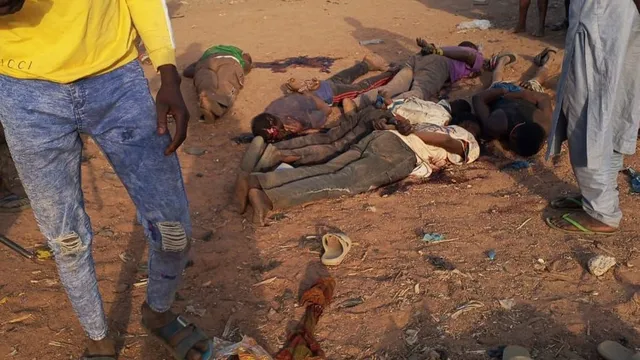
At least 170 killed in horrific attack on Nigerian village

Feb 4, 2026, 3:40 PM90
(Update: Feb 6, 2026, 5:32 PM)
State in Nigeria
international news agency

At least 170 killed in horrific attack on Nigerian village

  • On February 4, 2026, armed extremists attacked Woro village in Kwara state, resulting in significant casualties.
  • Officials claim victims were executed after being bound, and there were reports of destruction of properties.
  • The incident highlights ongoing insecurity in Nigeria and the need for urgent improvement in safety measures.
Share your opinion
9

Story

In a tragic event in Nigeria, armed extremists attacked the village of Woro in Kwara state on February 4, 2026, killing at least 170 people. Local lawmaker Saidu Baba Ahmed reported that the attackers bound victims' hands before executing them, while they also set homes and shops ablaze, causing terror and devastation in the community. Survivors revealed that the militants, believed to be jihadists, had previously demanded that villagers abandon their support for the Nigerian state in favor of Sharia law. Following the assault, authorities mobilized police and military forces for a search-and-rescue operation in the area as they combed through nearby bushland looking for survivors. The aftermath of this incident captured significant media attention, with many human rights organizations expressing outrage over the attack, labeling it one of the deadliest assaults in recent months. Despite the surveillance and patrol efforts, the violence continues to plague many regions in Nigeria, with this specific incident reflecting the larger issues of insecurity, Boko Haram's influence, and the ongoing struggle against armed groups throughout the country. This incident underscores the urgent need for enhanced security measures and community support to restore safety and trust among citizens.

Context

Nigeria has faced significant challenges due to jihadist violence, primarily attributed to the Boko Haram insurgency which began in the early 2000s. The group, which initially focused on opposing Western education and promoting a strict interpretation of Islam, rapidly escalated its operations into violent attacks against civilians, military personnel, and government institutions. Since then, Boko Haram has splintered into various factions, with the most notable being the Islamic State West Africa Province (ISWAP). This fragmentation has complicated the already difficult security situation in Nigeria, leading to increased violence and instability in the northeastern region. The impact of this violence has been devastating, with thousands killed, millions displaced, and extensive humanitarian crises emerging as a result of ongoing conflict. According to various reports, the scale of displacement in Nigeria ranks among the highest in the world, with over two million people forced from their homes due to Boko Haram and ISWAP activities. The humanitarian response has been severely hampered by insecurity, limited resources, and logistical challenges, with many people lacking access to basic needs such as food, shelter, and medical care. NGOs and international organizations have attempted to provide aid, but their efforts often fall short amid growing danger in affected regions. In addition to its immediate effects, jihadist violence in Nigeria has had profound socio-economic consequences. The continuous unrest has disrupted local economies, led to the closure of markets and businesses, and hampered agricultural activities, further exacerbating food insecurity. Educational institutions have also been frequent targets, with numerous schools destroyed and students abducted, deepening the crisis within the sector. The long-term implications include a generation of children who have missed out on education, which will perpetuate cycles of poverty and instability. The Nigerian government has struggled to effectively combat the insurgency, leading to public dissatisfaction regarding its ability to ensure safety and security. Military operations have faced criticism for human rights violations, which have undermined trust within affected communities. Furthermore, the involvement of local vigilante groups has created an environment of distrust and has sometimes led to further violence, complicating the overall security landscape. Regional responses to the violence have included cooperation among neighboring countries such as Chad, Niger, and Cameroon, which have contributed troops to a multinational task force aimed at combating Boko Haram. While these efforts have seen some success in reclaiming territory and reducing the group’s operational capacity, the persistent nature of the conflict highlights the difficulty in achieving lasting peace. Political and social factors must also be addressed to effectively combat the underlying issues fueling the insurgency, such as poverty, unemployment, and lack of education, particularly in the northeast region. Addressing these root causes is essential to prevent the further spread of extremist ideologies and promote long-term stability in Nigeria. As of now, the situation remains dire, and continued vigilance and engagement at both national and international levels are necessary to address the assorted challenges posed by jihadist violence in Nigeria.

2026 All rights reserved
