

Iran threatens severe punishment for dissenters abroad amid crackdown
Iran threatens severe punishment for dissenters abroad amid crackdown
- Iran's government has intensified security measures, warning against protests due to the ongoing conflict.
- Foreign figures encourage Iranians to resist the regime, framing it as a crucial moment for change.
- The risk of severe punishment for dissent adds to the already desperate conditions faced by civilians.
Story
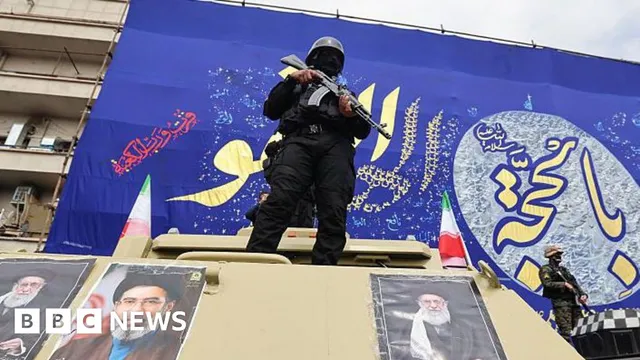
Iran has been facing a severe crackdown on protests, particularly in the wake of escalating conflict with the US and Israel. Reports indicate that government officials are increasing security forces' presence in cities, issuing warnings against gathering or protesting. On March 8, the Prosecutor General's Office publicly cautioned Iranians abroad of potential severe repercussions if they align with what the government labels hostile entities. Concurrently, figures like Reza Pahlavi encourage citizens to prepare for decisive action against the regime, amidst suggestions from Israeli Prime Minister Benjamin Netanyahu that now is the time for change. In Tehran, citizens express despair over both the violent responses to protests and the ongoing military actions targeting certain areas, leading to fears for their safety and financial stability. The tension and unrest have deeply affected daily life, with many being forced to reconsider their economic choices while grappling with an intense security atmosphere and persistent internet blackouts. The situation has escalated to a critical level, prompting fears of further deterioration for both Iraq and the broader Middle East region as civilians bear the brunt of the violence.
Context
The US-Israel conflict has significant implications for Iran, shaped by historical, political, and military dimensions. Iran views the United States as its principal adversary, particularly due to its support for Israel, which Tehran perceives as a threat to its national security and regional ambitions. The ongoing tensions contribute to a cycle of hostility, wherein Iran seeks to bolster its military capabilities and influence throughout the Middle East to counteract what it perceives as US-Israeli aggression. This situation is further exacerbated by Iran’s nuclear program, which has been a focal point of international concern and a catalyst for US-led sanctions aimed at curtailing Tehran’s advancements in nuclear technology. As a result, Iran remains steadfast in its pursuit of regional hegemony, often in direct response to US-Israeli initiatives, which bolsters its resolve to maintain a sustained military presence in countries like Syria and to support proxy groups in Lebanon and Gaza. The geopolitical landscape surrounding the US-Israel conflict is also significantly influenced by regional dynamics and shifting alliances. Iran finds itself strategically positioned to exploit divisions among its adversaries in the region, leveraging its relationships with non-state actors and its influence in Iraq and Syria to fortify its regional standing. This has prompted a reevaluation of traditional alliances, with some Gulf States indicating a willingness to engage with Israel, largely motivated by a shared concern over Iran's activities. The normalization of relations between Israel and several Arab nations has sparked a complex web of interactions, compelling Iran to adapt its strategies and maintain its deterrent capacity against what it perceives as encroaching threats from both Israel and the United States. Iran's response to the US-Israel conflict is also a critical factor shaping its domestic policies and public sentiment. The regime utilizes the narrative of external threats to consolidate power internally and distract the populace from socio-economic challenges. Nationalistic rhetoric surrounding the US-Israel relationship serves to unite various factions within Iran, reinforcing a collective identity among its citizens against perceived foreign aggression. In this context, the conflict has become a focal point for Iranian leadership to justify military expenditures and the enhancement of its missile programs, which are presented as essential for national defense. Furthermore, the international community's reactions to the US-Israel conflict have far-reaching implications for Iran. While sanctions have been punitive, they have simultaneously spurred Iran to seek deeper alliances, particularly with nations like Russia and China, which oppose US unilateralism. These partnerships not only provide Iran with economic opportunities but also strategic military support that can counterbalance US-Israeli influences. Consequently, the interplay of the US-Israel conflict with Iran's foreign policy continues to shape the regional security architecture, making it an essential dimension of contemporary Middle Eastern geopolitics. The trajectory of these relations holds potential for both escalatory conflict and avenues for diplomatic engagement, with the balance tilting based on shifts in leadership and international priorities.


