
University of Sunderland faces backlash over glass degree cancellation
- The University of Sunderland is terminating its glass and ceramics degree programs and closing the National Glass Centre in 2026 due to financial difficulties.
- Artists participating in the final exhibition express deep concern over job loss and the disruption of a nurturing artistic community.
- The closure reflects a broader trend in higher education regarding the sustainability of specific programs, raising important questions on the future of arts education.
Story
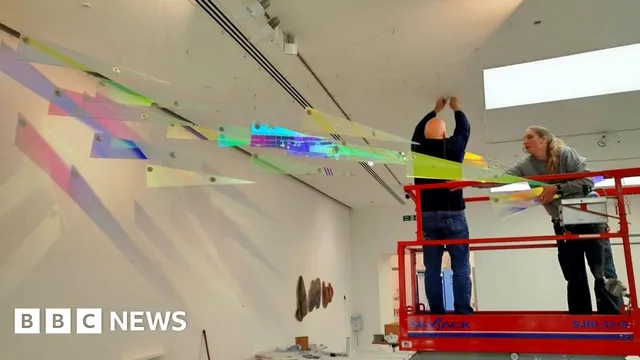
In the United Kingdom, the University of Sunderland has faced significant criticism for its decision to terminate the National Glass Centre and its associated glass and ceramics degree programs slated for closure in 2026. This decision was announced two years ago as part of an effort, as stated by university officials, to address financial constraints that made it unsustainable to continue the courses. As a result, the National Glass Centre is holding its final exhibition, showcasing the work of 52 artists, including graduates and staff from the 44-year history of these degree programs. The exhibition, titled 'The Graduates', is a poignant reminder of the community and opportunities fostered through these educational offerings. Many artists have voiced their concerns regarding the impact of closing these programs. Dr. Laura Johnston expressed a feeling of bittersweetness participating in the final show, emphasizing that the closure could lead to job losses and dismantling of a unique artistic community. She pointed out how important these courses have been in facilitating opportunities for real-world application of art, stating that the original commission allowed her to explore the use of dichroic glass at an architectural scale, which opened doors to more public art projects across the UK. Sean Barnes, another glass artist, highlighted the specialized training and equipment that the National Glass Centre provided, noting that glassblowing is a skill that requires hands-on experience rather than theoretical knowledge. The loss of such a program, according to Barnes, risks not only the closure of an educational institution but also the end of the pathway needed to nurture the next generation of glass artists and researchers. Emma Baker, an artist affected by this decision, also expressed feelings of being gutted, indicating a wider sentiment among the creative community about the irreversible loss of such programs. The university reasoned that the cost to relocate the glass and ceramics program was around £10 million, which was deemed unfeasible. The board's conclusion that the program was no longer financially viable is part of a broader trend where higher education institutions are reassessing the sustainability of various degree courses amid changing economic landscapes. While some voices, including the Pro-Vice Chancellor at the University of Northampton, support the growth of alternative education formats like apprenticeships, there remains a significant acknowledgement of the role traditional degree programs play in providing valuable skills and connections that contribute to career development in the arts and other fields. As the National Glass Centre prepares to close its doors permanently, the ramifications of this loss not only affect current students but also future generations who may never have the opportunity to learn and advance in the art of glass-making.
