

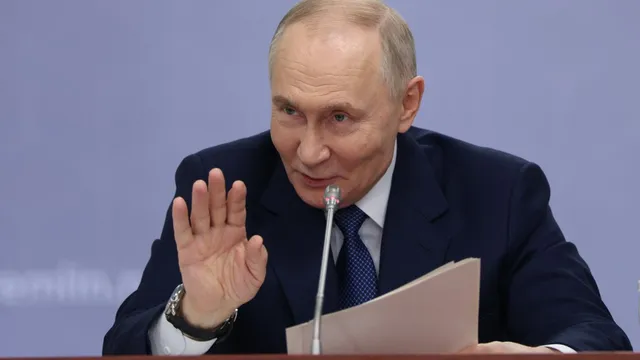
Putin prioritizes nuclear triad development amid arms control treaty suspension
Putin prioritizes nuclear triad development amid arms control treaty suspension
- Vladimir Putin announced the development of Russia’s nuclear forces as the country's absolute priority following the expiry of the New START agreement with the US.
- He emphasized enhancements in military capabilities, including the nuclear triad, the army, and navy, with improvements planned for overall combat readiness.
- The escalation of military ambitions and lack of arms control poses significant risks for global security and increases tensions between Russia and other nations.
Story
On February 23, 2023, Russian President Vladimir Putin delivered a speech emphasizing the importance of developing Russia's nuclear triad during the country’s Defender of the Fatherland Day. This declaration came after the expiration of the New START agreement, which was the last remaining nuclear arms control pact between Russia and the United States. With no current treaties binding both nations, Putin highlighted the development of a nuclear triad as an absolute priority, claiming it guarantees Russia’s security and effective strategic deterrence. In his address, Putin also announced plans to strengthen Russia’s army and navy and enhance the combat readiness of all branches of the military. He stressed the importance of adapting military capabilities to the current international situation, utilizing combat experience from the ongoing conflict in Ukraine. In addition to developing nuclear capabilities, the Russian leader declared intentions to improve the mobility and operational conditions of the armed forces, ensuring they remain effective even in the most challenging situations. In the context of the broader geopolitical landscape, Ukrainian President Volodymyr Zelenskyy described Putin's actions as a declaration of 'World War III,’ underscoring the extensive implications of Russia’s military ambitions. Zelenskyy emphasized the necessity of preventing further invasions by Russia, warning that yielding territory, such as the Donbas region, would only allow Russia to rebuild its military capabilities and continue its aggressive stance. This situation portrays a critical moment in Russo-American relations and global security dynamics, reflecting increasing tensions and the potential for further military escalation. With the collapse of arms control agreements, experts warn this could result in an arms race that jeopardizes international stability.


