

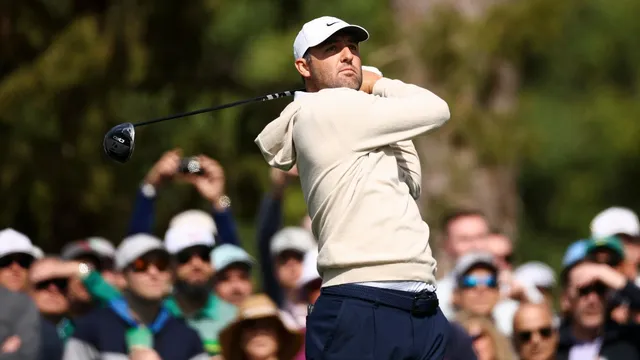
Scottie Scheffler aims for Tiger Woods' legacy at The Masters
Scottie Scheffler aims for Tiger Woods' legacy at The Masters
- Scottie Scheffler aims to win his third Masters title and solidify his status in golf history.
- He faces claims about his mental and emotional state, which may affect his performance.
- Scheffler's entry as the world's top player juxtaposed with negative pundit assessments raises questions about his readiness.
Story
In April 2026, Scottie Scheffler, the world No. 1 golfer, is poised to compete in The Masters tournament held at Augusta National Golf Club, a prestigious event in the sport of golf. Leading up to the tournament, it was announced that Scheffler would be entering as the world No. 1 for the fifth consecutive time, which matches a record held by legendary golfer Tiger Woods during his prime years from 2000 to 2004 and again from 2006 to 2010. This recognition underscores Scheffler's dominance in the sport, as he aims to add to his collection of green jackets, having already secured two titles in previous years. The 2026 Masters is scheduled from April 9 to 12, coinciding with a period of high anticipation among fans and players alike. Scheffler is not only a favorite but also the top-ranked golfer entering the tournament, with strong betting odds of +495 from DraftKings. His consistent performance over the last two years has made him a formidable presence on the golf course, with recent victories solidifying his status as a leading contender. However, despite these accolades, Scheffler has faced criticism regarding his current form and demeanor, with some experts suggesting that he is experiencing a mental struggle or “slump.” In a vibes-based ranking conducted by Golf Digest, Scheffler was placed at the bottom of a list of potential contenders for the tournament, despite being the number one player in the world. This juxtaposition has raised eyebrows in the golfing community, as it captures the inherent subjectivity in assessments of players’ forms before a major tournament. Observers noted that Scheffler's recent behavior has been unusual, which may contribute to the less favorable perception of his prospects. This internal struggle could potentially impact his performance as he navigates the high-pressure environment of Augusta. As the tournament week progresses, the traditional events surrounding The Masters, such as practice rounds and the Champions Dinner, create an atmosphere steeped in both reverence and competition. Collectively, these elements highlight the fascinating intersection of sports achievement and the psychological nuances athletes face. As Scheffler competes for a third green jacket, he not only seeks to enhance his legacy but also to quell any doubts about his current mental state, a critical factor in golf where concentration and poise can determine success or failure on the course.
Context
The mental health of professional golfers is a subject of increasing importance as the pressures of the sport continue to mount. Golf is often perceived as a solitary game, where individual performance is paramount. This perception can lead golfers to experience unique mental health challenges, including anxiety, depression, and the stress of maintaining peak performance. The competitive nature of professional golf places immense pressure on players to succeed, which can be exacerbated by public scrutiny, the fear of failure, and the need for self-motivation. As athletes navigate these pressures, it is crucial to understand the specific factors that contribute to their mental well-being. Several studies have highlighted the prevalence of mental health issues among professional golfers. Research indicates that golfers may face similar levels of psychological stress as athletes in more physically demanding sports. Factors such as travel schedules, financial pressures, and the need for constant public engagement can severely impact a golfer's mental health. Additionally, injuries and physical limitations can lead to feelings of inadequacy and anxiety about future performance. Understanding these dynamics is vital for developing effective mental health support systems tailored to golfers. Furthermore, the stigma surrounding mental health in sports continues to persist, which may discourage many golfers from seeking help. Players often feel they must maintain a tough exterior and may fear that admitting to mental health struggles could undermine their careers. Increasing awareness and fostering open discussions about mental health within the golfing community are essential steps towards creating a supportive environment. Professional organizations, coaches, and golfers themselves must collaborate to promote mental wellness initiatives and reduce stigma, allowing players to access the support they need without fear of judgment. In conclusion, addressing the mental health needs of professional golfers is critical not only for their well-being but also for their performance on the course. By prioritizing mental health awareness and resources, the sport can cultivate a culture where players feel empowered to seek help, ultimately leading to improved performance and satisfaction in their careers. As the conversation around mental health evolves, it is imperative that stakeholders within the golfing community remain vigilant and proactive in taking steps to ensure that the mental health of players is given the attention it rightfully deserves.


