

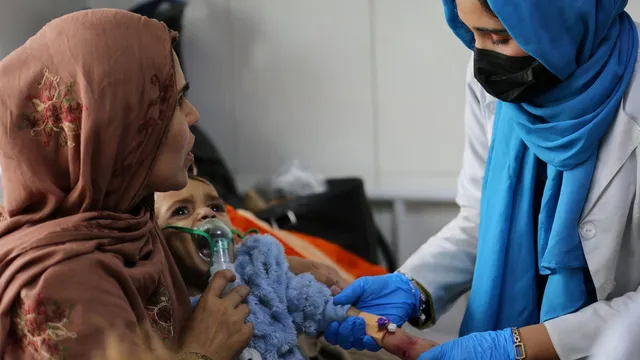
World Food Program forced to turn away three in four malnourished Afghan children
World Food Program forced to turn away three in four malnourished Afghan children
- Afghanistan faces a severe humanitarian crisis with approximately 4 million acutely malnourished children.
- Funding cuts have forced the World Food Program to limit assistance, helping only 2 million children instead of the necessary 4 million.
- Experts warn of rising child mortality and the urgent need for international support to combat this escalating crisis.
Story
Afghanistan is currently experiencing a severe humanitarian crisis characterized by widespread acute malnutrition among children. As of recent reports, approximately 4 million children are affected by malnutrition, with the World Food Program (WFP) constrained to assist only 2 million due to significant cuts in funding. John Aylieff, the Afghanistan Country Director for WFP, has expressed profound concern, stating that the organization is now compelled to turn away three out of four acutely malnourished children. This situation is unprecedented in his extensive career as a humanitarian, highlighting the dire needs of the population amidst ongoing aid deficits. The child malnutrition crisis has escalated during the last year, underscoring deep-rooted issues arising from decades of conflict, poverty, and inadequate healthcare systems. The WFP previously had a budget of $600 million for Afghanistan in 2024, but funding declined dramatically to an anticipated $200 million for this year. This drastic reduction has severely hampered the organization's ability to deliver essential nutritional aid and medical treatment to children facing life-threatening conditions, with reports citing over 500 child deaths attributed to hunger in recent months. In light of these harrowing statistics, the Afghan government recognizes the grave hunger problem and has taken steps to expand its facilities for treating malnutrition from 800 to 3,200 locations. Authorities acknowledge that malnutrition is not a new issue, as it has persisted for decades fueled by persistent poverty and conflicts. Health Ministry officials have been engaging with various international aid organizations to address the funding gaps and ensure the continuation of vital support for malnourished children in the nation. Despite the government’s efforts, advocates for humanitarian aid, such as Sharafat Zaman, stress the urgent need for global support to prevent further deterioration of conditions for Afghan women and children. As the country grapples with extreme hunger and malnutrition, members of the international community are being urged not to abandon the Afghan populace during this critical period. The implications of neglecting this crisis could lead to further suffering and loss of life, impacting millions of vulnerable children across Afghanistan.
Context
The hunger crisis in Afghanistan is a pressing humanitarian disaster that has escalated in recent years due to a combination of political instability, economic decline, and natural disasters. Since the resurgence of the Taliban in 2021, the country has faced severe economic hardships, leading to decreased agricultural production and increasing food insecurity. Millions of Afghans are currently experiencing acute hunger, with the United Nations estimating that nearly half of the population is in need of urgent aid. The situation is further exacerbated by the ongoing conflict, restrictions on humanitarian access, and the global economic impacts of the COVID-19 pandemic. Governments and international organizations are grappling with how best to respond to this growing crisis, necessitating a coordinated response to address both immediate needs and longer-term solutions to food security in the region. In response to this crisis, various governments and aid organizations have mobilized resources to provide assistance to affected populations. The international community has stepped up its efforts to deliver emergency food aid, nutrition support, and health services to those in need. However, bureaucratic challenges, including the re-establishment of banking services and humanitarian access, have hampered the effectiveness of these initiatives. Moreover, the political landscape remains complex, with ongoing debates about how to engage with the Taliban government while ensuring that aid reaches those who need it most. Despite these obstacles, several countries have pledged financial assistance and have begun to implement food distribution programs to alleviate the suffering caused by hunger. Sustainable solutions to the hunger crisis must go beyond immediate food aid. There is a critical need for investments in agriculture and rural development, as well as support for local farmers to boost food production and resilience against future shocks. Programs aimed at improving agricultural practices, providing training, and ensuring access to markets can help enhance food security in the long term. Furthermore, addressing the underlying issues of poverty, education, and women's empowerment is essential for creating a more stable and self-sufficient society. As the situation in Afghanistan evolves, it is imperative to implement multifaceted strategies that not only respond to the immediate crisis but also build a foundation for future resilience. In conclusion, the government response to the hunger crisis in Afghanistan requires urgent attention and action from the international community. While immediate humanitarian aid is crucial to alleviate suffering, a comprehensive approach that includes long-term development strategies is necessary to address the root causes of food insecurity. Collaborative efforts from governments, NGOs, and local communities are vital to ensure that all Afghans have access to sufficient food and resources necessary for their survival and dignity. Continuous monitoring and assessment of the situation will also be necessary to adapt strategies and interventions effectively, ensuring that assistance reaches the most vulnerable populations.


