

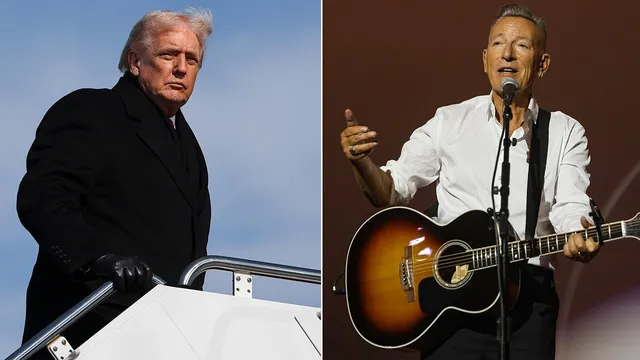
Bruce Springsteen denounces federal agents after deadly shootings in Minneapolis
Bruce Springsteen denounces federal agents after deadly shootings in Minneapolis
- Bruce Springsteen released 'Streets of Minneapolis', a protest song dedicated to victims of recent federal agent shootings.
- The song addresses the broader issues of immigration enforcement and critiques the Trump administration's policies.
- This incident has sparked nationwide protests and discussion on the treatment of immigrants in the United States.
Story
In January 2026, Minneapolis experienced significant unrest following violent incidents involving federal law enforcement. Alex Pretti, an ICU nurse, and Renee Good, a mother of three, were both fatally shot by ICE agents during immigration enforcement operations that incited public outrage. Bruce Springsteen responded by releasing a protest song titled 'Streets of Minneapolis,' dedicated to the victims and their memories. In his lyrics, Springsteen criticized the actions of the Trump administration and federal agents, referring to them as 'federal thugs' and highlighting the fear facing immigrant communities. This protest was part of a larger wave of dissent against the violent approach taken by federal agents in various cities across the U.S., indicating a growing divide over immigration policies.
Context
The Trump administration's Immigration and Customs Enforcement (ICE) policies have had significant implications for various communities across the United States. Under the leadership of former President Donald Trump, the administration adopted a more aggressive stance on immigration enforcement, characterized by widespread deportations, increased workplace raids, and limited protections for undocumented immigrants. These measures aimed to fulfill campaign promises to prioritize the removal of individuals with criminal records, but they also reflected a broader approach to crack down on illegal immigration. The impact of these policies extended beyond enforcement actions, stirring national debates on human rights, family separation, and the role of local law enforcement in immigration matters. One of the most controversial aspects of the Trump administration's ICE policies was the effect on immigrant communities. The aggressive enforcement strategies created a climate of fear among individuals and families who often refrained from accessing essential services such as healthcare and education. Many undocumented immigrants faced the constant threat of detention and deportation, resulting in profound psychological stress and disruption of family structures. Reports highlighted instances of community members being apprehended while dropping off children at school or attending medical appointments, leading to a chilling effect on community trust towards law enforcement and public institutions. Additionally, the policies propagated a narrative that often reduced individuals to their immigration status, disregarding their contributions to society and the economy. The use of executive orders, like the rescission of Deferred Action for Childhood Arrivals (DACA), further illustrated this shift. Although DACA was eventually upheld by the courts, the uncertainty it brought caused anxiety within the DREAMer community and beyond. Small businesses, often reliant on immigrant labor, expressed concerns about labor shortages and economic ramifications. National and local economies faced challenges as the labor force shrank, affecting industries that depend heavily on immigrant workers. In conclusion, the ICE policies of the Trump administration reshaped the landscape of immigration enforcement in the United States while eliciting mixed reactions from the public and advocacy groups. Supporters argued for the necessity of strict immigration laws to maintain national security and uphold the rule of law. In contrast, opponents decried the humanitarian consequences, advocating for more compassionate policies that consider individual circumstances rather than blanket enforcement measures. As the nation moves forward, understanding the lasting impacts of these policies is vital in shaping future immigration reforms and ensuring that human rights remain at the forefront of the immigration debate.


