

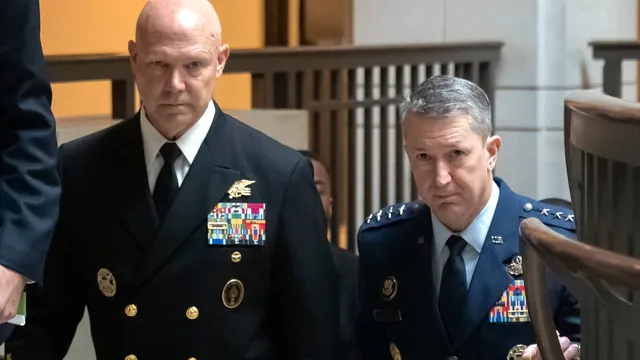
Navy admiral admits to ordering attack on drug boat survivors
Navy admiral admits to ordering attack on drug boat survivors
- Adm. Frank Bradley ordered a follow-up strike that resulted in the deaths of two survivors from an attack on a drug boat.
- Lawmakers are demanding an investigation and more extensive documentation regarding the strikes and directives involved.
- The incident raises serious questions about military procedures and accountability, leading to increased scrutiny of operational decisions.
Story
In September 2025, in the United States, a Navy admiral is under scrutiny after a military operation resulted in the deaths of survivors from an alleged drug boat. The admiral, Frank Bradley, reportedly initiated an attack on the boat's survivors as they were in clear distress and had no means of escape. This decision has prompted bipartisan outrage among lawmakers who are demanding greater accountability and transparency regarding the military's actions. Legal experts assert that the attack could constitute a criminal act if it is determined that the survivors were intentionally targeted. The military briefing on Capitol Hill included top lawmakers and was led by General Dan Caine, the chairman of the Joint Chiefs of Staff, which underscores the seriousness of the situation. The briefing aimed to clarify the circumstances surrounding the strikes, particularly the directives issued by Hegseth, a named figure in relation to the operations. Following initial reports, some members of Congress have expressed a desire for all relevant documents, including videos of the strikes, potential executive orders, and intelligence data that classified the vessels as legitimate targets. Investigative efforts are ongoing, as the timeline suggests that there was an awareness of survivors in the water during the second strike, which raises further questions about the decisions made by military officials. Both Democratic and Republican leaders in the Armed Services Committees are advocating for a thorough inquiry into military protocols and the extent of authority exercised by those involved. As public and political pressure mounts, the potential for repercussions regarding this incident remains an open question, highlighting the complexities of military engagement rules. Advocates for accountability have also emphasized the necessity of understanding the legal frameworks guiding military operations, especially in scenarios involving civilians or survivors. As discussions continue, the emphasis on transparency in military engagements and preserving accountability for actions taken during combat situations remains pivotal, ensuring that both justice and national security are maintained in the face of evolving military challenges.
Context
Military strikes against civilians are fraught with profound legal implications, stemming from both international humanitarian law and human rights law. International humanitarian law, primarily encapsulated in the Geneva Conventions, seeks to limit the effects of armed conflict, particularly by protecting those who are not participating in hostilities. Strikes against civilian populations, particularly targeted attacks or disproportionate use of force, are considered violations of these laws. The key principle of distinction must be adhered to, which mandates that military operations must distinguish between combatants and non-combatants. Failure to comply with this principle could constitute a war crime, carrying severe consequences for individuals and states alike under the jurisdiction of international criminal law. Furthermore, the doctrine of proportionality holds that even if a military target is legitimate, any collateral damage to civilians must not be excessive in relation to the anticipated military advantage gained from the strike. The implications of military strikes against civilians extend beyond immediate legal accountability to encompass broader ramifications for state behavior and global governance. When a state perpetrates acts that violate international law, it not only risks prosecution but also faces potential sanctions, international condemnation, and damage to its reputation. This can lead to diplomatic isolation and pressures from other states to comply with international norms. In addition, the concept of state responsibility demands that states provide reparations for wrongful acts, further entrenching the obligations of states to protect civilian populations in conflict areas. Countries may also be subject to actions in national courts, as some have enacted laws that allow for the prosecution of war crimes that occur abroad, indicating an evolving landscape of accountability for such actions. Furthermore, civilian casualties often lead to significant socio-political repercussions that extend well beyond legal frameworks. They can incite local and international outrage, fostering a cycle of violence and perpetuating grievances that undermine peace and security efforts. The impact on global public opinion can influence public policy and pressures governments to reconsider their military tactics and strategies. In recent history, military engagements where civilian casualties have occurred have seen a backlash against the military's operational practices, with increasing calls from the international community for greater accountability and transparency in military operations. The ethical considerations that accompany military strikes against civilians, particularly as they are scrutinized by both domestic and international audiences, cannot be underestimated in ensuring compliance with legal standards. In conclusion, military strikes against civilians not only raise critical legal issues but also carry vast and complex consequences that can affect international relations, state behaviors, and societal stability. These implications underscore the necessity for a thorough understanding of humanitarian laws and an unwavering commitment to safeguarding civilian lives in times of conflict. To navigate these legal and ethical challenges, states must prioritize adherence to international norms, implement effective command structures to ensure lawful military operations, and engage in open dialogue regarding the obligations and consequences of military engagements. The path towards accountability and restoration of trust in international relations hinges on robust mechanisms to address violations and uphold human rights standards, ensuring that all actors in conflict are held to their respective responsibilities.


