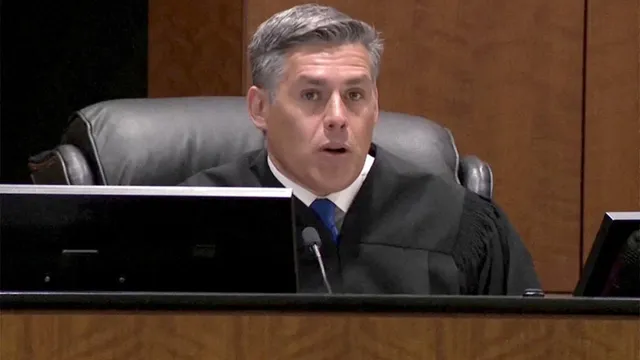
Tyler Robinson charged with murder of Charlie Kirk
politics
tragic
controversial

Tyler Robinson charged with murder of Charlie Kirk

31
(Update: )
Ph.D., Astronomy, University of Washington
American political activist and radio talk show host
  • A police officer testified about witnessing the shooting of Charlie Kirk and finding evidence on a rooftop.
  • Prosecutors presented video footage and a note allegedly written by Tyler Robinson indicating his intent to kill Kirk.
  • The preliminary hearing aims to determine if there is enough evidence to proceed to trial against Robinson.
Share opinion
3

Story

In Provo, Utah, a preliminary hearing began on July 6, 2026, for Tyler Robinson, who is accused of murdering prominent conservative activist Charlie Kirk on September 10, 2025. During the hearing, a police officer testified about witnessing the shooting and discovering what appeared to be a sniper pad on a rooftop near the scene. The prosecution presented evidence, including video footage and a note allegedly written by Robinson, indicating his intent to kill Kirk due to his political beliefs. The hearing is part of a weeklong process to determine if there is sufficient evidence to proceed to trial. Charlie Kirk, a significant figure in conservative politics and co-founder of Turning Point USA, was shot while addressing a crowd at Utah Valley University. His death has raised concerns about political violence in the United States, particularly against public figures. Prosecutors are seeking the death penalty for Robinson, who faces seven criminal charges, including aggravated murder. The evidence presented includes video footage of the shooting and DNA evidence linking Robinson to the murder weapon. Robinson's defense team has not commented on his guilt or innocence but is expected to challenge the prosecution's evidence, particularly the inconclusive ballistics testing that failed to match a bullet fragment found in Kirk's body to the alleged murder weapon. The courtroom was filled with Kirk's family members, including his widow, Erika Kirk, who took over Turning Point USA after his death. The emotional atmosphere underscored the impact of Kirk's assassination on his loved ones and the broader political landscape. As the preliminary hearing continues, prosecutors aim to convince the judge that there is enough evidence to proceed to trial. Legal experts suggest that the standard for this hearing is lower than that of a trial, making it likely that the case will advance. The proceedings have highlighted the ongoing debate over political violence in a polarized society, with Kirk's assassination being one of several recent attacks on political figures. The outcome of this case could have significant implications for discussions surrounding political discourse and safety in the United States.

Context

Political violence in the United States has emerged as a significant concern in recent years, reflecting deep-seated divisions within society. This violence can manifest in various forms, including protests that escalate into riots, targeted attacks against individuals or groups based on their political beliefs, and the rise of extremist groups that promote violence as a means to achieve their goals. The events surrounding the 2020 presidential election and the subsequent Capitol riot on January 6, 2021, serve as stark reminders of how political tensions can spiral into violence, leading to loss of life and property, as well as a profound impact on the nation's political landscape. The roots of political violence in the U.S. can be traced to a combination of factors, including economic inequality, social injustice, and the polarization of political ideologies. The increasing prevalence of misinformation and conspiracy theories, particularly on social media platforms, has further exacerbated these tensions, creating an environment where individuals feel justified in resorting to violence to express their grievances. Moreover, the normalization of aggressive rhetoric in political discourse has contributed to a culture where violence is seen as an acceptable means of achieving political ends, undermining democratic processes and institutions. In response to the rising tide of political violence, various stakeholders, including government agencies, civil society organizations, and community leaders, have begun to implement strategies aimed at mitigating this issue. These strategies include promoting dialogue and understanding among differing political factions, enhancing law enforcement training to better handle politically charged situations, and addressing the root causes of discontent through social and economic reforms. Additionally, there is a growing recognition of the need for comprehensive policies that address hate crimes and domestic terrorism, which are often intertwined with political violence. Looking ahead, it is crucial for the United States to confront the challenges posed by political violence head-on. This requires a collective effort to foster a culture of respect and tolerance, where differing opinions can be expressed without fear of violence. Education plays a vital role in this endeavor, as it can help individuals develop critical thinking skills and promote civic engagement. Ultimately, the health of American democracy depends on the ability of its citizens to engage in constructive dialogue and resolve conflicts peacefully, ensuring that political violence does not become a defining characteristic of the nation's future.