
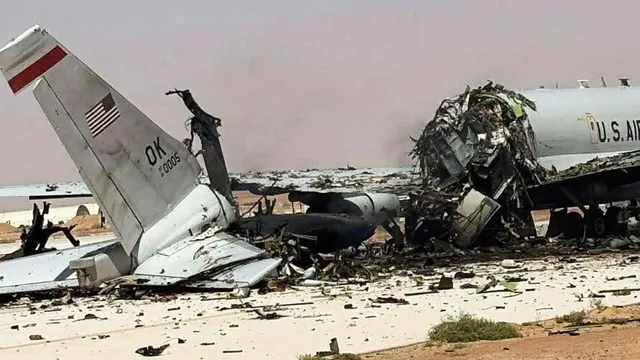
Iran launches missile and drone attack injuring U.S. troops in Saudi Arabia
- Iran launched an attack on Prince Sultan Air Base, resulting in injuries to at least 15 U.S. troops.
- Military presence in the region has increased with the deployment of 2,500 Marines aboard the USS Tripoli.
- The escalating tensions highlight the ongoing conflict and military engagements between the U.S. and Iran.
Story
On Thursday, March 27, 2026, Iran conducted a significant missile and drone attack against Prince Sultan Air Base in Saudi Arabia. This assault inflicted injuries on at least 15 U.S. troops, including five who were reported to be in serious condition. The attack involved the firing of six ballistic missiles alongside 29 drones, highlighting the escalation of military hostilities in the region. The air base had previously been targeted, signaling ongoing tensions in U.S.-Iran relations. The context surrounding this attack is rooted in a series of escalated exchanges and military movements. Following months of conflict, U.S. officials indicated that over 300 service members had sustained injuries due to the ongoing hostilities, yet most had returned to active duty. As American military presence in the Middle East intensified, with the arrival of approximately 2,500 Marines on the USS Tripoli, Iran’s aggressive maneuvers demonstrated the fraught atmosphere between U.S. forces and Iranian military interests. These movements came just after U.S President Donald Trump publicly asserted that Iran's military capabilities had been neutralized significantly, raising questions about the effectiveness of deterrence measures in place. The earlier attacks on the Saudi air base earlier that week had resulted in injuries to 14 U.S. troops and damage to an aircraft, revealing a pattern of increasing confrontation. These incidents coincided with high-stakes diplomatic dynamics, where Trump claimed negotiations to resolve the conflict were progressing positively despite the escalating violence on the ground. In light of ongoing assaults, the U.S. response seemed poised to draw further military engagement in an already volatile situation marked by complex geopolitical interests. This situation represents a significant turning point in the ongoing conflict, suggesting that military responses will likely increase in frequency as both sides confront their respective strategic goals. The ripple effects of these hostilities are already impacting global air travel and oil prices, demonstrating the broader implications of localized military actions. As tensions mount, the possibility of engagement in a deeper military conflict involving U.S. forces remains heightened, with future implications for international diplomacy and regional stability.
