

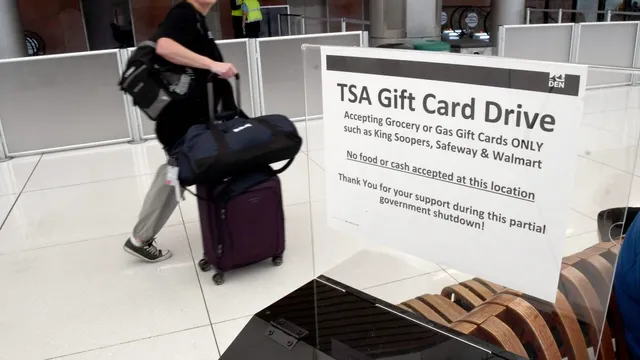
TSA agents struggle as nonprofits provide essential assistance during shutdown
TSA agents struggle as nonprofits provide essential assistance during shutdown
- Over 120,000 Department of Homeland Security employees, including TSA agents, worked without pay during a prolonged government shutdown.
- Local organizations and nonprofits began coordinating assistance, such as food and toiletries, to help affected TSA officers.
- The situation highlights the necessity for community support and raises concerns about how essential workers are treated during government stalemates.
Story
In the United States, during a partial government shutdown that lasted 33 days, over 120,000 employees of the Department of Homeland Security, including approximately 50,000 Transportation Security Administration (TSA) officers, were working without pay. The ongoing negotiations regarding immigration enforcement were at the center of the legislative standoff, leaving essential workers, such as TSA agents, in dire financial situations. Reports from various airport communities indicate that many TSA staff were struggling to afford basic necessities, which prompted local nonprofits and community members to step in to provide support. Feeding San Diego played a crucial role when it began distributing boxes of food including pasta, beans, peanut butter, and fresh produce to impacted TSA officers near the airport. This initiative was a direct response to a request from TSA and the San Diego County Regional Airport Authority, which aimed to navigate the ethical restrictions prevent direct aid to federal employees. The ability for TSA officers to receive donations directly at screening locations is complicated due to those same ethics rules, which underscores the importance and necessity for organizations to work through proper channels to deliver essential support. In Baton Rouge, Louisiana, Tonja Myles, who leads Set Free Indeed Ministries, made it her mission to help TSA agents facing financial hardships during the shutdown. Myles, motivated by her promise to serve God, provided food, toiletries, and even financial assistance. She emphasized the need for faith-based organizations nationwide to take similar action through collaboration with local partners. Her group was motivated by the dependency of TSA agents on these essential supplies, especially considering many reported trouble meeting basic needs like toothpaste and laundry detergent, leaving families in serious situations. A significant collaboration across different airports also came into play, as officials at Seattle-Tacoma International Airport collected donations of food and household products for employees who were off-duty. Local vendors participated by contributing meals usually intended for travelers, highlighting the deep connection among airport community members. The reception of donations reflected not only the goodwill of these local organizations but underscored the shared humanity and solidarity in facing economic strife during a government shutdown. As nonprofits and community groups rose to the occasion, it became clear that the need for support during such crises was becoming increasingly urgent, prompting extensive conversations about how society values and supports those who sacrifice for public safety.


