

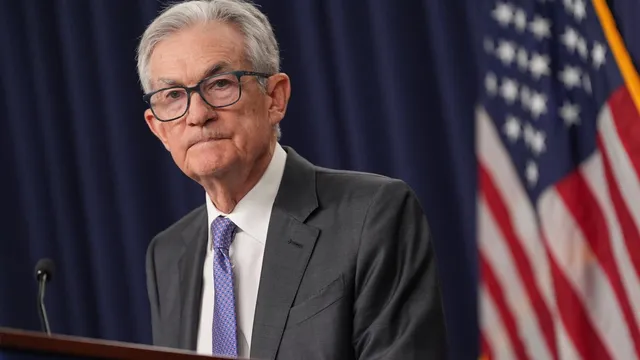
Federal Reserve defies Trump by holding interest rates steady
Federal Reserve defies Trump by holding interest rates steady
- The Federal Reserve maintained its benchmark interest rate after a 10-2 vote amid mixed economic signals.
- President Donald Trump has openly criticized Fed Chair Jerome Powell, urging for lower rates to stimulate the economy.
- The decision demonstrates the Fed's commitment to its independence despite political pressure from the White House.
Story
The US Federal Reserve held its benchmark interest rate steady on January 28, 2026, maintaining the current range between 3.50% and 3.75%. This decision follows a 10-2 vote by the Federal Open Market Committee, which cited signs of strong economic activity and moderately high inflation as reasons for their choice. This decision is particularly significant as it comes amid ongoing pressure from President Donald Trump, who has openly criticized Chair Jerome Powell for not reducing rates quickly enough. Trump has accused Powell of harming the economy by keeping interest rates high and has called for rates to be the lowest among all countries. Despite Trump's insistence that lower borrowing costs are essential for economic growth, the Fed's statement highlighted a balanced job market and ongoing concerns about inflation, which remains above the target of 2%. Fed officials emphasized that future adjustments to interest rates will depend on incoming economic data, indicating a cautious approach as they navigate competing pressures from the White House and economic realities. This environment has fostered significant dissent among Fed policymakers, with officials like Christopher Waller and Stephen Miran advocating for rate cuts. However, it appears that the Fed continues to prioritize its independence, responding to economic indicators rather than political pressure. Tensions have escalated between Trump and Powell, exacerbated by the revelation of a criminal investigation into Powell’s testimony regarding a controversial renovation project. Critics have raised concerns about the implications of such political interference in central bank operations. Overall, the Fed's choice to maintain its current rates underscores a commitment to economic stability in the face of external pressures and reflects the complexity of managing monetary policy during politically charged times. The decision not only affects domestic markets but also plays a crucial role in the global economic landscape as financial markets responded significantly to the announcement.
Context
The Federal Reserve's interest rate decisions play a critical role in shaping the economic landscape of the United States and have far-reaching implications for various sectors including consumer spending, business investment, and overall economic growth. By adjusting the federal funds rate, which is the interest rate at which banks lend to each other overnight, the Fed influences borrowing costs for businesses and consumers alike. An increase in interest rates typically leads to higher costs for loans and mortgages, which can dampen consumer and business spending. On the other hand, a decrease in rates generally makes borrowing cheaper, stimulating economic activity by encouraging spending and investment. This delicate balance of monetary policy is aimed at fostering maximum employment while keeping inflation in check, reflecting the Fed's dual mandate to support the economy's health without allowing inflation to rise excessively. In making interest rate decisions, the Federal Reserve closely monitors various economic indicators such as inflation rates, unemployment levels, and GDP growth. For instance, when inflation exceeds target levels, the Fed may choose to raise interest rates to cool off an overheating economy. Conversely, during periods of economic slowdown, lower interest rates can invigorate spending and investment, ideally leading to job creation and higher economic output. However, the timing and magnitude of these rate adjustments are critical, as premature or too drastic changes can lead to unintended consequences, such as stifling growth or inciting inflation. The strategic communication of these decisions is also essential; the Fed aims to provide transparency and guidance about its future policy intentions to minimize market volatility. Market participants, including investors and businesses, closely watch the Fed's interest rate decisions, as they can significantly impact financial markets. For example, higher interest rates often lead to a stronger dollar, as they attract foreign investment and yield higher returns for U.S. dollar-denominated assets. This can benefit U.S. consumers by reducing the cost of imported goods but may also hurt domestic manufacturers by making exports more expensive. Conversely, lower interest rates can spur investment in local businesses, potentially leading to job growth and greater economic activity. Therefore, businesses must adapt their financial strategies based on Fed policies, such as managing debt and planning capital expenditures accordingly. Global implications of the Federal Reserve's interest rate decisions should not be overlooked. As the U.S. dollar is the world’s primary reserve currency, changes in the Fed's rates can influence economic conditions beyond U.S. borders. Countries with economies closely tied to the dollar may experience capital inflows or outflows depending on the Fed’s decisions, affecting exchange rates and international trade dynamics. For emerging economies, this could result in increased volatility as they negotiate their own monetary policies while being influenced by the Fed's actions. Thus, the implications of the Federal Reserve's interest rate decisions extend well beyond domestic concerns, affecting global economic stability and growth.


