

Ukraine's call for a European army faces strong rejection from EU leaders
Ukraine's call for a European army faces strong rejection from EU leaders
- Ukrainian President Vladimir Zelensky proposed creating a unified European army to bolster defense against Russia, citing Ukraine's combat experience.
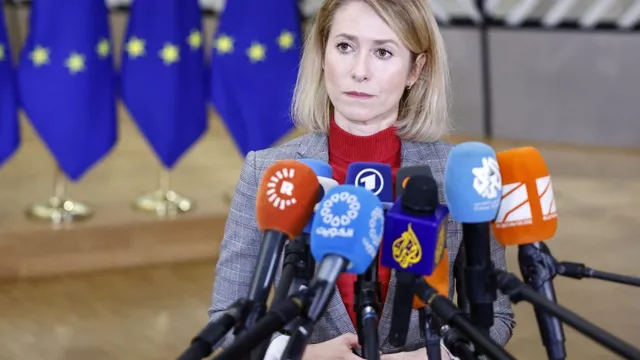
- Kaja Kallas, the EU's foreign policy chief, expressed that the idea is impractical due to NATO memberships of many EU nations and their established military structures.
- Skepticism from EU leaders indicates strong resistance to the formation of a separate European army, focusing instead on existing national forces.
Story
In a recent context surrounding Ukraine's ongoing conflict with Russia, Ukrainian President Vladimir Zelensky proposed the establishment of a unified European army during a speech at the World Economic Forum in Davos. Zelensky argued that Ukraine, having combat experience against Russia, could substantially contribute to a collective military force. However, this call for a united armed force was met with skepticism from significant figures within the European Union. Kaja Kallas, the EU's foreign policy and security chief, emphasized the complexities of forming a new army, indicating that many European Union countries are also NATO members, which complicates the establishment of a parallel military branch. She stressed that the existing national armies, primarily organized under NATO's command structures, should not be replaced with alternative frameworks that could lead to confusion and inefficiencies in military operations. Following Kallas' remarks, Polish Foreign Minister Radoslaw Sikorski rejected the idea of a joint EU army as unrealistic. Sikorski pointed out that national armies are unlikely to merge, asserting that conversations about a federated military force were futile. Instead, he suggested the creation of a European legion composed of citizens from member states and possibly candidate states, which would allow for a more practical and flexible approach to European defense. These debates occur against the backdrop of escalating tensions between the EU and Russia, which significant EU leaders have cited as a reason for reconsidering collective defense strategies. EU Defense Commissioner Andrius Kubilius previously called for the establishment of a powerful standing military force, possibly comprising 100,000 troops, arguing that shifting U.S. national security priorities require Europe to take more responsibility for its defense. While the EU acknowledges the perceived threat from Russia and advocates for military readiness, internal disagreement persists on how such a unified military initiative should be structured. Despite the emphasis on collective security, Putin's government has dismissed Western perspectives as groundless, asserting that NATO's expansion has contributed significantly to ongoing conflicts. As discussions on defense continue within the EU, Kallas reiterated her stance, noting she cannot envision member states agreeing to create separate military forces outside existing frameworks. Meanwhile, calls for increased autonomy and collaboration among European countries have left existing structures and obligations to NATO in question. The implications of these debates and the nature of future military cooperation in Europe will likely evolve further in response to ongoing geopolitical tensions and will shape the future of defense strategies within the bloc.
Context
The European Union (EU) has been evolving its military defense strategy in response to the changing global security landscape. This strategic shift is aimed at enhancing the EU's ability to address various security threats, ranging from traditional state-based threats to non-state actors and hybrid warfare. The growing complexity of the security environment highlights the necessity for a cohesive and comprehensive military strategy that not only protects the member states but also promotes stability within the EU's immediate neighborhood. The strategy emphasizes the need for increased collaboration among member states and with NATO, as well as fostering partnerships with global actors to ensure a united front against common threats. In recent years, the EU has recognized the importance of a stronger defense capacity and has initiated numerous programs to bolster its military capabilities. Key initiatives include the Permanent Structured Cooperation (PESCO) which allows member states to work together on defense projects, and the European Defense Fund (EDF), which aims to enhance the EU's defense industry by financing joint military research and development efforts. These initiatives are designed to encourage member states to invest in their defense capabilities while promoting interoperability among the armed forces of different nations. The overarching goal is to create a more self-sufficient EU defense framework that reduces reliance on external actors and boosts collective security efforts. The EU's military defense strategy is also characterized by an adaptive approach to crisis management, including a commitment to sending missions abroad to assist in conflict resolution, capacity building, and humanitarian responses. This proactive stance reflects the EU's understanding of the interconnected nature of security challenges, where instability in one region can have far-reaching impacts on global security. The EU's involvement in peacekeeping and stability operations demonstrates its readiness to act in areas where its interests and values are at stake. Consequently, a combination of military and non-military tools, including diplomacy and development assistance, is integral to the EU's strategic approach. Moreover, addressing contemporary security challenges necessitates a focus on cybersecurity and countering disinformation campaigns that threaten democratic institutions and societal cohesion. The EU has made strides in developing its cyber defense capabilities, which are crucial for safeguarding critical infrastructure and ensuring a robust response to cyber threats. As the security landscape continues to evolve, the EU's defense strategy must remain flexible and responsive to new challenges, including climate change, which is increasingly recognized as a driver of conflict and instability. Thus, the EU's military defense strategy represents a commitment to a comprehensive and integrated approach that fosters resilience, solidarity, and the capacity to act decisively in defense of its values and interests.


