The Exploration Company seeks $300 million to boost valuation over $2 billion
technology
innovative
impactful

The Exploration Company seeks $300 million to boost valuation over $2 billion

11
(Update: )
Operator for public transport in Wallonia, Belgium
  • The Exploration Company is developing a full-stack space transportation system, including the Nyx reusable space capsule.
  • The company aims to raise at least $300 million to achieve a valuation of over $2 billion.
  • TEC's mission is to democratize space travel, making it accessible for humanity.
Share opinion
1

Story

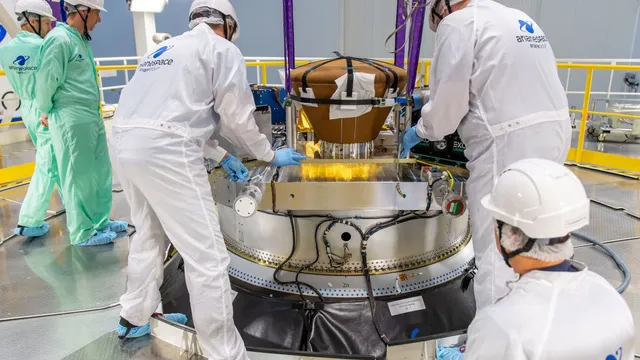
Germany's The Exploration Company (TEC), founded in 2021 by Hélène Huby and a team of aerospace veterans, is making significant strides in the space sector. The company is developing a full-stack space transportation system, which includes the Nyx reusable space capsule designed to dock with any space station. The Nyx capsule is expected to undergo its first flight demonstration in 2028. TEC is also working on a high-thrust staged combustion rocket engine called Storm, further enhancing its capabilities in space travel. As Europe intensifies its efforts to compete with established US companies in the space industry, TEC is reportedly aiming to raise at least $300 million. This funding is crucial for the company to achieve a valuation exceeding $2 billion. The EQT-managed $5 billion Scaleup Europe Fund is in discussions to make one of its first investments in TEC, addressing the late-stage financing gap that has historically pushed European scale-ups to seek capital elsewhere. TEC has already garnered support from various investors, including EQT Ventures, Bayern Kapital, Promus Ventures, Partech, Vsquared Ventures, Cherry, and Red River West. The company did not disclose its valuation following a previous raise of $160 million in 2024. Recently, TEC opened a new lab near the NASA Johnson Space Center in Houston, which will facilitate further testing on a full-scale mock-up of the Nyx crew capsule. The company's mission is to democratize space travel by building vehicles that are accessible to humanity. TEC is the first European company to sign a Space Act Agreement with NASA, highlighting its commitment to collaboration and innovation in the space sector. With offices in Germany, France, Luxembourg, Spain, Italy, the US, and the United Arab Emirates, TEC is well-positioned to make a significant impact in the global space industry.

Context

The European space industry has been experiencing a significant transformation in recent years, driven by the need to compete with the United States, which has long been a dominant force in the global space sector. The U.S. has leveraged its technological advancements, substantial investments, and a robust private sector to maintain its leadership position. In contrast, Europe has been working to enhance its capabilities through collaboration among member states, increased funding for research and development, and the establishment of partnerships with private companies. This shift is crucial as the space industry is not only a matter of national pride but also a key driver of economic growth and technological innovation. One of the primary challenges facing the European space industry is the need to innovate rapidly in response to the fast-paced developments in the U.S. market. Companies like SpaceX and Blue Origin have revolutionized the industry with reusable rocket technology and cost-effective launch services, which have significantly lowered the barriers to entry for satellite deployment and space exploration. In response, European entities such as the European Space Agency (ESA) and various national space agencies are focusing on developing their own innovative technologies, including the Ariane 6 launch vehicle and the upcoming European Space Launch System (ESLS). These initiatives aim to ensure that Europe remains competitive in the commercial launch market and can support its own satellite programs effectively. Moreover, the European space industry is increasingly recognizing the importance of collaboration with private enterprises. The rise of commercial space ventures has prompted European governments to foster an environment conducive to private investment and innovation. Initiatives such as the European Commission's Space Strategy for Europe emphasize the need for public-private partnerships to enhance the competitiveness of the European space sector. By leveraging the strengths of both public institutions and private companies, Europe can create a more dynamic and resilient space industry capable of competing on a global scale. In conclusion, the competition between the European space industry and its U.S. counterpart is intensifying, necessitating a strategic approach to innovation, collaboration, and investment. As Europe seeks to carve out its niche in the global space landscape, it must prioritize the development of cutting-edge technologies, foster partnerships with the private sector, and ensure that its policies support a thriving space economy. The future of the European space industry will depend on its ability to adapt to the rapidly changing environment and to harness the collective strengths of its member states and private enterprises.