

China faces energy crisis as Iran war disrupts oil supply
China faces energy crisis as Iran war disrupts oil supply
- The US and Israel launched military strikes against Iran in late February, disrupting global oil supply.
- Asian countries are implementing measures to conserve energy and protect consumers amid rising oil prices.
- China, despite its heavy reliance on oil imports, has built substantial reserves that provide a buffer against current disruptions.
Story
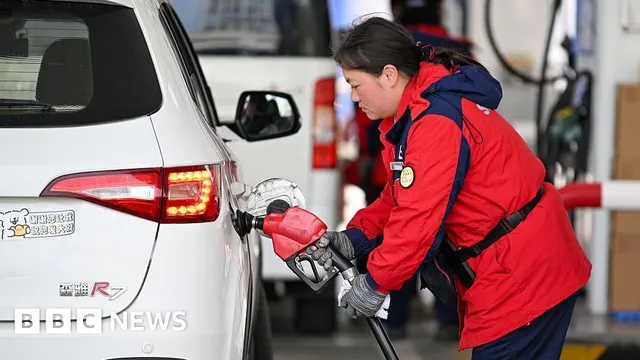
The ongoing conflict involving Iran has severely disrupted global oil supplies, primarily impacting countries in Asia. As the United States and Israel initiated military actions against Iran in late February, the situation has escalated, leading to uncertainty in oil markets and driving up prices significantly. The Strait of Hormuz, a critical shipping route for a large portion of the world's oil, has been under immense strain, with nearly a fifth of global oil flow at risk. This has forced various Asian nations, including Japan, Thailand, and Pakistan, to undertake emergency measures to manage their energy supplies, including rationing and tapping into national reserves. Countries that depend heavily on imports are particularly vulnerable, with Japan reportedly relying on the strait for about 93% of its oil imports. Japan responded by releasing oil from its private and national reserves to mitigate the impacts of supply disruptions. Similarly, Thailand, which generates over half its electricity from liquefied natural gas imports, is grappling with corresponding supply issues and is looking into strategies to safeguard its energy needs. As the tensions continue, Asian nations are racing to conserve energy, protect consumers from rising costs, and adapt to the realities of a potentially prolonged crisis. The situation is further complicated for China, the world's largest energy importer, which imports significant quantities of oil from the Middle East, including Iran and Saudi Arabia. Despite China's heavy reliance on oil shipments through the vulnerable shipping route, the country is relatively insulated thanks to substantial oil reserves. Estimates indicate that China has approximately 900 million barrels of oil stockpiled, equating to just under three months of imports, which has served to buffer shocks caused by the conflict. However, the price of oil continues to rise, affecting consumer costs and increasing operational expenses for industries such as steel and textiles. In response to the crisis, the Chinese government has taken proactive steps to manage the inflationary pressures on fuel prices by halting the export of refined fuel. Meanwhile, China's transition towards renewable energy generation continues to progress, with renewables contributing more than a third of the country's electricity as of 2025. This shift not only supports environmental goals but also mitigates the economic risks posed by fluctuations in global energy markets. As such, while the conflict poses a challenge, China may be better positioned than many of its neighbors to weather the storm, highlighting the successes of its long-term energy investments and planning.
Context
The impact of the Iran war on global oil supply is a multifaceted issue that involves geopolitical tensions, economic ramifications, and the energy landscape's evolution. Since the escalation of conflict in Iran, there have been considerable disruptions in oil production and exportation, particularly in the Strait of Hormuz, through which approximately 20% of the world's oil passes. These disruptions have led to fluctuations in global oil prices, creating an atmosphere of uncertainty for both producers and consumers. The strategic positioning of Iran as a key oil supplier further complicates the situation, as international sanctions and military actions can significantly impact not only Iranian exports but also the broader Middle Eastern oil supply chain. As nations scramble to secure adequate oil supplies, the conflict has prompted a reevaluation of energy policies worldwide. In response to the war, countries heavily reliant on oil imports from Iran have sought alternative sources, driving up demand for non-Iranian oil supplies. This search for alternative energy sources has included increased imports from countries such as Saudi Arabia, Iraq, and the United States, all of which have ramped up production to fill the gap left by diminished Iranian output. The shift has also encouraged some nations to invest further in renewable energy sources and technologies, aiming to reduce dependence on fossil fuels, especially during times of geopolitical instability. However, the transition to alternative energy supplies is often hampered by existing infrastructure limitations and fluctuating oil prices that affect investment and production decisions. The global oil market is thus experiencing both short-term and long-term impacts as a result of the conflict in Iran. In the short term, the immediate reaction from markets has led to increased volatility, with prices soaring in response to fears of supply shortages. Although some of this volatility can be tempered through strategic reserves and cooperative agreements among oil-producing nations, the underlying tensions remain a significant driver of uncertainty. Moreover, countries that are less economically resilient may find it challenging to navigate the increased cost of oil, which in turn can lead to inflation and reduce economic growth prospects. Looking ahead, the ongoing situation raises questions about the future stability of global oil supplies and the geopolitical dynamics in the Middle East. The potential for further escalation in the conflict, coupled with the responses of other oil-producing nations, will continue to influence global market conditions. Furthermore, the longer the war persists, the more likely it becomes that structural changes in the oil industry will occur, including permanent shifts in supplier relationships and energy strategies of affected nations. As countries adapt to the changing dynamics, the ramifications of the Iran war will likely extend beyond the immediate disruption of oil supplies, shaping the global energy landscape for years to come.


