

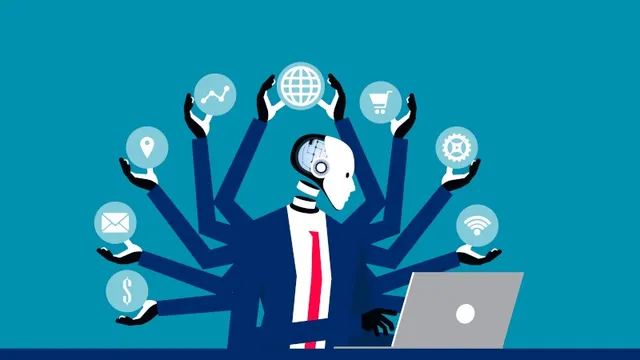
Agile leadership defines the future of AI in companies
Agile leadership defines the future of AI in companies
- Cathy Mauzaize emphasizes the need for agile leadership in leveraging AI technologies.
- The integration of AI will transform work into a multimodal environment, enabling various forms of communication.
- Successful companies will master the partnership between humans and AI while ensuring governance fosters trust.
Story
In 2026, the business landscape is anticipated to witness a significant transformation driven by advancements in artificial intelligence. Companies will increasingly rely on agile leadership to take advantage of AI technologies and incorporate them seamlessly into their operations. This shift will redefine how work is conducted, making it multimodal and integrating various communication methods such as voice, text, and video. For instance, the London School of Economics has predicted that Generation Alphas, the future workforce, will likely not communicate with their managers via email, as they will naturally expect intelligent systems to support their work. As AI becomes an integral part of businesses, organizations will find themselves navigating the dual challenges of governance and speed. Leaders will need to cultivate an environment of trust while promoting fast-paced innovation. The EU AI Act represents a critical juncture where formal regulations will shape the future of AI deployment, pushing leaders to view governance not merely as a compliance mechanism but as a foundation for trust and resilience in their operations. A pivotal aspect of this evolution will be the emergence of agentic platforms—systems that integrate human and machine collaboration to enhance operational efficiency. By 2026, it is expected that AI will not simply be an ancillary tool but embedded within daily work processes, assisting organizations to make better decisions and streamline workflows. The seamless integration of AI will require careful orchestration of various AI practices to address specific business needs and ensure that the human-AI partnerships flourish. As businesses prepare for this new era, the ability to embrace and master the collaboration between humans and intelligent systems will be vital. Success will hinge on how readily organizations can harness these technologies to drive meaningful change, and how effectively they can adjust their governance frameworks to promote trust in an increasingly automated world.


