
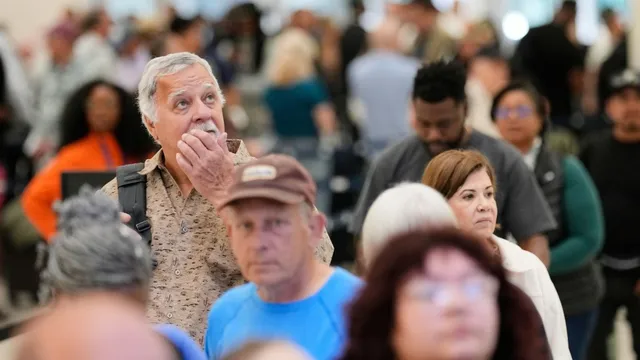
Long TSA lines plague US airports amid ongoing shutdown
- The Department of Homeland Security is currently in partial shutdown, affecting the Transportation Security Administration and leading to significant staffing shortages.
- Airports are reporting unprecedented wait times for passengers, reaching up to 4.5 hours in some locations as a result of increased call-out rates amongst TSA employees.
- The ongoing situation persists due to lack of funding resolution from Congress, putting both safety operations and employee livelihoods at risk.
Story
In the United States, a partial shutdown of the Department of Homeland Security (DHS) commenced on February 14, 2026, due to a failure of Congress to approve funding. This lapse has severely impacted services provided by the Transportation Security Administration (TSA), which is responsible for airport security. As a result, TSA personnel are working without pay, leading to increased absenteeism and resignations, with reports of up to 500 TSA employees leaving their positions. Passengers at major airports have experienced unprecedented wait times, some exceeding 4.5 hours, due to the loss of staff and insufficient funding. As the situation escalated, various U.S. airports recommended that travelers allow extra time for security, with increased advice suggesting arrival at least two and up to four hours in advance, depending on the airport. This disruption coincided with the spring travel season, which typically sees a spike in passenger volume. Critics have pointed to the lack of resolution in Congress as contributing to this chaos, emphasizing that the TSA was not equipped to handle the demand without full staffing and operational support. Testimonies before Congress highlighted the dire scenarios faced by TSA employees, many of whom have resorted to extreme measures to maintain their livelihoods during the shutdown, such as sleeping in cars or taking second jobs. The nature of the current political standoff has caused rising tensions among airport staff and frustrated passengers, which has led to increased assaults on TSA personnel. More than 400 TSA workers have reportedly quit since the start of the shutdown, resulting in more than 50% call-out rates during peak travel days, compared to the normal average of around 4%. The protracted government shutdown threatens both domestic operations and national security efforts, particularly with significant events like the FIFA World Cup on the horizon. Officials have noted that the ongoing lack of funding is not only affecting TSA operations but also jeopardizing various essential services managed by the DHS, including disaster response and cyber threat assessments. Without a timely resolution in Congress, the ramifications are likely to grow, impacting both the workforce and the public they serve.
Context
The impact of government shutdowns on the operations of the Transportation Security Administration (TSA) can have significant and far-reaching effects on airport security, employee morale, and overall air travel safety. During a government shutdown, funding for TSA is reduced or halted, leading to critical disruptions in staffing and operational capability. As a direct consequence, many TSA employees are either furloughed or required to work without pay, resulting in increased workloads for those who remain on duty. This can lead to longer lines at security checkpoints, reduced efficiency in processing passengers, and heightened stress for both employees and travelers alike. Moreover, during government shutdowns, the TSA faces challenges in maintaining the level of security necessary to ensure the safety of air travel. The reduction in personnel often leads to a compromise in the thoroughness of security checks, increasing the vulnerability of airports to potential threats. The disruption in standard operating procedures may give rise to concerns from both the traveling public and airport authorities about the effectiveness of the security measures in place. The resulting uncertainty can affect travelers’ perceptions of safety and may lead to decreased air travel during shutdown periods, impacting airline revenues and the broader economy. In addition to immediate operational disruptions, government shutdowns can have a longer-term impact on TSA's ability to recruit and retain qualified personnel. The increase in job insecurity and low morale stemming from repeated shutdowns can deter potential applicants from seeking employment in an already challenging work environment. The TSA requires a consistent influx of well-trained personnel to maintain its security standards, and the threat of government shutdowns can create a less attractive work atmosphere for current and prospective employees. Furthermore, the repercussions extend beyond just the operational capabilities of the TSA, as they can affect the entire airport ecosystem, including airlines, maintenance teams, and even concession operators. Increased wait times and security disruptions discourage travelers, leading to a potential decline in ticket sales and overall passenger satisfaction. The cascading effects of operational challenges during government shutdowns highlight the necessity for sustainable funding mechanisms to ensure that TSA can fulfill its essential role in maintaining national security and providing safe air travel.
