

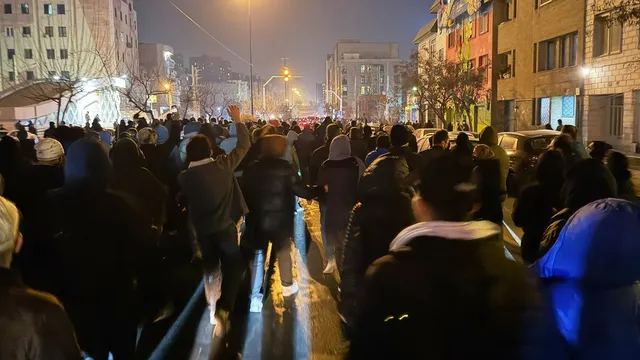
Trump considers extreme measures against Iran amidst protests
Trump considers extreme measures against Iran amidst protests
- The Iranian regime faces renewed protests led by citizens expressing deep dissatisfaction over economic conditions.
- Donald Trump has supported these protests and is considering military action, including potential assassinations of Iranian leaders.
- The situation reflects escalating tensions between the U.S. and Iran, as the regime remains resistant to negotiating under pressure.
Story
In recent developments, protests against the Iranian regime intensified, particularly after President Donald Trump showed support for the demonstrators. These protests, primarily motivated by economic grievances, have escalated since December 2025, leading to violent crackdowns by government forces. Estimates suggest that around 30,000 demonstrators may have been killed, with at least 6,876 confirmed by the Human Rights Activists News Agency. Amidst this social unrest, Trump has also indicated a significant military buildup in the Persian Gulf, including the deployment of naval forces and reconnaissance aircraft. It appears that the United States government is considering the use of limited military strikes as a strategy to curb Iran's nuclear ambitions and compel them to return to the negotiating table. This military presence accompanies renewed nuclear discussions set to begin soon between U.S. and Iranian officials. The Iranian government maintains a defiant stance, with officials claiming they will not yield to external pressure during the negotiations. As military assets gather in the region, speculation grows over the intentions behind these deployments, with Trump's administration reportedly weighing the option of targeting key Iranian leadership figures, including the son of Supreme Leader Ayatollah Ali Khamenei, Mojtaba Khamenei, who is viewed as a potential successor. The outcomes of these events could have significant implications for U.S.-Iran relations and the broader geopolitical climate in the Middle East.
Context
The impact of US military presence in the Persian Gulf has been a significant geopolitical factor since the latter half of the 20th century. Situated strategically, the Gulf region harbors vital shipping routes, particularly for oil exports, making it central to global energy security. The presence of American military forces contributes to a perception of stability for Gulf states, deterring potential aggressors such as Iran, which has been known to pursue militaristic policies in the region. This military footprint has allowed for rapid response capabilities to crises, including wars and conflicts that threaten the geopolitical balance. Additionally, the US military presence fosters military cooperation and readiness among Gulf Cooperation Council (GCC) countries, enhancing their defense capabilities through joint exercises and training programs. This aspect plays a crucial role in capacity-building for smaller states within the GCC, which may otherwise struggle to maintain their sovereignty against regional threats. Nevertheless, military support comes with the underlying challenge of increased political dependence on the US, which can strain local governance and sovereignty as states prioritize alignment with US foreign policy goals to secure military aid and protection. The military presence also influences local economies, as the US military bases create job opportunities and drive demand for local services and goods. However, this dependence may lead to economic vulnerabilities, particularly during periods of reduced US engagement or changes in foreign policy priorities. The downside is that it can exacerbate regional tensions, particularly among countries opposed to US influence, leading to a complex environment where military presence does not necessarily equate to peace or stability. Insights into public opinion reveal that in several host countries, there is a significant ambivalence towards the presence of US forces. While some segments of the population view the US as a stabilizing force, others perceive it as a form of imperialism that infringes on national sovereignty. This dichotomy presents challenges for US foreign policy, as it must navigate the balance between providing security and not alienating local populations. Consequently, the persistence of US military presence in the Persian Gulf remains a double-edged sword: a necessary bulwark against aggression but also a potential source of unrest and resentment.


