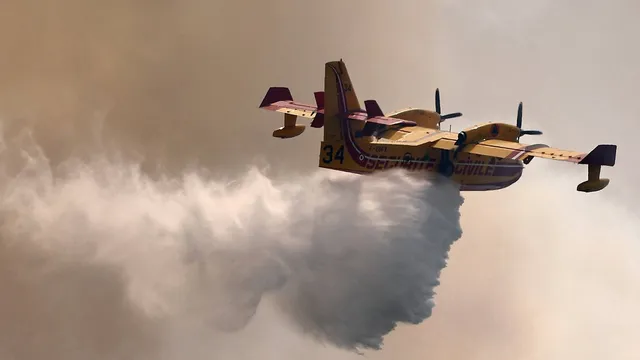
Wildfires rage across Europe as heat wave fuels destruction
environment
tragic
catastrophic

Wildfires rage across Europe as heat wave fuels destruction

21
(Update: )
political and economic union of 27 European states
  • Wildfires have burned more land in Europe this year than the annual average over the past two decades.
  • Two firefighters died in France while battling wildfires, highlighting the extreme conditions caused by the heat wave.
  • The ongoing crisis emphasizes the urgent need to address climate change and its impact on weather patterns.
Share opinion
2

Story

In July 2026, extreme heat waves have gripped Southern Europe, leading to devastating wildfires in Spain and France. Firefighters in Spain are struggling to contain the largest wildfire of the year in Guadalajara, which has burned an estimated 32,000 hectares and forced evacuations in numerous municipalities. In France, two firefighters tragically lost their lives while battling a fire in the Gironde region, highlighting the dangerous conditions exacerbated by the ongoing heat wave. The situation is dire, with authorities warning of a very high risk of further wildfires across both countries. The heat wave has been described as one of the most intense in recent years, with temperatures soaring above normal levels. In Western Europe, the average high temperature is forecasted to be 26.6 degrees Celsius, significantly higher than the historical average for this time of year. The combination of extreme heat, drought, and human activity has led to a surge in wildfires, with data indicating that more land has burned in Europe this year than the annual average over the past two decades. This alarming trend is attributed to climate change, which scientists say is intensifying heat waves and creating conditions conducive to wildfires. In response to the escalating situation, authorities in both Spain and France have implemented measures to mitigate the risk of further fires. In France, officials have urged residents to avoid using barbecues and other activities that could spark wildfires, as nine out of ten fires are caused by human activity. Meanwhile, Spain's weather agency has issued warnings about the ongoing danger of wildfires, advising the public to exercise extreme caution. The situation remains precarious, with forecasts predicting a continuation of high temperatures and dry conditions in the coming days. As the wildfires continue to rage, the impact on local communities and the environment is profound. Thousands of hectares of land have been scorched, wildlife habitats destroyed, and air quality deteriorated due to smoke and ash. The loss of life among firefighters underscores the human cost of these disasters, as they bravely confront the flames to protect lives and property. The ongoing crisis serves as a stark reminder of the urgent need to address climate change and its far-reaching consequences, as Europe grapples with the reality of a warming planet and its associated risks.

Context

Climate change has emerged as a significant factor influencing the frequency and intensity of wildfires across Europe. Rising temperatures, prolonged droughts, and shifting precipitation patterns have created an environment conducive to wildfires. The Mediterranean region, in particular, has experienced a marked increase in wildfire incidents, with hotter summers and drier conditions exacerbating the risk. These changes are not only a result of natural variability but are increasingly linked to anthropogenic climate change, which has altered the landscape and ecosystems that are susceptible to fire. The implications of these changes are profound, affecting biodiversity, air quality, and human health, as well as leading to economic losses in affected areas. The impact of climate change on wildfires is multifaceted. Higher temperatures can lead to increased evaporation rates, reducing soil moisture and making vegetation more flammable. Additionally, the changing climate has resulted in longer fire seasons, with some regions experiencing wildfires year-round. This extended period of vulnerability means that fire management strategies must adapt to a new reality where traditional methods may no longer suffice. The increased frequency of extreme weather events, such as heatwaves and storms, further complicates the situation, as these events can create conditions ripe for wildfires to ignite and spread rapidly. Moreover, the ecological consequences of wildfires are significant. Fires can lead to habitat destruction, loss of biodiversity, and disruption of ecosystem services. Species that are already vulnerable due to habitat loss or climate change may face additional pressures from increased fire activity. The recovery of ecosystems post-fire can take years, and in some cases, the landscape may not return to its original state, leading to long-term ecological shifts. The social and economic ramifications are equally severe, with communities facing displacement, loss of property, and increased costs for firefighting and recovery efforts. In conclusion, the impact of climate change on wildfires in Europe is a pressing issue that requires immediate attention and action. Policymakers, researchers, and communities must work together to develop adaptive strategies that mitigate the risks associated with wildfires. This includes investing in fire prevention measures, enhancing land management practices, and increasing public awareness about the importance of preparedness. As climate change continues to evolve, so too must our approaches to managing and understanding wildfires, ensuring that we protect both human lives and the natural environment.