

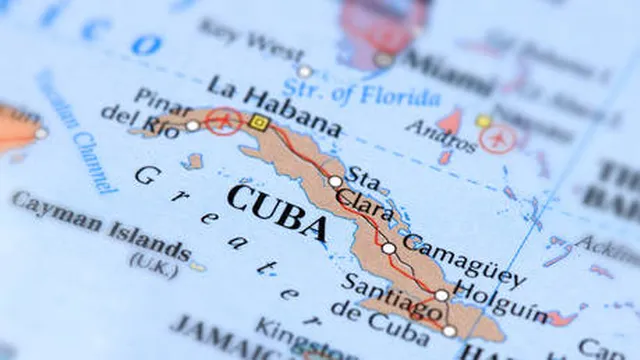
US plans regime change in Cuba by 2026
US plans regime change in Cuba by 2026
- US officials are reportedly working to find insiders in the Cuban government as part of a regime change plan.
- The proposed total blockade of oil imports to Cuba aims to further destabilize the current administration.
- The situation in Cuba could lead to significant geopolitical changes as US actions evolve.
Story
In recent months, the United States has increased its focus on Cuba, particularly in the wake of the recent ousting of Venezuelan President Nicolas Maduro. American officials, encouraged by the recent events in Venezuela, have expressed interest in identifying insiders within the Cuban government to facilitate a regime change aimed at President Miguel Diaz-Canel's administration. Several meetings have reportedly taken place between US officials and Cuban exiles located in Miami and Washington, aimed at uncovering a government official in Havana who may be open to collaborating on a potential deal to topple the current regime. The US government believes that the economic state of Cuba is nearing collapse after the loss of financial and oil support from Venezuela. According to reports, officials feel this situation presents a favorable opportunity to intervene in Cuba. Discussions within President Donald Trump's administration have circulated the idea of imposing a total blockade on oil imports to Cuba. American officials claim this drastic measure could effectively incapacitate the Cuban government. Previous sanctions have already restricted Cuba's access to resources since the 1960s, but the proposed blockade could represent the most intense pressure since the naval blockade instituted by President John F. Kennedy in 1962. Furthermore, statements from US officials, including Trump, indicate that the Cuban regime is vulnerable and may be on the brink of collapse. Trump has urged Cuban leaders to negotiate with the US, warning of dire consequences if they fail to act. Amid growing tensions, Cuban authorities have dismissed Trump's threats, with President Diaz-Canel asserting Cuba's sovereignty and its resilience against external pressures. Russian officials have also condemned the US's ongoing strategy in the region, characterizing American actions as violations of international law. As the situation develops, Washington appears committed to its plan, seeking a conclusive resolution by the end of 2026, inspired by the recent outcomes in Venezuela. The US is executing a detailed strategy that may redefine diplomatic relations, while dissenting voices from within Cuba continue to resist the prospect of foreign intervention, emphasizing their determination for self-governance. The outcomes of these maneuvers remain to be seen, as both Cuba and US policies evolve amidst the complexities of international diplomacy.
Context
The United States has imposed a series of sanctions on Cuba throughout the 20th and 21st centuries, primarily in response to the Cuban Revolution of 1959, which led to Fidel Castro's socialist government taking power. The initial sanctions were implemented in October 1960, following the Cuban government's nationalization of American oil refineries without compensation. In response, the U.S. imposed a partial trade embargo, which was designed to limit Cuba's ability to trade with American businesses. Shortly thereafter, in January 1961, the U.S. broke diplomatic relations with Cuba, marking a significant turning point in U.S.-Cuba relations. The situation escalated during the Bay of Pigs invasion in April 1961 and the subsequent Cuban Missile Crisis in 1962, leading to a broader and more comprehensive trade embargo that would last for decades. Over the years, the sanctions have evolved, adapting to changing political landscapes and events both in Cuba and the international community. The Cuban Democracy Act of 1992 and the Helms-Burton Act of 1996 further tightened restrictions on trade and travel, underlining the U.S. commitment to isolating the Cuban regime economically and politically. While the sanctions were aimed at pressuring the Cuban government to encourage democratic reform and respect for human rights, their impact has been multifaceted, often leading to significant hardship for the Cuban populace and limited success in achieving U.S. policy objectives. The embargo has also fostered an enduring anti-American sentiment among Cubans, framing the U.S. as the principal enemy and reinforcing the legitimacy of the Cuban government. In recent years, particularly during the Obama administration, there was a shift in U.S. policy toward Cuba, leading to a thaw in relations. In 2014, President Obama announced a series of measures aimed at normalizing diplomatic relations, which included easing some travel restrictions, allowing remittances from Cuban-Americans to their families in Cuba, and reopening embassies in Washington and Havana. However, this rapprochement faced setbacks during the Trump administration, which reinstated many of the sanctions and reversed several of Obama’s initiatives, citing the Cuban government's support for authoritarian regimes in Venezuela and Nicaragua as reasons for the stricter policies. As of January 2026, the sanctions continue to shape U.S.-Cuba relations. The Biden administration has indicated a desire to reassess the policies but has faced complexities including domestic political pressure and resistance from congressional opponents of normalization. The Cuban economy remains vulnerable due to the prolonged embargo, which compounds challenges such as limited access to international markets, foreign investment, and exacerbated economic conditions worsened by the COVID-19 pandemic. The future of U.S. sanctions on Cuba will likely depend on broader geopolitical considerations, the state of human rights in Cuba, and the ongoing dialogue regarding normalization of relations.


