

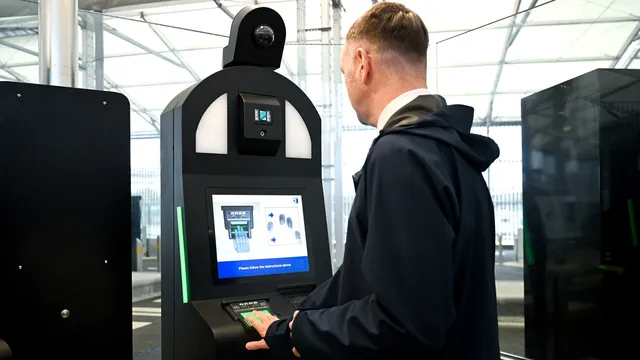
New biometric border system requires face and fingerprint scans for American travelers to Europe
New biometric border system requires face and fingerprint scans for American travelers to Europe
- The new biometric border system in Europe will require all visitors to provide facial scans and fingerprints starting April 10, 2026.
- Implementation of the Entry/Exit System has led to increased wait times at border crossings, with some locations experiencing up to three-hour delays.
- Travelers are encouraged to allow extra time for processing and stay informed about real-time updates to navigate these changes smoothly.
Story
Starting April 10, 2026, Europe will fully implement a new biometric border system requiring all visitors to provide fingerprints and facial scans upon arrival. This system, part of the Entry/Exit System (EES), was gradually rolled out beginning on October 12, 2025, across 29 countries in the Schengen Area, which allows free movement among its member countries. Countries such as France, Italy, and the United Kingdom are leading the charge in adapting this rigorous entry protocol, which ultimately aims to enhance border management and security while combating fraud and terrorism. The new digital registration process will replace traditional passport stamping, allowing carriers to perform identity checks through an online system. Travelers arriving in Europe can expect longer wait times, with processing speeds increased by as much as 70%, causing peak-period queues to extend to three hours in some locations. The European Commission suggests that during peak travel times, border authorities may temporarily suspend the biometric system for up to six hours to alleviate congestion until September 2026, indicating a recognition of the operational challenges presented by the new program. As millions of Americans travel to Europe each year—estimated at 16 to 18 million in 2025—this transition is anticipated to affect their travel experience significantly as logistics adjust to the new requirements. Experts recommend travelers to factor in additional waiting time and to remain informed about real-time flight and border control updates to navigate potential delays as the rollout deadline approaches. Over the next few years, as the new system stabilizes, it is expected to streamline processes for travelers with biometric passports, as they will have access to a self-service system. While the initial implementation is likely to face operational challenges, officials are hopeful for a smoother experience post-April 2026, provided that adequate resources and infrastructure are put in place to support the new procedures.


