

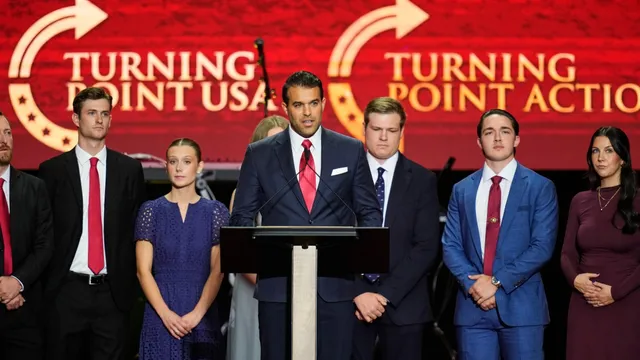
Kolvet warns impeachment if Trump drops nuclear bomb on Iran
Kolvet warns impeachment if Trump drops nuclear bomb on Iran
- Andrew Kolvet stated he would call for impeachment if Trump dropped a nuclear bomb on Iran.
- Trump has faced backlash over escalating threats and potential military actions against Iran.
- Discussions in Congress are underway to curb Trump's war powers amidst growing tensions.
Story
In recent developments regarding U.S.-Iran relations, President Donald Trump escalated threats against Iran, which included a chilling warning that 'a whole civilization will die tonight.' Following this statement, Andrew Kolvet, a spokesperson for Turning Point USA and executive producer of The Charlie Kirk Show, commented on the drastic measures he would support if Trump were to use nuclear weapons. Kolvet emphasized that he viewed such an event as highly unlikely but still made the bold statement that he would call for impeachment if it were to happen. This remark stirred public discussions on the president's authority and potential actions that could be seen as war crimes. The political atmosphere has become charged, with many Democrats criticizing Trump's rhetoric and pushing for a resolution to curb his war powers, especially given the backdrop of violence that saw more than 3,500 casualties reported in Iran due to escalating conflicts. These actions led to discussions in Congress about a new vote regarding Trump's military authority, particularly in light of the corporations' concerns about a potential full-scale war against Iran. As tensions mounted, Iran’s Supreme National Security Council announced acceptance of a conditional two-week ceasefire, just as Trump was boldly threatening military actions. This ceasefire has been viewed as an effort to halt the rising violence, although critics from both parties voiced concerns over Trump’s approach to handling international relations. Some lawmakers have shifted their positions, expressing support for measures that would limit the president's military capabilities without congressional approval. Discussions surrounding a war powers resolution are gaining traction, highlighting frustrations with the administration’s strategies regarding the ongoing conflict with Iran. In light of these developments, Senate Democrats pointed to Trump's behavior as indicative of instability, suggesting that if he were to restart conflict operations, it could lead to severe consequences domestically and internationally. Support from both sides of the aisle has begun to coalesce around initiatives aimed at redefining the limitations of presidential military authority. As these tensions both domestically among lawmakers and internationally with Iran continue to escalate, the implications for U.S. foreign policy and domestic governance remain significant and complex. The growing desire among legislators to clip Trump's war powers indicates a notable shift in political dynamics. The previous attempts to restrain his military actions had been met with resistance from some members of Congress, but recent comments have prompted a reevaluation of these stances. Amid this tumult, public sentiment appears to lean towards caution and restraint from further military actions. Thus, as negotiations and political maneuvering continue, the situation carries the potential for significant implications regarding military authority and U.S. policy toward Iran moving forward.


