

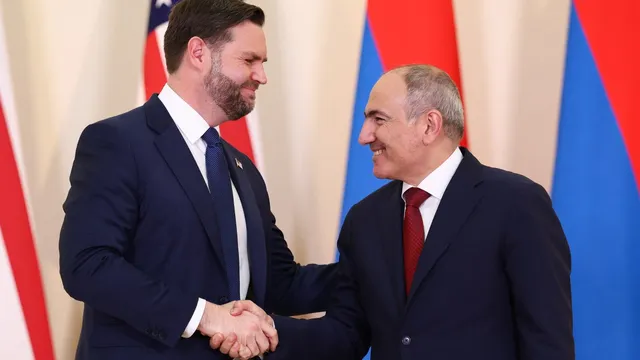
Pashinian's party leads as Armenia votes on future direction
Pashinian's party leads as Armenia votes on future direction
- Armenians are voting in parliamentary elections on June 7, 2026, with 2.49 million registered voters.
- Nikol Pashinian's Civil Contract party is leading in pre-vote polls against pro-Russia parties.
- The election outcome will significantly influence Armenia's future direction and its relations with Russia and the West.
Story
On June 7, 2026, Armenia held parliamentary elections amid significant political tension and international scrutiny. The elections were seen as a crucial test of Prime Minister Nikol Pashinian's support following his controversial peace efforts with Azerbaijan and his attempts to pivot Armenia closer to the West, moving away from decades of reliance on Russia. Approximately 2.49 million registered voters were eligible to cast their ballots across 2,005 polling stations, with Pashinian's Civil Contract party leading in pre-vote polls, garnering support from 24-32 percent of the electorate. In contrast, the pro-Russia Strong Armenia party, led by Samvel Karapetian, was polling at 6-11 percent. The elections were monitored by around 400 international observers, highlighting the global interest in Armenia's political landscape. The electoral process was marred by the arrest of six Strong Armenia candidates just before the elections, raising concerns about the fairness of the electoral environment. The backdrop of these elections included Russia's recent economic coercion against Armenia, which had imposed restrictions on Armenian exports in response to Yerevan's westward drift. This situation has led to heightened tensions between Armenia and Russia, with President Vladimir Putin warning of potential consequences for Armenia's European integration aspirations. The elections were framed as a historic moment for Armenia, with implications for its foreign policy and regional stability. Pashinian's government has been supported by the US and EU, particularly after signing a strategic partnership charter with the US, which included agreements on critical minerals and energy cooperation. The outcome of these elections could significantly impact Armenia's future direction, either consolidating Pashinian's peace efforts or leading to a potential collapse of the current political framework.
Context
analysis data analysis policy policy trends global trends data global geopolitical shift market market analysis strategic economic shift strategic economic market impact market insight impact policy insight impact global strategic market data global global global economic strategic market insight data policy global strategic economic trends global impact economic market shift analysis economic insight policy global market market economic strategic economic insight insight strategic strategic economic policy impact data trends trends shift geopolitical economic trends economic impact geopolitical strategic shift shift...


