

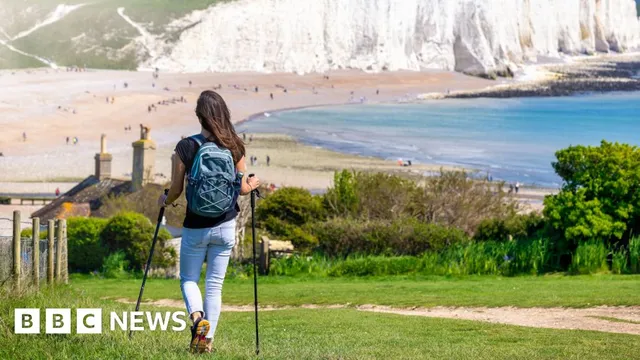
King Charles coastal path opens over 2,000 miles of England's coast
King Charles coastal path opens over 2,000 miles of England's coast
- The King Charles III England Coast Path stretches over 2,700 miles, creating a continuous trail along England's shoreline.
- More than 1,000 miles of new paths were created, while existing ones were upgraded to enhance walkability and accessibility.
- This project, initiated 18 years ago, now allows the public to legally access previously off-limits coastal areas.
Story
In England, the King Charles III England Coast Path has been established, allowing access to the entire shoreline for the first time. This extensive walking route spans over 2,700 miles and offers walkers unprecedented legal rights to traverse areas previously off-limits. The project, which took 18 years to complete, began under the government of Prime Minister Gordon Brown and has involved collaboration from seven subsequent prime ministers. This coastal path is notable for its continuous trail, enabling individuals to walk alongside the sea at various points along England's coastline. Although much of the route incorporates existing paths, over 1,000 miles of new paths have also been created, and many pre-existing sections have received significant upgrades. Importantly, this development comes alongside the establishment of a coastal margin, the area between the path and the sea, which includes beaches, dunes, and cliffs, thus enhancing public accessibility. One of the core features of the project is the provision for path alteration, referred to as 'rolling back' if the coastline erodes or shifts due to environmental changes. This forward-thinking legislation, introduced by the Marine and Coastal Access Act of 2009, ensures that the trail adapts to ongoing changes in the coastal environment. Moreover, the path is designed to provide improved accessibility for individuals with mobility challenges, allowing them to enjoy more of the coastline than ever before. As the path was officially renamed following the coronation of King Charles in 2024, it represents a significant step forward in terms of public access to natural spaces. While many areas along the path have previously been open to the public, there remain sections that allow for newly accessible zones, enhancing the exploration experience for walkers. The efforts by Natural England, the government advisory body for the natural environment, highlight a commitment to reshaping how residents and visitors interact with England’s rich coastal heritage.


