

Marcos vows to imprison powerful politicians involved in corruption scandal by Christmas
Marcos vows to imprison powerful politicians involved in corruption scandal by Christmas
- Amid public uproar, President Ferdinand Marcos Jr. revealed criminal complaints have been filed against 37 senators, Congress members, and business leaders linked to corruption.
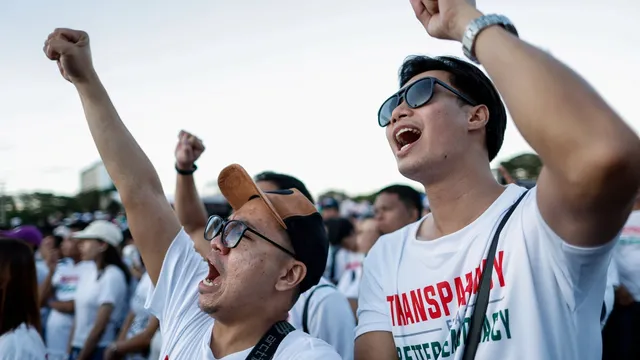
- Thousands gathered in Manila for rallies demanding accountability for the corruption scandal involving flood defense projects.
- Marcos assured the public that many implicated individuals will face jail time by Christmas, signaling a strong stand against corruption.
Story
In recent months, the Philippines has been engulfed in a corruption scandal involving flood control projects that has implicated numerous powerful figures, including senators, members of Congress, and wealthy businesspeople. The scandal has come to light amid the backdrop of devastating typhoons that have affected millions, highlighting the importance of flood defense. Following significant public outrage, President Ferdinand Marcos Jr. announced that many of the implicated individuals would end up in jail by Christmas, showcasing a commitment to accountability. A fact-finding commission established by the government has filed criminal complaints against at least 37 individuals for serious offenses, including graft, corruption, and plunder. These criminal allegations also extend to construction executives and government officials who evaded taxes totaling nearly 9 billion pesos. As the public rallies for justice continue, demonstrated by significant gatherings in the capital Manila, the government faces immense pressure to act decisively against those implicated. Demonstrators, organized by various groups, are demanding accountability for the financial mismanagement and theft of public funds related to the infrastructure projects. The situation has led to heightened security measures in and around Manila, especially as protests ramp up over the weekend, showcasing the widespread demand for change and the public's frustration with political corruption. In an effort to address the scandal, President Marcos emphasized that investigations would include everyone, indicating that powerful political figures, including his allies, are not immune from scrutiny. This sentiment was echoed by other officials, who also underscored the importance of restoring trust in government institutions after the recent revelations. The Anti-Money Laundering Council has taken proactive steps to address the issue by freezing assets tied to the suspects, and government officials have promised that those accused will be treated like ordinary citizens in terms of legal consequences. The implications of this scandal are not only significant for those directly involved but also for the nation as a whole. The public's response and continued advocacy for transparency will likely shape political discourse in the Philippines moving forward, especially in light of the upcoming national budget discussions, which have also brought scrutiny upon other projects potentially marred by corruption. As the investigations unfold, the outcomes may serve as a watershed moment for the nation in its ongoing battle against corruption and the restoration of public confidence in government leadership.


