
Kim Jong Un lashes out at South Korea's nuclear submarine plans
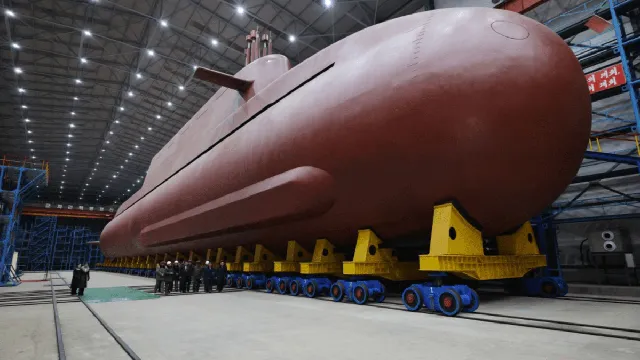
- North Korean leader Kim Jong Un inspected a nearly completed nuclear-powered submarine.
- During the visit, he criticized South Korea's plans to build a similar vessel, viewing it as a threat.
- The developments indicate an ongoing arms race that may exacerbate regional tensions.
Story
In recent events in North Korea, Supreme Leader Kim Jong Un inspected the construction progress of what the country claims to be an 8,700-ton nuclear-powered submarine. This visit occurred after Kim oversaw a test-firing of a long-range missile, highlighting an uptick in military activity amid rising tensions on the Korean Peninsula. Photographs published by the Korean Central News Agency showed the nearly completed hull of the submarine, with features suggesting it could soon be launched. Kim's remarks during his visit included direct condemnation of South Korea's ambitions to develop its own nuclear submarine, which he deemed a severe threat to North Korea's national security. This assertion aligns with a wider narrative where Kim portrays external military advancements, especially those backed by the United States, as provocations necessitating a robust response from North Korea. The leader emphasized that building a nuclear-powered vessel is essential for reinforcing North Korea’s naval capabilities and deterrence posture. Experts have indicated that North Korea's submarine is being designed to potentially be armed with nuclear weapons, including power derived from likely technological assistance. These developments come amid a broader modernization of North Korea's military, with numerous testing activities being conducted to enhance missile technology. There is concern that if North Korea achieves greater underwater missile capabilities, it would elevate the risks of unintended conflicts, especially considering its recent cooperation with Russia regarding military technology. The backdrop to the recent militarization efforts includes a historical context where negotiations to curb North Korea's nuclear ambitions have stagnated, particularly after collapsed talks in 2019. Washington and Seoul's calls for diplomacy continue to be dismissed by Pyongyang, which insists on advancing its military projects in light of perceived threats. Kim's inspection of the submarine construction, coupled with his aggressive defense rhetoric against South Korean initiatives, underscores the increasingly volatile situation in the region and raises alarms regarding potential arms races that could emerge as both Koreas pursue similar military capabilities.
Context
The military relations between Korea, particularly involving the Republic of Korea (South Korea) and the Democratic People's Republic of Korea (North Korea), have been a critical factor in regional stability and security dynamics in East Asia. The Korean Peninsula has been a significant flashpoint for tensions since the Korean War in the early 1950s, leading to an intricate web of military postures, alliances, and engagements. South Korea has cultivated a strong military alliance with the United States, relying on the presence of U.S. forces as a deterrent against potential aggression from the North. In contrast, North Korea has pursued a policy of military buildup, including the development of nuclear weapons, which it views as a necessary counterbalance to perceived threats from the South and its allies. This militarized stance has led to a precarious security environment that continues to challenge both diplomatic and military engagement strategies in the region. In recent years, various attempts have been made to engage in dialogue aimed at reducing tensions and fostering stability in military relations. These efforts, particularly highlighted in summits and meetings between the leaders of the two Koreas, have had mixed results. While moments of hope emerged with diplomatic overtures, such as the inter-Korean summits in 2018, the outcomes have often been undermined by the persistence of underlying tensions and provocative actions, including missile tests by North Korea and joint military exercises conducted by South Korea and the United States. The challenge lies in balancing military readiness while pursuing peace initiatives, as any sign of weakness could provoke further aggression from North Korea. Internationally, the United States plays a pivotal role in the dynamics of Korean military relations, providing security guarantees to South Korea while attempting to negotiate denuclearization with North Korea. The U.S. maintains a significant military presence on the peninsula, which serves both as a deterrent and as a mechanism for power projection in the region. Yet, this presence is often met with criticism from North Korea and faces calls for reduction or withdrawal from certain South Korean political factions advocating for improved inter-Korean relations. The complexity of these relationships is compounded by the interest of other regional powers, such as China and Russia, both of whom have vested interests in maintaining a balance of power on the Korean Peninsula while promoting stability and economic ties. Looking ahead, the prospects for military relations on the Korean Peninsula remain uncertain. Ongoing developments in North Korea's nuclear program, coupled with South Korea's military advancements, continue to shape the strategic landscape. The key to forging a path forward lies in establishing frameworks for sustained dialogue that address security concerns and negotiate denuclearization while ensuring that military postures do not escalate into conflict. Ultimately, a cautious approach that prioritizes communication, confidence-building measures, and multilateral engagement with all stakeholders is imperative in managing the delicate balance of military relations on the Korean Peninsula.
