

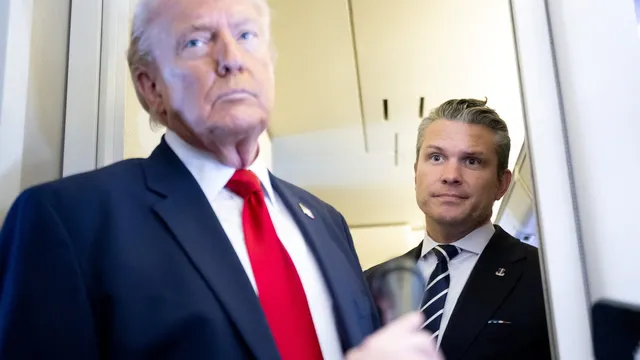
Majority of GOP aides claim Hegseth undermines Trump's foreign policy
Majority of GOP aides claim Hegseth undermines Trump's foreign policy
- Over half of Republican aides in Congress believe Hegseth has negatively impacted Trump's foreign policy.
- The administration continues to assert Hegseth's effectiveness despite public criticism and controversies.
- The ongoing military operations point to a significant shift in U.S. foreign policy under Trump.
Story
The United States has seen significant military actions in the Middle East and the Caribbean under the leadership of Defense Secretary Pete Hegseth, who has been in office for around 13 months. Following a series of airstrikes targeting Iranian nuclear facilities and operations against the Houthis in Yemen, a recent poll indicated that over half of Republican congressional aides perceive Hegseth's actions as detrimental to President Donald Trump's foreign policy objectives. Public sentiment surrounding Hegseth, particularly following the military campaign in Iran, has been influenced by these perceived failures, with 72 percent of senior aides expressing concerns about his impact. The controversies surrounding Hegseth are multifold, with notable incidents such as the Signal group chat security breach, dubbed 'Signalgate,' where classified military information was allegedly shared with unintended individuals. This incident sparked a considerable backlash, with critics calling for his resignation and labeling him a 'war criminal' after questionable military operations against alleged narco-traffickers. Despite these challenges, Trump has continued to support Hegseth, asserting that he has been instrumental in executing the president's foreign strategy, specifically highlighting the alleged success of Operation Epic Fury in Iran. The primary goal of Hegseth and the Trump administration appears to reflect a shift in U.S. foreign policy, moving towards more direct military engagements in areas such as Iran and Venezuela. However, some supporters of Trump express discontent with this direction, feeling it contrasts sharply with his initial campaign promises of ending endless wars and prioritizing 'America First.' The divergence in opinions among aides and military analysts indicates a growing concern regarding the long-term implications of these military initiatives and their alignment with Trump's overarching agenda. Pentagon spokespersons have stated their belief that the president is the sole architect of his foreign policy and that only his feedback is relevant, disregarding the opinions of congressional aides. This lack of alignment between congressional aides and the executive branch raises questions about the future of U.S. foreign policy and the effectiveness of Hegseth's leadership. As military operations continue, both the administration and its critics will be closely monitoring the outcomes to assess their impact on international relations and domestic perceptions.


