

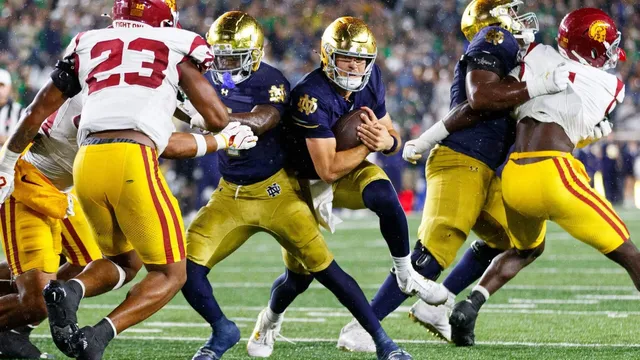
Notre Dame and USC rivalry ends after failed negotiations
Notre Dame and USC rivalry ends after failed negotiations
- The Notre Dame and USC football rivalry has been put on indefinite hiatus due to failed negotiations.
- Both schools had previously played annually since 1926, with interruptions only for World War II and the COVID-19 pandemic.
- The rivalry's pause signals a troubling trend in college football, as traditional matchups become less prioritized in favor of new schedules.
Story
In the United States, the historic football rivalry between the University of Notre Dame and the University of Southern California has been paused indefinitely. This decision came after the two institutions were unable to reach an agreement on terms for the continuation of their rivalry, which has seen games played annually since 1926, with the exception of a few interruptions during World War II and the COVID-19 pandemic. Despite efforts from both sides to maintain the tradition, discussions ultimately fell short, leading Notre Dame to schedule a different opponent, Brigham Young University, for a home-and-home series in 2026 and 2027 instead. In February, USC athletic director Jen Cohen expressed a desire to keep the rivalry alive, mentioning concerns about the changing college football landscape and its impact on both schools. The last agreed-upon game was not meant to be played until the 2026 season, but plans began to unravel when Notre Dame's guarantee for a College Football Playoff spot through a new agreement became a point of contention. This seemingly gave the Irish an upper hand, leading to tension between the schools. As discussions continued, USC sought to alter the game schedule, suggesting a neutral site for the matchup, but both sides could not come to an understanding. This debate over location and timing underscores the shifting priorities within college sports as schools navigate their schedules and competitive dynamics. The two programs are recognized for their storied history, each boasting a significant number of national championships and a long tradition of football excellence. Fans and alumni from both schools were left disappointed by the collapse of negotiations. Each side has expressed their longing for the rivalry to be renewed in the future, citing the importance of the competition not only to the teams but to their broader communities. The rivalry has delivered numerous memorable moments and is considered one of the highlights of college football. With the landscape of the sport continuously evolving due to factors like television contracts and playoff formats, many fear that this pause is just the beginning of a trend where longstanding rivalries are sacrificed for more lucrative arrangements.
Context
The impact of the College Football Playoff (CFP) on conference scheduling is a critical area of study, particularly in understanding how it has transformed the landscape of college football. Since its inception in the 2014 season, the CFP has introduced a new level of competitiveness and urgency to the sport, compelling conferences to reassess their scheduling strategies. With the emphasis on securing a spot in the playoff, teams now prioritize matchups that will enhance their strength of schedule, a key factor considered by the selection committee. This has led to more high-stakes games, as teams within power conferences are increasingly opting for challenging non-conference opponents to boost their playoff candidacy, shaping a more dynamic and competitive environment within collegiate athletics. Moreover, the conference scheduling patterns have evolved as schools aim to balance their conference games with strategically chosen non-conference games. The need to be perceived as a strong candidate for the playoffs has also pushed teams to avoid scheduling easier opponents, which may have been commonplace in the past. Instead, many programs are now scheduling serious competitors, particularly those from other major conferences. This shift not only improves the quality of games throughout the season but also increases fan engagement and viewership, as fans are drawn to contests between highly ranked teams that have implications for playoff berths. The ramifications of this scheduling evolution extend beyond just on-field competition; they impact conference revenue structures as well. Contests between high-ranking teams command more attention, yielding higher ticket sales and greater television ratings, which translates to increased revenue for the conferences involved. The financial incentives are significant, as enhanced media rights deals and sponsorship opportunities arise from the rise in visibility that a more competitive schedule provides. As programs strive for playoff inclusion, the economic implications of such scheduling choices become a driving force in how conferences construct their annual schedules. In conclusion, the College Football Playoff has indeed reshaped conference scheduling in numerous ways. The demand for stronger schedules has led to a more competitive landscape, which not only enhances the quality of the games but also engenders greater financial benefits for conferences and institutions. As the playoff system continues to evolve, the impact on scheduling will likely remain a pivotal area for teams and conferences alike, necessitating ongoing research and strategic planning to adapt to this new paradigm.


