
politics
controversial
provocative

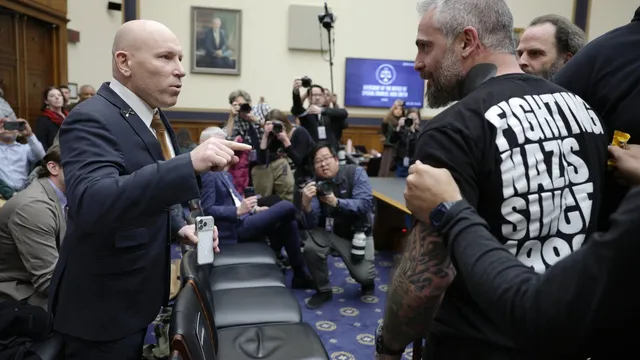
Michael Fanone confronts Ivan Raiklin at congressional hearing

Jan 22, 2026, 4:53 PM40
(Update: Jan 23, 2026, 12:07 AM)
American police officer

Michael Fanone confronts Ivan Raiklin at congressional hearing

  • Michael Fanone confronted Ivan Raiklin during a congressional hearing focused on Trump's legal issues.
  • The verbal exchange escalated, leading to police intervention and Fanone being escorted out.
  • The incident reflects ongoing tensions regarding the Capitol riot and implications for law enforcement.
Share your opinion
4

Story

In the United States, a volatile confrontation occurred during a congressional hearing involving former D.C. Metropolitan Police officer Michael Fanone and conservative activist Ivan Raiklin. This incident took place amidst testimony by former Department of Justice special counsel Jack Smith, who was addressing investigations surrounding former President Donald Trump. Fanone, known for his vocal criticism of Trump and his experience during the January 6 Capitol riots, faced off against Raiklin after the latter provocatively introduced himself in the packed House Judiciary Committee room. The altercation escalated quickly as both men exchanged heated remarks, with Fanone expressing his disdain for Raiklin, whom he views as a foe. Raiklin attempted to provoke Fanone further, implying something about his behavior. The verbal conflict intensified to a point where police were required to intervene and escort Fanone out of the hearing. This contentious exchange occurred during a recess, with onlookers noting the charged atmosphere in the room as several Democratic lawmakers supported Fanone's actions. The backdrop of this confrontation is rooted in broader tensions surrounding Trump’s legal challenges. Jack Smith's testimony aimed to defend his investigations, countering accusations from Republican lawmakers that the DOJ had been politicized to target Trump. Smith asserted that his investigations were based on factual evidence rather than political motivations, contrasting with claims made by GOP representatives during the hearing, including accusations of a lack of humility in Smith's approach. Michael Fanone, who was severely injured during the January 6 insurrection, has become a prominent figure in discussions relating to police responses to political violence. His experience resonates with multiple instances of violence against law enforcement during the Capitol riot, where several officers sustained injuries. As such, Fanone's presence at the hearing, alongside other officers who responded to the insurrection, illustrates ongoing debates over law enforcement's role in protests and public safety. This incident highlights the divisive atmosphere surrounding discussions of Trump’s presidency and legal issues. Fanone’s clash with Raiklin exemplifies the friction between those who uphold democratic principles and those who challenge the legitimacy of the post-2020 election reality. The involvement of public figures in these confrontations suggests further escalations in the ongoing national dialogue over the events of January 6 and their repercussions for American democracy and law enforcement.

Context

The impact of the January 6 Capitol riot on law enforcement has been profound, revealing systemic issues and prompting widespread reflection and reform. The events of that day, characterized by a violent breach of the U.S. Capitol as a result of political tensions, had immediate implications for law enforcement agencies at both the federal and local levels. Officers faced unprecedented challenges in crowd control, intelligence gathering, and response coordination. The riot exposed vulnerabilities in preparation and response protocols, leading to significant scrutiny of how law enforcement agencies managed the event. In particular, criticisms were raised regarding intelligence failures prior to the incident and the delayed response in mobilizing sufficient resources to address the threat effectively once it had materialized. In the aftermath, law enforcement agencies initiated comprehensive reviews of their practices. This included assessments of training protocols for handling civil unrest, as well as enhanced communication strategies among federal, state, and local law enforcement agencies. The need for improved intelligence sharing became paramount, with many agencies adopting new technologies and methods to monitor potential threats and gather actionable intelligence. Furthermore, these agencies faced the dual challenge of addressing domestic extremism while also ensuring the protection of constitutional rights. This balancing act has required law enforcement to engage in a broader dialogue about the role of policing in a democratic society. The January 6 riot also resulted in heightened scrutiny of the relationship between law enforcement and extremist groups. Many personnel faced allegations of complicity or sympathies toward the rioters, leading to extensive internal investigations and a reevaluation of hiring practices within police departments. Efforts have been made to establish stricter vetting protocols to ensure the integrity of those serving in law enforcement roles. As a direct response, several police departments have also committed to diversity training and education initiatives aimed at fostering inclusive practices, recognizing that systemic biases can lead to vulnerabilities within the ranks. Ultimately, the January 6 Capitol riot has initiated a larger conversation about the future of policing in America. Law enforcement agencies are now focused on restoring public trust while navigating an increasingly complex social landscape. The lessons learned are being applied to develop more robust, responsive, and accountable policing strategies. As ongoing reviews and reforms continue to unfold, the legacy of January 6 will likely shape the evolution of law enforcement practices in the years to come, highlighting the critical need for adaptive approaches to safeguarding democracy and public safety.

2026 All rights reserved
