

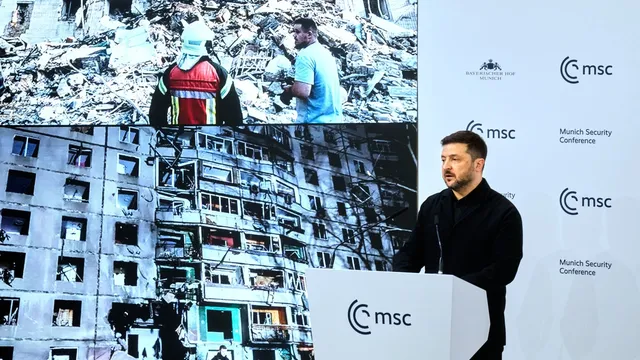
Ukrainian delegation heads to Geneva for crucial talks with Russia
Ukrainian delegation heads to Geneva for crucial talks with Russia
- A Ukrainian delegation is travelling to Geneva for negotiations with Russian officials.
- Upcoming discussions aim to address the ongoing territorial disputes resulting from the conflict.
- Current sentiments suggest minimal expectations for a resolution amidst entrenched positions from both sides.
Story
A Ukrainian delegation is arriving in Geneva for a new round of negotiations with Russian officials. This meeting occurs as the conflict approaches its fourth anniversary since Russia's full-scale invasion of Ukraine, which began in February 2022. Both sides express skepticism regarding any substantial developments, expecting that their respective positions on critical issues will remain unchanged. A significant focus of the negotiations is the future of Ukrainian territories currently occupied by Russia, a matter that has been a central point of contention throughout the conflict. Despite U.S. efforts to mediate a settlement by setting a June deadline, optimism about achieving peace remains notably low. In the context of an ongoing war of attrition, Ukrainian forces are engaged in combat with a much larger Russian army across a front line that stretches approximately 1,250 kilometers (about 750 miles). The situation is exacerbated by recent escalations, including an uptick in drone activities, with Russia reportedly shooting down a series of Ukrainian drones. Ukrainian Air Force officials have acknowledged that Russia launched a significant number of drones and missiles against Ukraine overnight, indicating a volatile military environment and persistent hostilities. Amid these developments, Kremlin spokesperson Dmitry Peskov has indicated that the Geneva talks will address a wide range of territorial concerns and other demands raised by Russia. Specific details regarding the issues to be discussed remain undisclosed, contributing to the uncertainty surrounding the negotiations. The lack of concrete expectations for progress highlights the entrenched positions of both sides. The negotiations come after previous peace efforts during President Donald Trump's administration yielded little success in halting the conflict, leading many Western officials and analysts to speculate that Russian President Vladimir Putin may believe that causative factors favor him. It is feared that as the war drags on, Western support for Ukraine might wane, potentially allowing the Ukrainian resistance to falter under sustained pressure. Some Ukrainian officials underscore the need for strategic resilience against this backdrop, expressing determination to stand firm despite the perceived challenges. As the delegations prepare to return to their respective leaders for further deliberation, the outcome remains dependent on the willingness of both parties to explore compromises amidst enduring hostilities.
Context
The Ukraine-Russia conflict, which has roots dating back several decades, intensified dramatically in 2022, culminating in a full-scale invasion of Ukraine by Russia on February 24, 2022. This marked a significant escalation in a conflict that began in 2014 with Russia's annexation of Crimea and its support for separatist movements in eastern Ukraine. The backdrop of the struggle is shaped by historical ties between the two nations, geopolitical interests, and the struggle for influence in post-Soviet space. Russia's actions have been motivated by a desire to maintain its sphere of influence over former Soviet states and prevent Ukraine from forwarding its ambitions for integration with Western institutions such as the European Union and NATO. This invasion sparked widespread condemnation from the international community and led to unprecedented economic sanctions against Russia, significantly impacting its economy and international relations. In the immediate aftermath of the invasion, Ukraine faced intense military aggression, resulting in severe humanitarian crises. Millions of Ukrainians were displaced, seeking refuge in various European countries. The Ukrainian military, bolstered by Western support in the form of military equipment, financial aid, and intelligence, mounted a robust defense against the Russian forces. The conflict has also revealed a significant level of societal resilience within Ukraine, fostering a sense of national identity and solidarity among the population. The global response included not only widespread condemnation of Russian actions but also a collective effort to provide humanitarian assistance to those affected by the conflict. The war has undergone several phases, with intense fighting taking place in key regions such as Kyiv, Kharkiv, and Mariupol. While initial Russian advances were met with fierce resistance, the conflict has evolved into a prolonged engagement characterized by trench warfare reminiscent of World War I, with both sides suffering heavy casualties. The territorial integrity of Ukraine has been a central theme in the conflict, with both sides engaging in military operations aimed at capturing strategic cities and regions. The impact on the global stage has been profound, leading to a re-evaluation of security policies in Europe and a shift in energy dynamics, as countries seek to reduce their reliance on Russian energy sources. As of 2022, diplomatic efforts to resolve the conflict have been ongoing but largely unsuccessful, with numerous rounds of talks failing to yield a lasting ceasefire. The situation remains fluid, with shifting frontlines and ongoing military engagements. Analysts suggest that the resolution of the conflict will require not only military solutions but also comprehensive diplomatic efforts addressing the underlying causes of the discord. The implications of the war are far-reaching, affecting international relations, energy security, global food supply chains, and alliances, thereby underscoring the geopolitical significance of the Ukraine-Russia conflict well into the future.


