

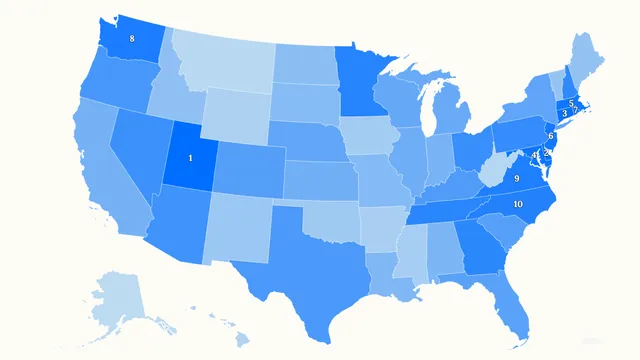
Utah emerges as the top state for remote work opportunities
Utah emerges as the top state for remote work opportunities
- WalletHub analyzed all 50 states and the District of Columbia using 12 key metrics related to remote work.
- Utah ranked highest due to low electricity prices, large home sizes, and good internet access.
- Overall, the findings emphasize the importance of a suitable living environment for remote workers.
Story
In recent months, a study conducted by WalletHub has revealed insights into the best states for remote work in the United States. The analysis focused on various metrics that affect the work-from-home experience, including home size, internet costs, energy expenses, and the overall living environment. Among all states, Utah emerged as the leader, largely attributed to its low electricity prices and large homes, which provide a comfortable setting for individuals working from home. The state's average home size stands at an impressive 2,459 square feet, allowing for greater freedom and less confinement for remote workers. Another significant point from the WalletHub report is that nearly 20% of Americans still work from home regularly. This is especially notable given that flexible working options have diminished since the pandemic ended. The study highlights the importance of affordable living costs and reliable internet access for those working remotely. High-speed internet is crucial in today's digital age, and Utah boasts almost 97% access to internet speeds over 25 Mbps. Additionally, reasonable energy costs in Utah play a vital role in making remote work more economically viable. While Utah takes the crown, it is important to note that the District of Columbia reported the highest share of remote workers in the country, ranking 19th overall. Other states that support a significant number of remote workers include Colorado, Washington, Maryland, and Oregon. Although these states have a remarkable number of people opting for remote work, they do not necessarily rank as the best states for working from home per WalletHub’s metrics. This draws attention to the distinction between the number of remote workers and the quality of the work-from-home experience. The report underscores that various factors can substantially influence the remote working experience, emphasizing the need for a conducive work environment. Factors such as household crowding and security not only affect productivity but also impact the savings potential for remote workers. As more people transition to remote or hybrid working models, understanding the environments that support these changes becomes increasingly crucial, helping individuals make informed decisions about where to live and work effectively.
Context
As remote work continues to gain popularity, it's essential to identify which states provide the best conditions for remote workers. Factors such as cost of living, access to high-speed internet, quality of life, and the availability of co-working spaces significantly influence a remote worker's experience. In 2026, certain states have emerged as frontrunners in creating an ideal environment for these professionals, attracting a growing number of individuals seeking flexibility in their work-life balance. The best states for remote workers can be characterized by a combination of affordability, robust infrastructure, and a vibrant community of like-minded individuals. Among the top contenders, states like Colorado and Oregon consistently rank high. Colorado offers a unique blend of natural beauty and urban amenities, making it appealing for those who enjoy outdoor activities as well as city living. With cities like Denver and Boulder, remote workers have access to excellent coffee shops, co-working spaces, and an active lifestyle. Similarly, Oregon, particularly its capital, Portland, is renowned for its creative atmosphere, progressive culture, and strong support for small businesses. These factors contribute to an appealing environment where remote work can thrive. Furthermore, states in the southeast, such as North Carolina andGeorgia, have gained traction thanks to lower costs associated with living and doing business. North Carolina's Research Triangle, which includes Raleigh, Durham, and Chapel Hill, has developed a reputation for innovation and offers an array of amenities catering to tech-savvy professionals. On the other hand, Atlanta, Georgia's bustling metropolis, provides ample networking opportunities and various recreational facilities that attract remote workers. The affordability of housing and various lifestyle options make these states standout choices for individuals looking to maximize their time spent working remotely. In conclusion, the best states for remote workers in 2026 offer a balance of affordability, lifestyle advantages, and essential infrastructure. States like Colorado, Oregon, North Carolina, and Georgia showcase unique strengths that cater to the needs of remote workers. As the trend towards remote work continues to evolve, these locations exemplify what modern remote workers seek, ultimately leading to a thriving community that nurtures productivity and well-being.


