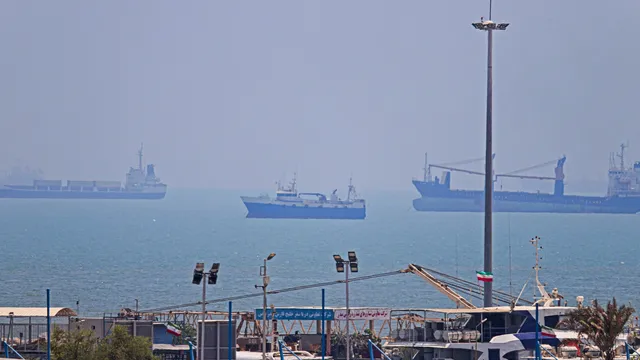
The Strait of Hormuz is a strategically vital waterway that connects the Persian Gulf to the Gulf of Oman and the Arabian Sea. It is one of the most important maritime chokepoints in the world, as it serves as a transit route for a significant portion of the global oil supply. Approximately 20% of the world's oil passes through this narrow strait, making it a critical artery for energy transportation. The geopolitical significance of the Strait of Hormuz is underscored by the fact that it is bordered by several countries, including Iran, Oman, and the United Arab Emirates, each with varying interests and influences in the region. Any disruption in this area can have immediate and far-reaching consequences for global oil markets and economies reliant on oil imports.
The stability of the Strait of Hormuz is often threatened by regional tensions, particularly involving Iran, which has historically exerted control over the strait and has threatened to close it in response to international sanctions or military actions. Such threats can lead to increased shipping insurance costs, heightened military presence in the region, and fluctuations in oil prices. For instance, during periods of heightened tensions, oil prices can spike dramatically due to fears of supply disruptions, which can have a cascading effect on global markets. Conversely, when tensions ease, prices may stabilize, reflecting the delicate balance of geopolitical dynamics in the region.
In addition to geopolitical factors, the Strait of Hormuz is also affected by economic considerations, including the demand for oil and the emergence of alternative energy sources. As countries strive to reduce their dependence on fossil fuels and transition to renewable energy, the long-term significance of the Strait may evolve. However, in the short to medium term, the strait remains a critical chokepoint for oil supply, particularly for countries in Asia, such as China, Japan, and India, which are heavily reliant on oil imports from the Middle East. The potential for supply disruptions due to geopolitical tensions or military conflicts in the region continues to pose a risk to global energy security.
In conclusion, the Strait of Hormuz plays a pivotal role in the global oil supply chain, with its strategic importance underscored by the volume of oil that transits through it and the geopolitical tensions that surround it. The implications of any disruption in this vital waterway extend beyond regional borders, affecting global oil prices and economic stability. As the world navigates the complexities of energy demand and geopolitical relations, the Strait of Hormuz will remain a focal point for discussions on energy security and international relations.